
🔴 Website 👉 https://u-s-news.com/
Telegram 👉 https://t.me/usnewscom_channel
If your household is like mine (and many others in this country), you probably get frequent deliveries from Amazon or other online retailers. Chances are, your usual routine is to carry those packages inside and open them on the kitchen counter or dining room table.
But experts say you might want to consider a new tactic. Otherwise, you could get an unpleasant surprise in the form of unwanted visitors: bugs.
You should never open delivery packages on your kitchen table, because these boxes often serve as hiding places for pests that hitch a ride from warehouses. “Insects are attracted to the cardboard material because it absorbs moisture and creates the perfect environment for insects to breed and feed,” said Ralph Masferrer, director of technical and training at Aruza Pest Control.
When I lived in Florida, it was common knowledge that you didn’t leave cardboard boxes lying around inside the home because pests — particularly the notorious palmetto bug — love to hide inside boxes. But this is an issue you should think about no matter where you live, as insects can be found hiding in boxes pretty much everywhere. And if you’re in a cold-weather area, insects may be especially eager to settle into a warm, cozy home like yours.
“During colder months, many pests are actively looking for a warm place to shelter,” explained Shannon Sked, Orkin entomologist and technical director. “Homes provide heat, moisture and access to food, which can make them appealing if pests happen to hitchhike inside on packages or other items. This can suddenly ‘wake up’ pests hiding in products that weren’t active when they were hiding in a cool warehouse.”
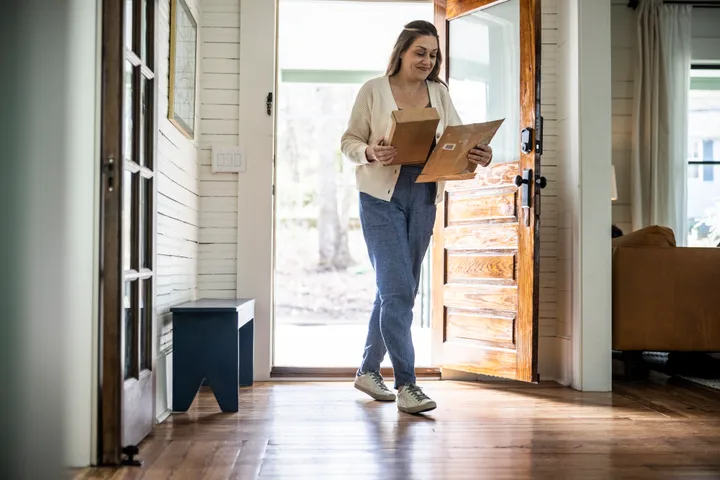
MoMo Productions via Getty Images
Why Insects Love Boxes So Much
Those boxes arriving on your doorstep might as well have a “Home Sweet Home” sign on them, because bugs often see them as the perfect place to live. While roaches may be the most obvious box-inhabiting hitchhiker, lots of insects like to forage in cardboard boxes and other containers. Sked said ants, silverfish, moths, rice weevils, and various types of tiny beetles are among the other insects that are attracted to cardboard and can easily sneak into tiny spaces.
“Many pests are drawn to dark, undisturbed spaces where they can hide and feel protected,” according to Sked. “Cardboard is porous and has layers and crevices that make it easy for insects to tuck themselves inside, especially within the spaces between corrugation layers. It can also absorb moisture, which makes it even more appealing to pests that thrive in humid environments like cockroaches, or for pests that eat molds like booklice, springtails and foreign grain beetles.”
And as the old saying goes, you never have just one cockroach. Masferrer noted there are certain insects, such as the German roach, that are notorious “hitchhikers.” These bugs also feed on wet or mildewed cardboard ― and can then quickly multiply.
“Like every living organism, German roaches need water to survive, so if the cardboard box is wet, they will be able to sustain themselves with solely the water source making it a perfect harborage living condition to breed,” Masferrer said.
A package that is wrapped with lots of packing tape might offer a false sense of security, but don’t be fooled into thinking that means it is insect-proof. “A perfectly sealed package rarely exists,” said Masferrer, who notes that no matter how well the package is initially sealed by the manufacturer, the transport process offers many opportunities for bugs to invade along the way.


“During the transport stage, the packages are tossed, moved, and kicked by the handler,” Masferrer added. “That is where the seal begins to lose its effect and small, tiny openings begin to occur. These tiny openings, to the little critters, are the perfect point of entry.”
How To Avoid Bringing Pests Into Your Home
The good news is there are some strategies that can help keep pests from invading your home via package deliveries. Sked said simple habits like opening packages on a surface that can be cleaned, breaking down boxes promptly, reducing clutter, and storing food in sealed containers can go a long way in prevention. It’s also a good idea to avoid opening boxes on carpets, upholstered furniture or bedding, where small pests could hide more easily without being spotted.
Keep in mind, though, that signs of significant pest activity, such as droppings, shed skins, damaged packaging or live insects, may indicate a larger problem that goes beyond a single package.
In that case, it is best to contact a trained pest professional ― the sooner, the better.