
🔴 Website 👉 https://u-s-news.com/
Telegram 👉 https://t.me/usnewscom_channel
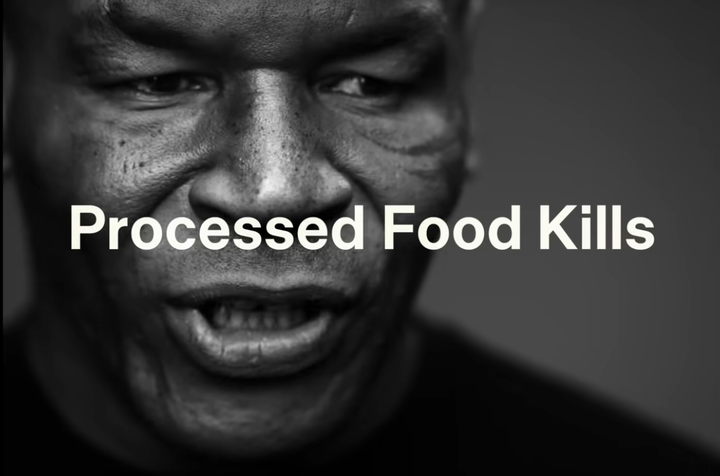
A black and white close-up of former heavyweight champion Mike Tyson opens up a Super Bowl commercial as he looks mournfully into the distance, recounting the death of his sister Denise at 25, which he attributes to obesity.
The 30-second spot, funded by the Make America Healthy Again (MAHA) Center, grows increasingly stark from there, cataloguing the health struggles Tyson says followed years of extreme eating, including consuming a quart of ice cream every half hour.
Online reactions have ranged from ridicule to sharp criticism, with some Reddit users comparing the ad’s tone to a surreal “30 Rock” sketch.
The ad packs multiple charged claims into the 30-second spot, referencing self-hatred and self-harm (Tyson calls himself “fat and nasty”), describing fat Americans as “fudgy,” and closing on a stark “Processed Food Kills, Eat Real Food” message superimposed over Tyson and his son chomping into apples.
Mike Tyson/https://www.youtube.com/@miketyson
Eating disorder specialists say moments like this reflect a broader pattern in modern health messaging — one that simplifies complex science, leans on shame and risks reinforcing harmful narratives about bodies and food that Health and Human Services Secretary Robert F. Kennedy Jr.’s MAHA agenda is strongly promoting. Let’s dive in.
The Argument: “Processed Foods Kill. Eat Real Food.”
Maybe you think of candy, cookies or soda when you hear the words “processed foods,” but it’s actually more complicated than that. “As a dietitian, the sentiment ‘eat real food’ resonates, but it oversimplifies a complex issue,” explained Marissa Karp, a registered dietitian and the founder of MPM Nutrition, based in New York. “Processing exists on a spectrum, and many processed foods like yogurt or pre-cut vegetables are nutritious and accessible.”
Because processing often makes food safer, more affordable and easier to access, experts say that demonizing it can cause unintended harm. Jennifer Rollin, an eating disorder therapist and founder of the Eating Disorder Center in Rockville, Maryland, said that kind of messaging can actually hurt, rather than help, especially when it comes to people with histories of disordered eating.
“Fear-mongering around processed foods will certainly contribute to the epidemic of disordered eating and eating disorders that we are seeing in this country. Having a more flexible approach towards eating, eating foods that you enjoy, and eating food with friends, is far healthier than isolating alone in your food eating so-called ‘clean foods.’”
But what about Tyson’s description of eating a quart of ice cream every half hour — or saying he would eat “anything?” Doesn’t that matter when it comes to health outcomes? Experts say individual behaviors are only part of a much bigger picture. “The ad becomes problematic when it implies that health or body size is solely the result of personal food choices, which reinforces stigma rather than supporting sustainable, inclusive health,” Karp said.
Ultra-Processed Foods Should Be The Actual Target Of The Ad
Perhaps Tyson was referring to ultra-processed foods, also known as UPFs — products made from refined ingredients and additives, like cereal and energy drinks, but also infant formula and premade dinners. But health experts say the ad blurs that distinction, turning a nuanced category into a sweeping warning.
While some research has linked diets high in UPFs to a higher risk of obesity, cardiovascular disease, certain cancers and other health concerns, eating disorder specialists say the conversation becomes far more complicated when entire categories of food are framed as inherently dangerous and off limits.


Mike Tyson/https://www.youtube.com/@miketyson
Why Body Shaming Doesn’t Work
Instead of a nostalgic, “Schoolhouse Rock”-style PSA, the spot veers into something closer to a schoolyard taunt. Tyson’s line — “I was so fat and nasty, I would eat anything” — sounds less like education and more like a punchline at someone else’s expense, a tone that eating disorder experts say can be deeply harmful.
“The language was extremely insulting and fat-shaming. I was really shocked when I heard it. It was potentially extremely harmful to many vulnerable people,” said Lauren Muhlheim, a licensed psychologist and owner of Eating Disorder Therapy LA. “Furthermore, research shows that shaming people does not lead to changing behaviors.”


That concern is backed by research. A study published in the International Journal of Obesity found that weight stigma (like maybe being called fudgy by a heavyweight champ) was associated with poorer mental and physical health outcomes, leading to disordered eating, more stress and more weight gain over time.
It’s an all-too-pervasive and damaging cultural narrative, according to body image experts. Jessi Kneeland, a body neutrality coach and author, said the commercial links fatness with suffering while positioning thinness as the path to happiness. They said, “This reinforces the idea that in order to feel good and have a good life we must be thin, which encourages people to prioritize weight loss (or management) over everything, leading to disordered eating and body dysmorphia/obsession, and to make us feel insecure about any normal weight fluctuations that happen throughout our lives, because we’re so afraid of ending up fat … and therefore miserable.”
Diet Culture Is The Water We’re Swimming In
What also stood out about the ad wasn’t just its language or message — familiar features of modern diet culture — but the choice of Mike Tyson as its messenger. Health experts say this points to a broader issue around who is seen as vulnerable to disordered eating in the first place.
“It’s important to acknowledge that eating disorders are often under-recognized in men, and that additional stigma and stereotypes around eating disorders can further delay recognition and treatment in BIPOC communities,” Rollin said.
While dieting and disordered eating are often framed as issues that primarily affect women, men also struggle with these conditions. Current estimates suggest between 2 and 3.6% of men are affected, though researchers believe underdiagnosis likely means the true number is higher. “The reality is that eating disorders do not discriminate based on age, race, body size or gender,” Rollin said.
Eating disorders carry among the highest mortality rates of any mental health condition, but that would make for a less headline-grabbing ad — especially when fear and fat-shaming are easier to package into a slogan.
If you’re struggling with an eating disorder, call or text 988 or chat 988lifeline.org for support.