
🔴 Website 👉 https://u-s-news.com/
Telegram 👉 https://t.me/usnewscom_channel
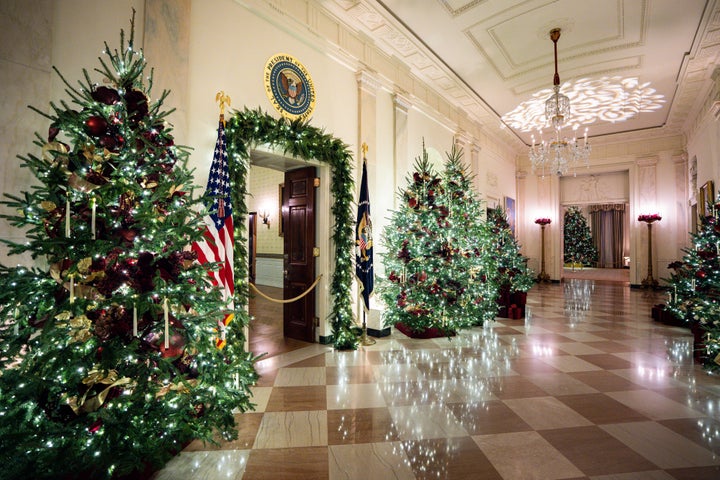
Earlier in December, the White House unveiled its 2025 holiday decor. With the theme “Home Is Where The Heart Is,” the design features rooms filled with ample greenery and a variety of motifs ― all presented through a moody walkthrough video that has already sparked strong reactions.
At a time when the White House has been physically transformed and its public access dramatically reduced, the holiday decorations feel like a symbolic battleground.
Bloomberg via Getty Images
To better understand the aesthetic choices and general messaging, HuffPost asked interior designers to weigh in.
A Clear Departure From Previous Years
“My first impression was that it felt very different than previous Trump administration years,” said lighting and furniture designer Sara Parker. “In past years we have gotten very theatrical, statement installations, and this year felt more nostalgic, sentimental and whimsical than what we have previously seen.”
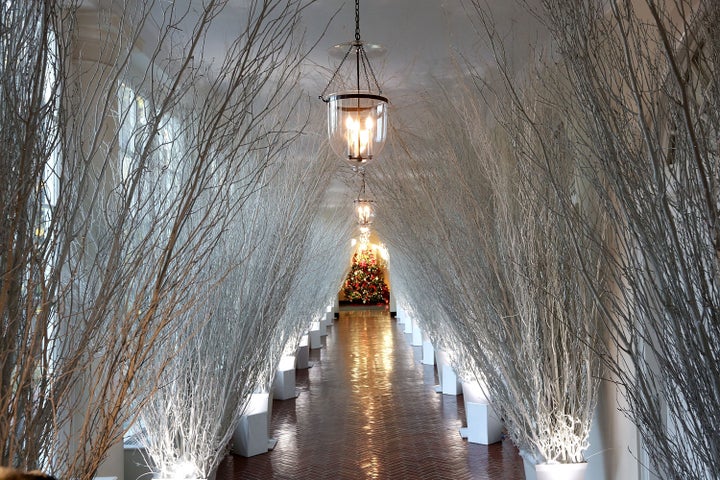
The contrast with earlier Trump White House decor is striking. In 2018, for example, the corridor of blood-red trees made headlines for its dystopian vibe.
“The best thing I can say about 2025’s holiday decorations is that they’re not 2017’s,” said interior designer Annie Elliott. “That all-white branchy birth canal was a travesty.”
Indeed, first lady Melania Trump’s icy white-branch tunnel decor drew widespread ridicule in the first year of the first Trump administration. Months later, the first lady’s former adviser recorded her saying, “Who gives a fuck about Christmas stuff and decoration?”
When the new decor was unveiled, some pointed out that the promotional video felt rather moody and not-so-spirited ― perhaps echoing the same sentiment from her audio recording.
Alex Wong via Getty Images
This year’s holiday decorations also feel rather surprising given Trump’s recent design choices elsewhere ― from covering the Oval Office with endless gold ornamentation to demolishing the East Wing to make room for a $300 million ballroom.
“What stands out most is the restraint,” Parker said. “Instead of trying to shock or overwhelm, the décor feels curated, sentimental and designed to make the viewer feel something familiar. It seems this year was less about grandeur and more about emotional warmth and memory-making, which feel very different than years past for this administration.”
Some installations ― like the butterfly tree ― struck Parker as “thoughtful and playful” while still elegant. But the accompanying “Be Best” ornaments quickly went viral online as viewers noted the incongruity between the first lady’s anti-cyberbullying campaign and the president’s near-constant attacks and demeaning language on social media.

The Washington Post via Getty Images
Interior designer Sarah Boardman said certain rooms seem to reach for meaningful metaphors, but not always successfully.
“There are rooms that attempt noble symbolism ― the butterfly concept tied to foster care awareness, for example, though it risks implying transformation as a function of aesthetics or appearance rather than systemic repair,” she said.
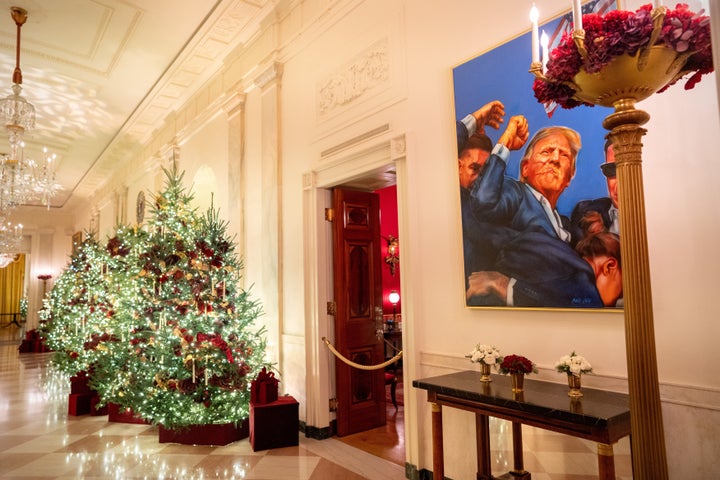
And perhaps the most jarring elements were the Trump portraits, including a one made of Legos that is evocative of the president’s mug shot following his arrest on felony charges related to his efforts to overturn the 2020 presidential election results.
“The large-scale inclusion of Trump portraiture, including a mug shot and a rally shooting image, is strange and overwhelms rooms meant to evoke peace, memory or reverence,” Boardman said. “That choice isn’t holiday symbolism; it’s political theater.”
The Washington Post via Getty Images
Nostalgia That Falls Short Of Connection
Parker described the general aesthetic of this year’s White House holiday decor as “nostalgia-driven,” which she believes aligns with the general craving for comfort and familiarity that many Americans feel today.
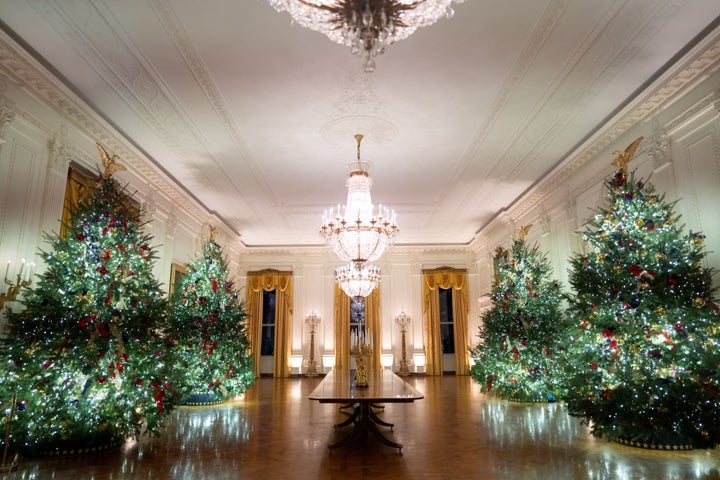
“My first impression is that it has a very classic American holiday feel ― almost like the Plaza Hotel in Home Alone,” echoed Andrew Shoukry, an interior designer and founder of Shouk House. “There’s a nostalgic, storybook quality to it ― lush greenery, warm lights, traditional ribbons, and a sense of abundance. It leans into a timeless Christmas aesthetic rather than trying to reinvent anything, and that gives it a cozy, familiar charm.”
He believes there’s a sense of comfort, tradition and stability in this decor approach.
“The use of classic elements — evergreen garlands, rich reds, gold accents — signals a desire to connect with cultural memory and shared holiday nostalgia,” Shoukry noted. “There’s a renewed love for ‘grandmillennial’ holiday charm — saturated, cozy, and sentimental ― and this year’s White House decor fits right into that shift.”
For Elliott, however, there’s an absence of warmth and connection compared to previous White House decor and general merriment.
“I remember Jill Biden invited lots of children to create ornaments for the trees,” she said. “I just think that making the decorations participatory in some way is a really lovely gesture and easy way to involve a broad swath of Americans and really reflect more of America.”
Indeed, Biden’s festive displays often featured drawings, ornaments and other art by children from around the U.S.
“As an interior designer, I spend most of my time making people’s homes beautiful and presentable ― colors coordinate, and furniture and objects are strategically placed,” Elliott said. “But if you can’t relax your standards and have a little fun at the holidays, we’re all in trouble. When else can you display the macaroni reindeer your kid made in preschool? Their beaming face when you hang it on the tree… that’s what the holidays are about.”
“When the spaces shrink, the storytelling shrinks. When imagery shifts from national symbolism to personality worship, it stops being holiday design and becomes messaging.”
– Interior designer Sarah Boardman
Boardman similarly observed a lack of true communal joy and warmth in the new White House holiday decorations.
“My first reaction is how visually quiet and oddly self-referential it feels,” Boardman said. “Historically, White House holiday decor invites the public into a shared national space. The traditional long approach through the East Wing, the China Room, the Library and the glorious Colonnade builds anticipation and belonging.”
This year’s aesthetic reads as “more staged than celebratory,” she added, noting that the decor is “highly curated but emotionally opaque.”
Rather than focusing on shared celebration, Boardman believes this approach is more about “narrative control.” In her opinion, the White House decor diverges sharply from modern holiday trends centered on warmth, hospitality, cultural inclusion, accessibility, personal craftsmanship, sustainability and communal joy.


Instead, there’s a clear loss of public engagement ― with pared-down tours and installations that get little life beyond a brief walkthrough video.
“We get glimpses of vignettes rather than an immersive experience, which aligns with the reality that public tours have been dramatically restricted since the East Wing’s destruction,” Boardman emphasized. “The rooms that historically carried meaning ― the Green Room, Blue Room, Red Room ― feel disjointed, almost like individually designed moments without a cohesive narrative binding them into a national holiday story.”
Peter W. Stevenson/The Washington Post via Getty Images
As noted, the historic East Wing of the White House ― which had long housed the main public entrance for the holiday tour ― was demolished in October.
“For generations, walking through the East Wing at Christmas was a democratic ritual. Schoolchildren, military families, community members, and ordinary citizens experienced beauty inside a building meant to belong to all of us,” Boardman said. “When the spaces shrink, the storytelling shrinks. When imagery shifts from national symbolism to personality worship, it stops being holiday design and becomes messaging.”
Parker similarly noted the absence of the East Wing from this year’s holiday installations, but still finds this year’s White House decor to be effective.
“Overall, I am pleased [with] the decorations despite being deprived of the East Wing,” she said. “It feels more human and less theatrical, which I appreciate.”
A Theme That Doesn’t Match The Execution
For Elliott, the design choices don’t quite align with this year’s theme, which makes the overall decor “confusing.”
“You can’t argue with red bows and white fairy lights, so at first glance, I thought, ‘OK, tasteful,’” she said. “Spend more than four seconds looking, though, and you’ll see how the theme, ‘Home is Where the Heart Is,’ is completely unsupported by the decor. Patriotism? Generosity? I fail to see how dominoes, blue butterflies ― let’s hope they’re faux ― and a Lego portrait of the president are relevant.”
Boardman also believes the theme feels contradictory, given the more limited public engagement with “The People’s House.”
“The stated theme, ‘Home is where the heart is,’ lands uncomfortably when access to the ‘home’ of the nation has been reduced,” she said. “In the past, decorations were intentionally for the public, especially children on holiday tours. This year, the message seems inward-facing, almost performative: Decor made to be filmed, not experienced.”
She also feels the choice to honor Gold Star families in the Blue Room “rings hollow,” given Trump’s history of dismissive and insulting rhetoric about those very families and members of the military in general.
“I am genuinely moved that Gold Star families were recognized, they deserve it,” Boardman said. “I can’t ignore the contrast between their lived sacrifice and the administration’s past treatment of them.”
That’s why she ultimately views the “performative” Christmas decor against the destruction of the East Wing as pure theater, which is part of a larger pattern.
“It’s a soft-focus façade obscuring what is actually being dismantled: public accessibility, yes, but also the safety nets for the most vulnerable, the mass unemployment of Black women, the slow-motion gutting of the ACA, and the escalation of fear through raids, detention, and punitive policy,” Boardman said.
“The holiday aesthetic isn’t benign ― it is distraction architecture,” she added. “This administration is like watching and experiencing a slow-motion train wreck.”