
🔴 Website 👉 https://u-s-news.com/
Telegram 👉 https://t.me/usnewscom_channel
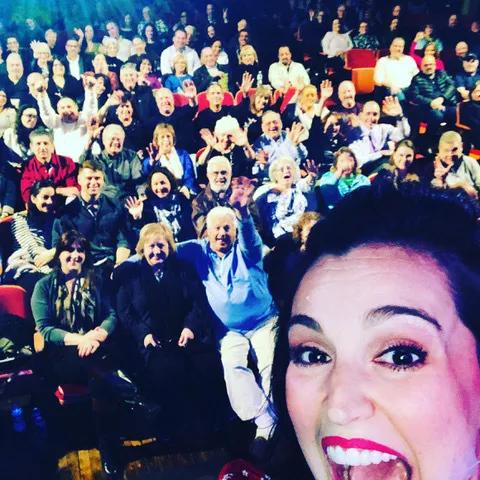
At 8 p.m., a sold-out crowd was waiting for me to walk onstage.
At 8:05 p.m., I had to stab a needle into my stomach.
I was backstage, doubled over in pain, a heating pad taped to my lower back, trying to steady my hand long enough to inject an IVF trigger shot into a stomach already bruised from weeks of hormones.
The audience was laughing, sipping drinks and waiting for a comedy show to start. I was trying to jab a needle into myself while silently praying the pain ripping across my hips and spine would ease enough for me to stand upright under the stage lights.
When I asked the stage manager if we could hold the house for five minutes, he rolled his eyes, assuming, I’m sure, that I needed extra time for mascara. When he saw the needle, his jaw dropped. He probably thought I was doing drugs. In a way, I was. Just not the fun kind.
A few months earlier, at 34 years old, I’d been told my eggs were “running out,” which sent me into a spiral. If I wanted any chance of having a biological child, the doctor said, I needed to start IVF immediately.
How could that be? My mind quickly raced through every life decision I’d made. Maybe I shouldn’t have chased a career as a performer. Maybe I should have saved more money. Maybe I should have had a baby at 20 like some of my friends.
Now, instead, I was backstage injecting hormones into my body and hoping it would cooperate. The thing is, my body had been trying to tell me something for almost two decades. No one was listening.
When I was 16 years old, I went to the doctor because my periods were so painful I sometimes couldn’t stand upright.
“It’s normal,” I was told. “Some women just have painful periods.”
The solution? Birth control. My mom, wanting to help her daughter feel better, agreed. Maybe the birth control pill would help. So I started taking it. And I stayed on it for 17 years. Still, the pain never disappeared. It just became quieter.
Meanwhile, new symptoms crept in: a swollen belly, fibroids, exhaustion, brain fog, low hormone levels. Every doctor told me some version of the same thing.
“This is just what women go through.”
They weren’t trying to be dismissive. They were just … uninformed. Just like I was.
The IVF cycle I injected backstage that night didn’t work. No eggs grew. None were retrieved. That failure pushed me to search for an answer again. Eventually, a fertility specialist noticed something odd about my ovaries, particularly the right one. She referred me to a surgeon in New York City.
Within days, I was sent for an MRI.
The surgeon looked at my images and said something that stunned me: “You have a dermoid tumor engulfing your right ovary and extending upward toward your chest cavity.” He also suspected something else ― endometriosis, a word I had never even heard until that point. I now know that endometriosis is a condition in which tissue similar to the uterine lining grows in other areas of the body, and that it can cause fertility issues, among other symptoms.
Then he asked a question that felt almost absurd: “Are you in pain?”
My answer was simple. “Always.”
Photo Courtesy Of Candice Guardino
Within 24 hours of that scan, I was in surgery. When I woke up, it felt like I had taken a quick nap, but the surgery had lasted more than 90 minutes.
During that time, the doctor removed a dermoid tumor wrapped around my ovary, several fibroids, stage 3 endometriosis spread across my reproductive organs, and endometriosis covering parts of my bowels and even my appendix, which was coated in endometrial tissue.
Suddenly years of confusing symptoms made sense. The pain during my period. The stabbing sensation when going to the bathroom. The exhaustion. The swelling. All of it.
Then the doctor smiled and said something I’ll never forget.
“Your eggs aren’t bad. They were just being suffocated. I saved your ovary. You’ll be pregnant one day.”


I burst into tears in my hospital bed.
My husband had been sitting in the waiting room, terrified. He later told me the surgeon took time to explain everything to him ― what had been discovered, what had been removed and what the future might hold. But there was another reality waiting for us. These kinds of surgeries are often not fully covered by insurance. Medical bills drained our bank account faster than we could say, “Insurance doesn’t cover that.”
Still, I was lucky. Because I finally had an answer.
Endometriosis affects roughly 1 in 10 women worldwide. Yet many of us go years, even decades, without diagnosis. We are told our pain is normal. We are prescribed birth control. We are told to push through.
We smile through meetings. We power through presentations. We perform onstage while pain radiates through our bodies. The world doesn’t see the heating pad, the injections or the quiet tears in dressing rooms and bathroom stalls.

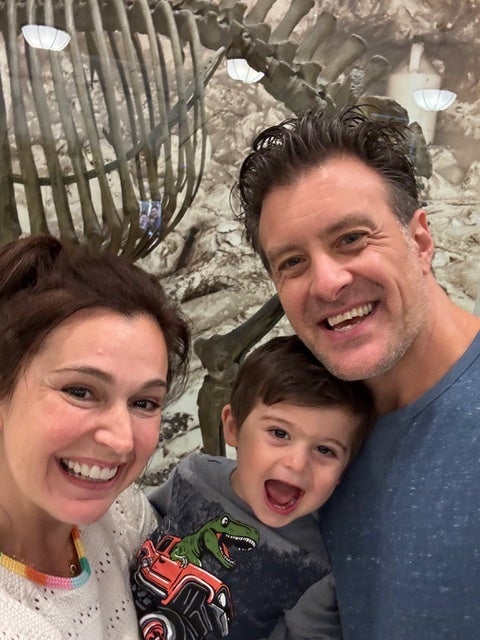
Photo Courtesy Of Candice Guardino
Years later, I finally heard the sound I had prayed for: my baby’s first cry. At that moment, every surgery, injection, bruise and backstage breakdown suddenly made sense. They weren’t random hardships. They were part of my path.
I still live with endometriosis, and I’m still in pain sometimes. Today, as I write this, I’m wearing a heating pad. But now I know what is happening, and I know how to manage it ― through diet, stress management and working with doctors who actually understand the disease.
I’m sharing this story because somewhere, another woman is being told her pain is “just normal.” To her I want to say: Keep asking questions. Keep advocating for yourself. Keep searching for answers. And most importantly, you’re not alone.
Candice Guardino is a writer and performer. Through humor and storytelling, she explores family, resilience and finding light in life’s hardest moments. She is also a fertility and endometriosis advocate. Follow her on Instagram @CandiceGuardino or learn more at www.candiceguardino.com.
Do you have a compelling personal story you’d like to see published on HuffPost? Find out what we’re looking for here and send us a pitch at pitch@huffpost.com.