
🔴 Website 👉 https://u-s-news.com/
Telegram 👉 https://t.me/usnewscom_channel
“It’s $2.13 an hour plus tips. $7 an hour when you’re working the bar. Plus, you don’t have to fold napkins and silverware. The job’s yours, if you want it.”
“Yes, I do,” I said, rising from my seat. The woman interviewing me smiled crookedly, told me to wear all black, and said I could start on Tuesday.
It wasn’t the job of my dreams. I had just turned 27, gone through a devastating breakup, was diagnosed with bipolar disorder, and moved from my one-bedroom apartment in New York City to my grandfather’s basement in a town 10 miles south of Atlanta. I’d quit my high-profile nonprofit job because I couldn’t keep up with the stress and traded it in to serve ramen in a shopping mall.
I had a master’s degree, years of experience, and still couldn’t find anything else. Like the “zillennials” I kept reading about online, I was both overqualified and underemployed. I was a walking LinkedIn paradox in an apron and non-slip shoes.
I told myself it was temporary. I wasn’t planning on selling noodles forever.
I walked into the ramen shop already carrying a diagnosis: bipolar II disorder, with psychotic features. I was stable, medicated, and seeing a psychiatrist monthly, but I knew how fragile that stability could be.
I never told anyone outside of my close friends and family about my disorder. Everyone saw the polished, high-achieving version of me — not the one who sometimes couldn’t sleep for days, or thought the news anchor was speaking directly to me and could see into the future.
In my old position, I spent countless hours hovered over my keyboard building out campaigns, analyzing metrics, and hopping on zoom calls. Everything was urgent. I didn’t feel a sense of peace. I spent most of my time panicking.
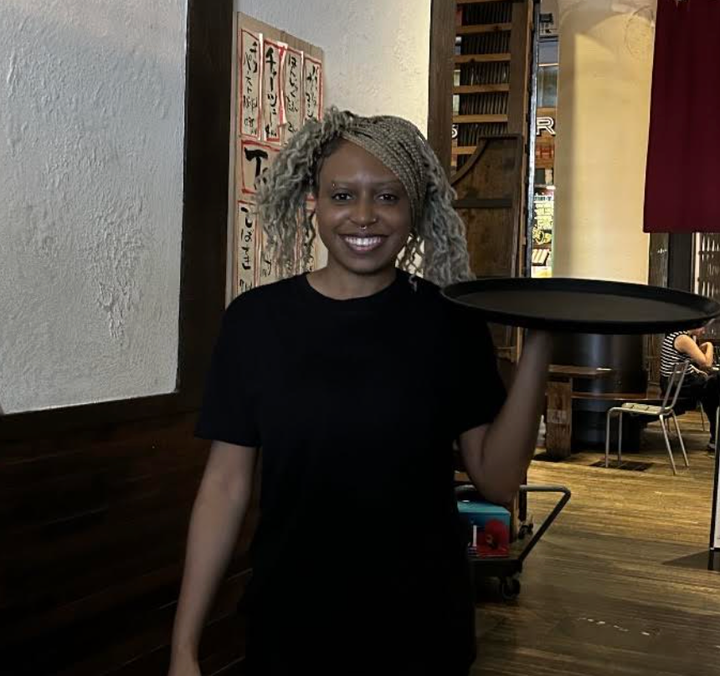
At the ramen shop, all I had to do was take orders, carry hot bowls of ramen, smile at customers and wipe tables. It was the first time in years I’d felt my body working in sync with my mind. Granted, I wasn’t using my master’s degree, but I was being active and interacting with people, and I finally felt good.
For a while, I let myself believe that this feeling of stability would last. However, when you have bipolar disorder, feeling good isn’t always a comfort. Sometimes it’s a warning sign.
Two months into my job and I was already making friends with my co-workers — something I didn’t get to do in my previous work from home positions. I was invited to go out to the club one night and as I got dressed in my new outfit — I felt it. I was manic.
I hadn’t slept the past two days. I stayed up all night reorganizing the house and spent too much money on cleaning supplies. I felt the stress of not sleeping creeping up on me, and I felt creative and wrote songs and essays all while functioning with just three hours of sleep.
I texted my sister: “I think I’m in an episode.”
Everything else was a blur. I remember crying, screaming, and begging my mom not to make me go to a mental health facility. I eventually took a nap. When I woke up, it was the middle of the night. I turned off my location on my phone and went for a drive.
My family was worried sick about me and called me over and over.
I was paranoid. I thought that my family was out to get me and that the cars on the road were following me. I was excited about being by myself and going on a drive and was speeding down the highway.
I eventually came home, went to sleep, and when I woke up, I asked my sisters to fill me in on my behavior from the previous night. My mom advised me to not go to work the next day.
I texted the group chat with the other servers and asked someone to cover my shift. They did. I had a few days to spend recovering. I called my psychiatrist, and he explained to me that I experienced what are called “breakthrough symptoms.”
“You’re stable on your medication, but there is no cure for bipolar. Sometimes, even with the right routine, symptoms come back,” he explained.
He upped my medication dosage and told me to keep doing the best that I can.
When I went back to work three days later, one of my co-workers remarked on my absence.
“I feel like I haven’t seen you in forever,” he said.
I nodded my head and explained that I had a mental health crisis. It was the first time I was ever honest with someone in a workplace about my condition.


“Sometimes I need time off of work,” I explained. He gave me a slight smile and told me things would be OK, and that he’s proud of me for getting the help I need.
It wasn’t a long conversation, but that brief moment of someone seeing me and not flinching — just offering gentle support — stayed with me. For the first time in a long time, I didn’t feel like I had to hide who I was to do my job.


When I was first diagnosed with bipolar, my mom told me that it wasn’t a “death sentence.” At the time, I didn’t believe her because it felt like my life was over. My episodes made it impossible for me to keep up with work, and I felt as if all of the work I did in my early 20s had gone to waste because of my condition.
At the time, I had a very narrow view of what success meant. I thought that having my own apartment and my dream job was what life was all about. What I didn’t realize is that I was losing myself in my career and not making space for what my mind and body needed.
In many ways, my bipolar disorder saved me from myself and the belief that I have to have everything figured out in order to be “successful.”
The ramen shop didn’t fix me. I still have bipolar. But it gave me structure and allowed me to do honest work and connect with other people. I leave work feeling tired but not drained.
There’s this idea in our society that work has to be your calling or it’s not valuable. But what I now realize is that what I need is something to get me through the day. I need care and stability.
I don’t know how long I will work at the ramen shop, but whether it’s temporary or more long term doesn’t matter. What matters is that I’m stable.
Amaris Ramey is a Black queer writer, content creator, and mental health advocate from the South who writes stories about identity, family, and belonging. Follow them on Instagram and TikTok @radmadgrad.
Do you have a compelling personal story you’d like to see published on HuffPost? Find out what we’re looking for here and send us a pitch at pitch@huffpost.com.