
🔴 Website 👉 https://u-s-news.com/
Telegram 👉 https://t.me/usnewscom_channel
In film and TV, portrayals of dementia leave a lot to be desired.
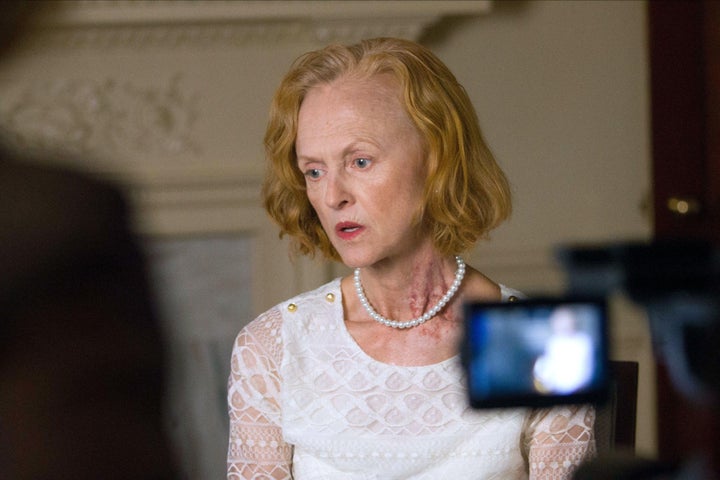
There’s a lazy, increasingly common trope in horror movies of a grandparent, usually a grandma, with Alzheimer’s who, lost to the disease, becomes “Exorcist”-level demonic. Most notably, there’s “The Taking of Deborah Logan,” a 2014 found-footage horror movie about a possessed nana with Alzheimer’s whose behavior grows increasingly disturbing — she opens and slams doors, strips naked while clawing at the walls and her skin, and jump-scares the camera at night.
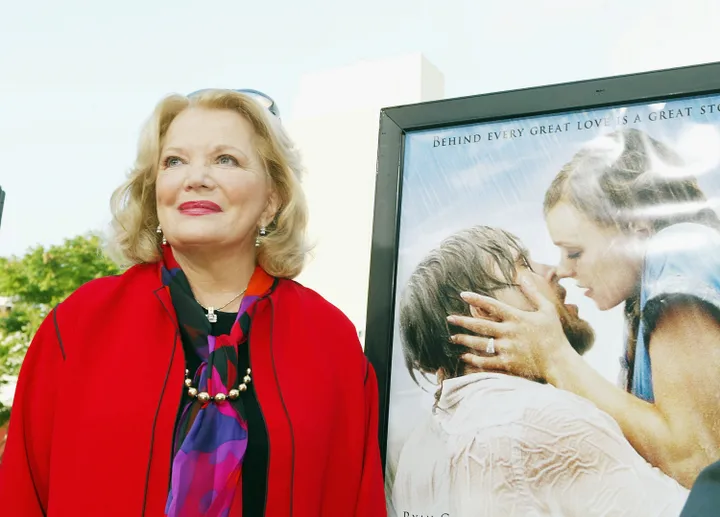
Even films that aim for tenderness and humanity don’t always get it right. In “The Notebook,” we meet Allie (played by Gena Rowlands) when she’s already in the later stages of Alzheimer’s. The movie skips past the earlier, slower progression of the disease — the intermittent memory lapses and gradual loss of function that can unfold over 10, 15 or even 20 years. As a result, viewers may be left with the mistaken impression that dementia happens almost overnight.
The reality is that Alzheimer’s disease, the most common type of dementia affecting around 7 million people in the United States alone, is not simply about being fully present one day and absent the next.
“In TV and film, it’s rapid and the people with Alzheimer’s or other forms of dementia experience a kind of straight, linear decline, and often memory loss is the central and sometimes the only symptom, like in ‘The Notebook,’” said Tom Kiely, a neuropsychologist in both California and New York and the host of the The Psych Studio Podcast.
The characters themselves are also equally one-note, Kiely told HuffPost.
“When we see characters with dementia, they’re usually portrayed in this kind of weak and fragile way. They’re childlike, empty and emotionally vacant,” he said. “In their confusion, they come across as if they’re lost or ‘disappearing’ before our eyes.”
Kevin Winter via Getty Images
Then of course, there’s the aforementioned horror-movie convention, where a diagnosis of dementia is conflated with a variety of evil.
“One academic has described these kinds of depictions of dementia as ‘vulnerable monsters’ and while this is a generalization, I would agree with it,” said Lee-Fay Low, a professor in aging and health at the University of Sydney in Australia, specializing in dementia care, rehabilitation and stigma reduction.
“Even in a new show like ABC’s ‘The Rookie,’ one episode had a man with a diagnosis of dementia that turned out to be a serial killer who assaults one of the main characters,” Low said.
Why These Pop Culture Depictions Are So Dangerous
The public’s limited understanding of dementia means that families and people living with the condition may turn to such TV shows and movies to fill in the gaps. But when those portrayals are simplified, compressed for drama, or played for jumpscares, it can create false expectations about how the disease unfolds. If you believe pop culture, dementia patients are lost souls given to violent streaks.
“I think pop culture has conditioned us to think that the diagnosis of dementia equals the immediate loss of your own personhood in many ways,” Kiely said.
“People think dementia is only about forgetting names and faces, and that people with dementia are no longer capable of any kind of acute insight,” he said. “They’re portrayed as humorless, or not capable of meaningful human connection, like they’re an empty shell.”

The grimness of these depictions can reinforce the fear of and stigma around, Kiely said, and even cause family members of dementia patients to look at their loved one differently, like they’re already gone or a shell of who they used to be.
Pop culture can also shape how loved ones interpret early symptoms, how quickly they seek medical help, and what they believe the progression of the illness will look like.
What Dementia Really Looks Like
Unlike how it’s portrayed in the film, dementia sneaks up on people: In the first stage, which specialists call the “stealth” phase, only a few vulnerable cells in the brain are affected, and it’s rare for memory loss to occur.
It’s typically not until the second phase — which can progress more quickly and aggressively — that the cognitive decline most people associate with dementia becomes pronounced.
During this stage, impairments in memory, thinking and daily functioning begin to significantly disrupt a person’s ability to live independently and maintain their quality of life.
Movies over-emphasize the memory impairments involved in a diagnosis at all stages. If the character has dementia, their waning memories are sometimes the only sign, when the reality is there are lots of other symptoms to be on the lookout for, Kiely said.
“Memory loss may not be the earliest or most prominent symptom of Alzheimer’s, even though it’s totally portrayed that way in the media,” the doctor said. “There’s non-memory symptoms that are rarely depicted, such as personality changes, a loss of inhibition or emotional volatility, and language changes.”

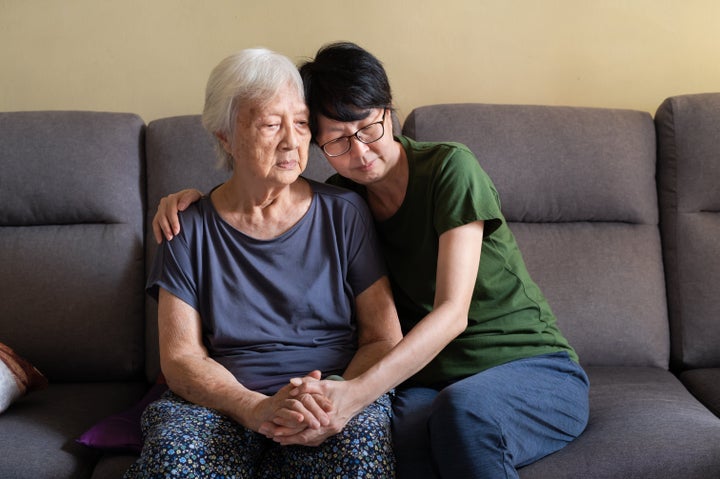
Here’s how TV and movies should portray dementia.
So how can Hollywood do better? Luckily, there are already some existing examples.
“I’ve noticed that when the intent of the film or TV is to explore the experience of living with dementia, filmmakers tend to show dementia in a more nuanced, rounded way,” Low said.
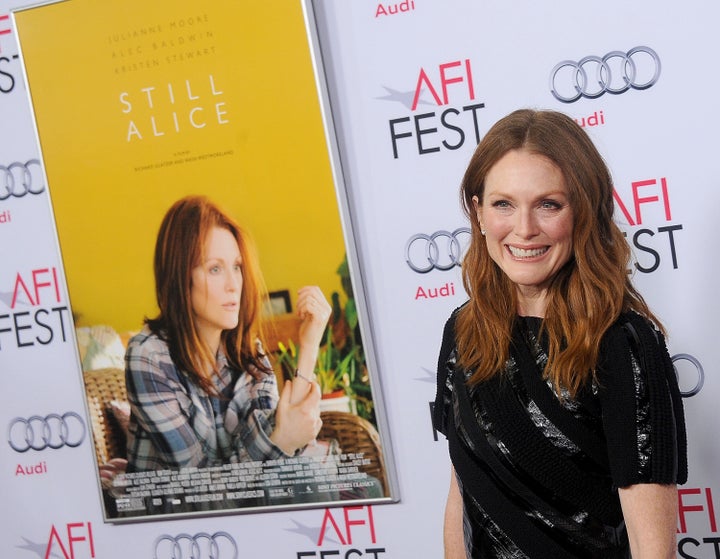
Low appreciates when movies or shows depict the positive and negative aspects of dementia for the person and their family. The professor is a particular fan of “Still Alice,” a 2014 drama starring Julianne Moore as a 50-year-old linguistics professor grappling with early-onset Alzheimer’s disease while trying to live in the moment as much as possible with her family.


Moore won the 2015 Academy Award for Best Actress for the film, which Kiely is also a fan of.
“It does a very good job at showing the loss of identity from a patient’s perspective, particularly early in the illness, when Julianne Moore’s character needs to step away from her career,” he said. ”That was devastating, and I was captivated as an audience member.”
As far as Kiely is concerned, any content where the character with dementia is a central figure, rather than the caretaking responsibility of the lead, is a step up from what we usually get.
“I think the biggest improvement filmmakers could make is to move away from dementia as like a single storyline device and move toward dementia as like a lived experience, like we see with something like ’Still Alice,’” he said.

Gregg DeGuire via Getty Images
That’s also the reason he likes “The Father,” a 2020 film starring Anthony Hopkins as a sprightly family patriarch who refuses help from his daughter (Olivia Coleman) in spite of his rapidly advancing dementia.
“In my opinion, it’s one of the most accurate depictions of what cognitive decline or cognitive disorientation can feel like internally, and it places the audience member inside that confusion rather than observing it from the outside,” he said.
Kiely believes filmmakers could do more to depict moments of competence in people living with dementia — showing small victories and flashes of clarity alongside the very real impairments and struggles.
“How is the character adjusting to their new normal? What strategies have they adopted in order to preserve some agency or functional independence,” he said. “I’d also love to see stories that show families and caregivers that are struggling, not just with loss, but with their own role changes and the ambiguity of the future.”
Documentaries can be a particularly good vehicle for exploring the complicated experience of having, or loving someone with dementia. Low mentioned Chris Hemsworth’s 2025 National Geographic documentary “A Road Trip to Remember,” where the actor documents his father Craig’s struggle with the early stages of Alzheimer’s and the family’s experience with reminiscence therapy, a treatment that helps people with dementia recall positive experiences and memories from the past using sensory prompts ― music, photos, familiar objects or scents.
Low added that negative portrayals of dementia are often intertwined with ageism, which is why she’s encouraged to see more shows centering older adults who are still living full, dynamic lives. She pointed to “Only Murders in the Building,” which stars Steve Martin, 80, and Martin Short, 75, as neighbors who — alongside Selena Gomez — investigate a mysterious death in their New York City apartment building.
“I hope that as the media becomes less ageist as a whole, they’ll also start to present dementia less stereotypically,” she said.