

🔴 Website 👉 https://u-s-news.com/
Telegram 👉 https://t.me/usnewscom_channel
My main focus in 2006 was finishing school and figuring out my next steps. I was 21, hanging out with friends, trying to get to class on time, and doing what most people my age did: planning for a future that felt wide open. Cancer was the furthest thing from my mind.
Then I found out I was pregnant. I was shocked, nervous and unsure of what people would think, but I was determined to keep living my life. That was my first pregnancy, so I didn’t know much about what to expect, but I remember being so tired that some days just getting dressed felt like a full workout.
At my four-month ultrasound — the day I was supposed to find out the sex of my baby — the tech was unnervingly quiet and took longer than usual. She finally told me it looked like I had a fibroid tumor and sent me for a second opinion that same day. I also learned I was having a boy. I was excited, but suddenly there was an unexpected layer of worry over the joy. I was told fibroid tumors were common in young women my age, and since my mom and aunts had a history with them, I tried to reassure myself that it was nothing unusual.
When my son was born healthy and perfect in January 2007, the tumor was still there. My doctors continued to monitor the Ping-Pong ball-size growth, and prescribed birth control to shrink it. I received multiple ultrasounds over the next several months, and I was alarmed to learn that despite the medication, it continued to grow. Four months later, I was told I should have it surgically removed and biopsied.
I will never forget the day I had that surgery. I woke up in the recovery room to the sound of machines beeping and the sight of my family gathered nearby. The doctor stood at the foot of my bed and said, “Your surgery went well, but you have cancer — peritoneal mesothelioma to be exact.”
The prognosis was so poor that the hospital called in grief counselors to speak with my family and help prepare them for what lay ahead. At that moment, I felt like I was the eye of a tornado — everything was spinning around me, but I was frozen in the center trying to make sense of words that didn’t seem real.
Everything after that felt static. Cancer? What is mesothelioma? I had just given birth. I was only 21. All I could think about was my baby boy.
My family and I didn’t waste any time searching for answers online. Everything we found was bad news. Peritoneal mesothelioma is a rare, aggressive cancer caused by asbestos exposure. Most patients are men over 65 with a history of blue-collar or military work. I didn’t fit the description of the typical patient, and less than 5% of cases are in young people. The prognosis was grim. My doctor told me I likely had 18 months to live.
I was terrified, but I wasn’t ready to give up. I was referred to an oncologist who knew nothing about peritoneal mesothelioma and had no treatment plan for me. It felt like he was already preparing me for palliative care rather than exploring ways to fight the cancer. My family and I searched cancer centers and looked for specialists, but we hit dead end after dead end.
I hit a breaking point. I asked my doctor if he would look for treatment options or reach out to a specialist who could review my case. He said there was nothing else he could do. That was it for me. I got up and told him, “If you can’t help me, I’ll find the help I need.”
Around that time, my mother put me on the prayer list at her job. A co-worker told her about an oncology specialist who treated peritoneal mesothelioma and offered a unique treatment possibility. Would you believe that this doctor was in the same city as me? My previous oncologist had not even tried to find him. It turned out he was one of only two doctors in the country at that time who performed a specific surgery for peritoneal mesothelioma.
I was in his office within two weeks, and he restored the little hope I had left when he told me I was the perfect candidate for HIPEC surgery — cytoreductive surgery with hyperthermic intraperitoneal chemotherapy. He explained that the procedure involved opening my abdominal cavity, removing all visible tumors along with any affected tissue or organs, and then circulating heated chemotherapy directly inside the abdomen to kill any remaining cancer cells. He was honest about the risks and warned me that the side effects could include kidney disease. He also told me that I might not be able to have any more children. I didn’t care. If it could get rid of the cancer — or at the very least give me more time and a better quality of life so I could be there for my baby — I was ready to do it.
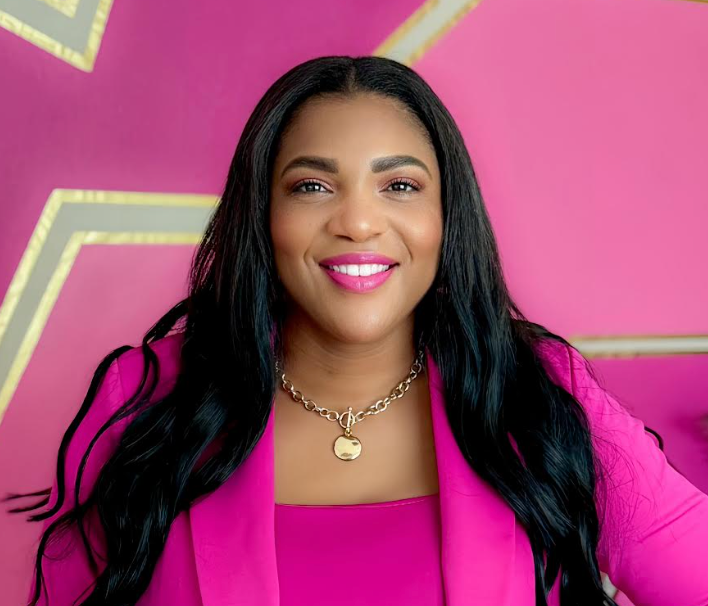
Courtesy of Tamron Little
The surgery was long and grueling — almost 12 hours — and my recovery was tough. I couldn’t lift my baby for weeks. My husband served as a caregiver for both me and our son, while my mom and sisters rotated shifts to help. I hated feeling like a visitor in my own life, but slowly my strength began to return. It took me about a year to fully recover and start to feel like myself again.
Follow-up scans showed no evidence of disease. Eighteen months passed, then two years, with no return of the cancer. Even the doctor was surprised. Three years after the surgery, I discovered I was pregnant with my second son. My oncologist was stunned because he was the one who had told me I wouldn’t be able to have any more kids.
The five-year mark arrived, and my scans were still clear. That’s when I got pregnant with my third child. Doctors began calling me the “miracle patient” and said it was incredible that I had reached the five-year mark without any recurrences. Seven years came, and I was pregnant with my fourth child, and still, there was no evidence of disease.

It has now been 18 years since my HIPEC surgery. My son — the baby I was afraid I wouldn’t live long enough to raise — just turned 18 and is headed to college.
Over the years, my experience as a cancer survivor has taught me so much. One thing I learned was that doctors know a lot, but they are also human too, and they don’t have all the answers. I also discovered my rights as a patient — my right to ask questions, voice my concerns and disagree with the doctor if need be. I learned to push for tests, to get second — even third — opinions, and not feel bad for doing it. The first time I heard the words “It’s probably nothing,” I believed them. But “probably” isn’t enough when it’s your life on the line. You are your best advocate, and this experience helped me realize that.
I owe much of my recovery to my faith and my family. My faith became my anchor, and my husband and children are a constant reminder of why I fight so hard. Nearly two decades later, I still have moments when I get the firm nudge of fear that the cancer might return. Thankfully it is not a constant panic, but a shadow that sometimes follows me into a doctor’s office or creeps into my mind when I feel an unfamiliar ache.
There’s a term for this — “scanaxiety” — and it’s a part of my new normal of emotions as a cancer survivor. I have thought about what I would do if it came back, but I refuse to let that thought take my mind captive. I am reminded of a scripture that reads, “I shall have life, and have it more abundantly.” I choose to focus on thriving, not just surviving, even when I don’t feel strong.
Being called a “miracle patient” is humbling. It means I am living in a space where statistics say I exist. It means I have been given a gift I can’t waste — the gift of time and a better quality of life. Because of these gifts, I feel a responsibility to speak up for others, to remind people that persistence can save a life, and to encourage anyone in the middle of their fight that there is still hope. I’m proof that thriving after a cancer diagnosis is possible, and that cancer survivorship can be full, purposeful and beautiful.
Along the way, I’ve found ways to use my story to help others. I’ve written “Thrive Sister Thrive,” a devotional for women navigating life after hard seasons, and “A Survivor’s Guide to Thriving in Survivorship,” a resource for navigating the emotional, spiritual and practical sides of life after diagnosis. I also work with The Mesothelioma Center to advocate for patients and raise awareness, speak at events, and contribute articles to educate and empower others facing a diagnosis. I use my social media platforms to share my journey and encourage others daily, and I write for several publications to reach even more people who may be walking a similar path.
Cancer changed my life, but it didn’t end it. It gave me a new purpose: to give hope to people who are where I once was. I’m living proof that statistics don’t always get the final say.
Tamron Little is a writer, speaker, podcast host, and cancer survivor. She is the author of Thrive Sister Thrive: 21-Day Women’s Devotional and founder of She Thrives Consulting. Her work has been featured in Essence, Women’s Health Magazine, BET, and The Mesothelioma Center. Learn more at TamronLittle.com.
Do you have a compelling personal story you’d like to see published on HuffPost? Find out what we’re looking for here and send us a pitch at [email protected].