

🔴 Website 👉 https://u-s-news.com/
Telegram 👉 https://t.me/usnewscom_channel
My daughter turned 3 in October, the magical age when friends and family (even perfect strangers) assume you’re ready to try again. And so they ask, “When will you have another child?”
Like so many others, I was horrified when I learned on Friday that the Centers for Disease Control and Prevention (CDC) had reversed its longstanding recommendation of a key vaccine for all newborns. The vaccine advisory committee ― whose members were handpicked by Health and Human Services Secretary Robert F. Kennedy Jr., an unapologetic vaccine critic ― chose to ignore decades of proven science and voted to recommend the Hepatitis B vaccine only to newborns whose mothers had tested positive for the virus.
How can I even consider having another baby now?
Hepatitis B is common (more than 2.4 million people in the U.S. have it), and it is easily transmitted. It can spread, undetected, through toys, surfaces, even the tiniest exchange of bodily fluids. Toddlers, like mine, who attend day care, can come in contact with the virus without parents even knowing. And this virus can cause liver problems, cancer, even death. No baby is a match for that.
So again, please stop asking.
Rolling back scientifically proven medical advancements does more than place babies in harm’s way; for people like me, it makes us rethink having children (or having more). Family planning is already stressful enough with skyrocketing child care costs, soaring inflation and lower job stability, and a reduction in family-first governmental subsidies. Now families like mine have to face the heightened health risks for our children.
Choosing to become pregnant can be riddled with anxiety, especially for first-time moms. Between figuring out what tests to get, what foods to avoid, what vitamins to take, what warning signs to look out for, pregnancy requires a mental load most expecting first-time mothers aren’t fully prepared for. I was a middle school teacher when I was pregnant with my daughter. My days were a blur of battling through nausea, dealing with hormone swings, managing the emotional roller coaster of tweens, and ensuring my students hit grade-level standards.
But one thing I didn’t have to worry about was vaccines. I knew my pediatrician would follow scientifically proven medical advancements to ensure my baby would be protected from a host of diseases. My daughter’s vaccine schedule matched exactly with the recommendations at the time; she received the hepatitis B vaccine at birth.
This vaccine has prevented more than 500,000 infections in children and saved an estimated 90,000 lives since the CDC started recommending it in 1991. Even I benefited from this hard-won scientific progress that pushed us from endemics to immunity.
Now I know that I took it for granted ― we all did.
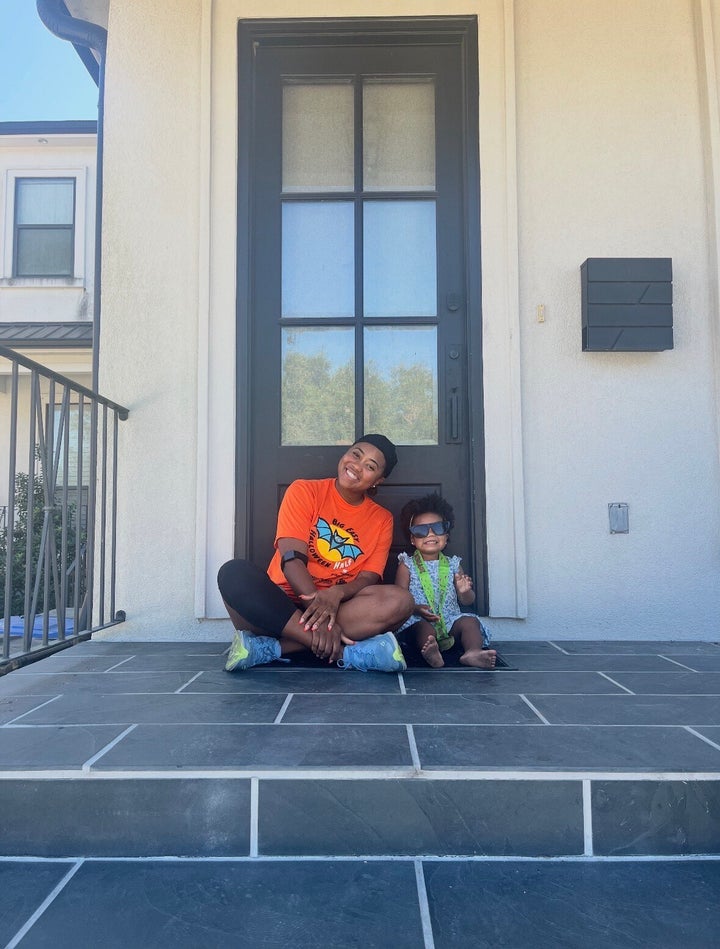
Photo Courtesy Of Julienne Louis Anderson
My grandmother warned me about this during Donald Trump’s first presidency. The rise of anti-vaxxer illnesses triggered her memories of smallpox and other endemics. She told stories about how many babies died, including some of her siblings, stories of caskets stacked one-on-top another because there was no way to save them.
“People forget,” she told me. “It’s a privilege not to worry about smallpox, to know that your children will grow up.”

That privilege is slowly disappearing.
Earlier this year, weeks before my daughter’s birthday, my home state of Louisiana rolled back key childhood vaccine support in alignment with federal mandates. Instead of scrolling Pinterest for party ideas, I was driving around searching for free vaccine fairs hosted by churches and community organizations, panicking about my toddler being exposed to a disease from which she no longer had guaranteed protection.
This is what policy decisions like the vaccine advisory committee’s vote on Friday create for families all over the country: fear, distress and desperation.
So no, my husband and I are not planning to give our daughter a sibling. Not when our government is treating children’s health like a partisan experiment. Not when flawed ideology is valued more than infant lives.
So please, stop asking when I’ll have another baby.
Julienne Louis Anderson is a toddler mom, an educator, and a Public Voices Fellow of The OpEd Project in partnership with the National Black Child Development Institute.
Do you have a compelling personal story you’d like to see published on HuffPost? Find out what we’re looking for here and send us a pitch at [email protected].