
🔴 Website 👉 https://u-s-news.com/
Telegram 👉 https://t.me/usnewscom_channel
“Your tumor is about the size of a watermelon,” my oncologist said.
I had met him just five minutes earlier. I was sitting in an ER hallway, waiting to be told when I would have surgery to remove the watermelon-sized tumor.
“The good news is, tumors this large are rarely cancerous,” he added.
Two days later, I woke up from a surgery in which my oncologist removed an eight-pound tumor and one of my ovaries. It was cancer. I lost nearly three pints of blood during the operation, along with the life I had previously known.
In 2020, I woke up one morning with the unshakable feeling that I had cancer. I had no real symptoms beyond fatigue, and who wasn’t exhausted in 2020? Still, the feeling was so persistent that I scheduled an appointment with my primary care physician. That was significant, as I used to avoid doctor’s visits. I’m a nurse, and we’re notoriously the worst patients.
The bloodwork they performed came back normal. Relieved, I dismissed my fear as paranoia. But, deep down, I still felt that something was wrong.
For years, I returned to doctors, convinced that each new symptom would finally explain what I felt. It never did, and eventually, I felt too embarrassed to keep going back to the doctor and stopped.
But then my symptoms worsened, and I could no longer ignore them. Extreme fatigue. Severe acid reflux. Pelvic and abdominal pain. Constant bloating. Irregular periods. I felt so unwell that I finally decided to see my doctor again. She took one look at me and sent me straight to the ER.
One pelvic ultrasound and abdominal CT scan later, my watermelon-sized tumor was discovered.
After the tumor was removed, an important question remained: Where had it come from? Two pathology reports and a dilation and curettage (D&C) helped doctors determine it was likely originating in my uterus. I was told it would need to be removed along with “everything else.” “Everything else” meant my fallopian tubes, cervix and remaining ovary.
At 28 years old, I underwent a total hysterectomy and bilateral salpingo-oophorectomy. I was immediately thrown into surgical menopause. The hot flashes, insomnia and depression that started immediately following the surgery were some of the worst symptoms I had experienced.
Until that point, I had been able to stay pretty optimistic. Finding the tumor had felt like progress. Treatment felt like action. Cancer, to me, felt like a temporary obstacle. Menopause felt permanent.
Accepting this part of my treatment has taken time. It was necessary to save my life, but that knowledge doesn’t erase the grief.
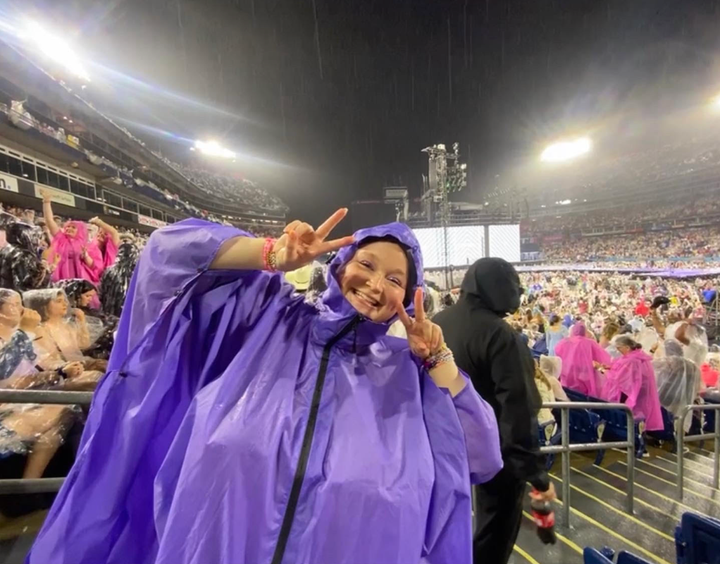
Photo Courtesy Of Casey Halterman
A few weeks later, though it felt much longer, I received my third and final pathology report. I was officially diagnosed with stage 3A endometrial adenocarcinoma, a type of uterine cancer that begins in the endometrium, or the tissue that lines the uterus. It’s the most common gynecologic cancer in the U.S. My oncologist recommended chemotherapy and pelvic radiation in addition to my two previous surgeries.
After my diagnosis, I learned that endometrial cancer most often affects women over 45, but that anyone with a uterus is at risk – as my diagnosis in my 20s could attest to. Also, the most common symptoms are irregular or postmenopausal vaginal bleeding. While I did have irregular periods, I hadn’t connected them with my other symptoms.
I wanted to begin treatment feeling informed and prepared, so I looked to social media. As I searched for support, I found many people online sharing their cancer stories. Very few, however, spoke about endometrial cancer. I wondered if it was because they felt embarrassed or even ashamed to be associated with gynecologic cancer.
Either way, I decided to share my own story with endometrial cancer.
At first, I didn’t expect anyone to watch my videos. Posting was simply a way to process what I was going through. One of my first videos was a “Get Ready With Me” (GRWM) as I prepared for my hysterectomy party.
I gathered my friends and we ate pizza, danced, sang and said goodbye to my uterus. That video really resonated with people, and the response to it encouraged me to keep sharing to spread awareness and help break some of the stigma around gynecologic cancers.
I posted videos documenting every round of chemotherapy, my unexpected symptoms, my small victories and practical tips that helped me get through treatment. Over time, an online community formed. One that supported me and each other, and ultimately carried me through some of the hardest months of my life.



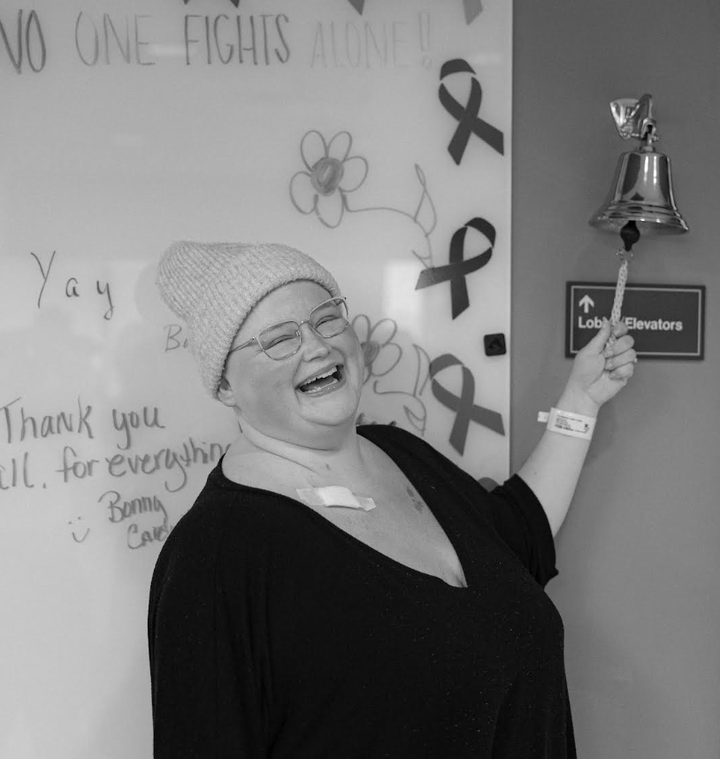
Photo Courtesy Of Casey Halterman
After five months of chemotherapy, two months of radiation, two bell ringings and countless GRWM videos, I completed treatment. My final scan showed no evidence of disease. I was done. Or so I thought.
One of the hardest lessons I learned after cancer treatment is that you are never truly finished. I often joke that while I was done with cancer, cancer wasn’t done with me.
Learning how to live after treatment has been one of the most difficult challenges of my life. I don’t have the language to describe it, only that I felt “other.” While my friends were getting married, buying homes, and having babies, my life revolved around clean CT scans and staying cancer-free.
I tried to reassemble the pieces of who I was before, but they had been surgically cut and radiated into something that no longer fit. I wasn’t the carefree woman in her 20s anymore, even though all I wanted was to feel like her again.
It has taken time to understand who I am in the “after.” I am learning to accept, and even love, this version of myself, shaped by trauma and survival. While part of me still misses who I was before, most of me doesn’t.
I believe I went through this for a reason. By sharing my story, I hope to encourage others to advocate for themselves when something doesn’t feel right. I want women to feel empowered to speak up about their symptoms, even when it’s uncomfortable or feels embarrassing. I want them to know that their health matters, and that we all deserve answers.
Endometrial cancer is most treatable when caught early, so trust yourself. If something doesn’t feel right, start the conversation with your doctor. Ask the questions. Speaking up today could mean more tomorrows. And, for anyone navigating your own cancer journey, I want you to know this: You are not alone.
Casey Halterman is a South Carolina-based nurse, endometrial cancer survivor, and paid spokesperson for GSK’s Don’t Be Embarrassed endometrial cancer awareness campaign. Learn more at DontBeEmbarrassed.com and follow Casey on Instagram and TikTok.
Do you have a compelling personal story you’d like to see published on HuffPost? Find out what we’re looking for here and send us a pitch at pitch@huffpost.com.