

🔴 Website 👉 https://u-s-news.com/
Telegram 👉 https://t.me/usnewscom_channel
While a lot of people (yes, even adults) think of vegetables as a bummer, there is a whole lot of science behind their health benefits.
They’re a good source of key nutrients like dietary fiber, vitamins, minerals and antioxidants, while being low in calories and fat. They can help reduce your risk of type 2 diabetes, heart disease and stroke, offer protection against certain cancers and help you maintain a healthy weight.
Unfortunately, the vast majority of Americans — as many as 90%, according to 2019 Centers for Disease Control and Prevention data — don’t hit the daily vegetable intake guidelines, so they’re not maximizing these benefits. For adults, the U.S. Department of Agriculture recommends between 2 to 4 cups of vegetables per day, depending on an individual’s age, sex, height, weight, activity level and pregnancy or breastfeeding status. You can use the USDA’s MyPlate calculator to determine your personal daily recommended amount.
Why Americans Struggle To Eat Enough Vegetables
Registered dietitian Stefani Sassos, nutrition and fitness director at the Good Housekeeping Institute, believes one of the main reasons comes down to a “lack of familiarity.”
“Maybe you didn’t grow up with veggies as a cornerstone of your family diet,” she told HuffPost. “People may not know how to prepare them in a way that tastes great, so they stick with foods they are more comfortable with. Many vegetables might feel like too much work to prepare or even boring if you haven’t cooked with them before.”
Cost, lack of time and access are impediments to veggie consumption for many folks. Convenience is a factor, too: Fresh produce typically requires washing, chopping or cooking, while many packaged foods do not.
As registered dietitian Dalina Soto, author of “The Latina Anti-Diet,” told HuffPost: “For busy families, parents and people juggling multiple jobs, prepping produce can feel like another task on an already packed day. It’s not that people don’t want vegetables, it’s that the systems around them make it harder than it needs to be.”
Many people also feel pressure to eat “perfectly,” said Soto. In other words, if their plate doesn’t look like some curated post you’d see on Instagram, they feel like they’re falling short. In reality, there are lots of ways to eat a balanced, veggie-rich diet.
“When people think ‘vegetables,’ they picture raw salads and steamed broccoli — foods that don’t feel connected to their culture or the way they naturally cook,” Soto added. “If veggies don’t feel satisfying or familiar, they become an afterthought.”
But eating more vegetables doesn’t have to be joyless, expensive or overly complicated. Dr. Brooke Resch, a psychiatrist with a certification in nutritional psychiatry, posted a viral video on her Cook With Dr. Brooke Instagram and TikTok accounts in November about accessible and well-liked foods we don’t necessarily think of as vegetables, but totally are. It has since been viewed upwards of 4.9 million times across the two platforms.
Knowing that these foods count toward your daily intake goal is encouraging, which may build up some positive momentum that motivates you to make more healthy choices moving forward.
To that end, we asked Resch, Sassos and Soto to share some of the foods that surprisingly “count” as veggies. Spoiler alert: You’re probably doing better than you think.
Claudia Totir via Getty Images
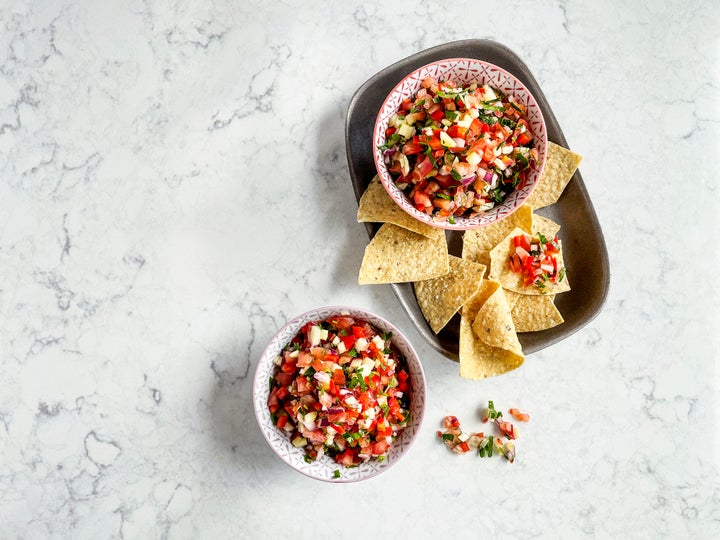
Salsa
Salsa consists of a bunch of chopped up vegetables like tomatoes, onions and peppers, as well as herbs like cilantro.
“Yes, there’s also salt, yes, there’s also seasonings. But the volume of salsa is like 99.9% vegetables,” Resch explained in her video.
“If you’re putting chicken and salsa in a Crock Pot, that’s a protein and a vegetable. If you’re putting salsa on your chips, that is a serving of vegetables,” she said. “You can count it. I certainly do.”
Similarly, the Italian appetizer bruschetta, which is typically a toasted piece of bread topped with a veggie-forward mixture of tomatoes, garlic, onion, fresh herbs and olive oil can help you meet your goals as well.
The tomato-based topping “packs in vitamins, antioxidants and fiber,” Sassos said. “Many people forget that it’s all vegetables because we often eat it on bread or crackers, but pairing it with whole-grain crostini or even on top of grilled chicken is an easy way to boost veggie intake. Tomatoes in particular are rich in lycopene, a powerful antioxidant associated with heart health.”
Pumpkin
While pumpkin is classified as a fruit in a botanical sense (much like other produce that contains seeds — think cucumbers and tomatoes), it is nutritionally and culinarily considered a vegetable.
“Pumpkin being used as a vegetable in savory applications means that it’s nutritionally going to be actually more similar to other root vegetables than, say, fruits like bananas,” Resch said in the video. “So go ahead and count the canned pumpkin as a vegetable.”
Sassos also praised pumpkin for its high fiber content and its role as a good source of beta-carotene and potassium.
“Plain pumpkin puree is perfect for smoothies, oatmeal and overnight oats, yogurt parfaits, energy bites, baked goods or even soups,” she said.
Just don’t confuse canned pumpkin puree with canned pumpkin pie filling, Sassos warned.
“The latter is loaded with added sugar. Stick with the plain stuff to get the real health benefits.”
Soto also cited pumpkin and squash — the generic Spanish term for which is “calabaza”— as being overlooked as vegetables.
“Calabaza shows up in stews, sopas and rice dishes throughout Latin America, but people rarely name it as a vegetable because it blends so well into dishes,” she said.
“Because it cooks down so softly, it’s easy to miss how much nutrition you’re actually getting from it,” Soto added.
Potatoes
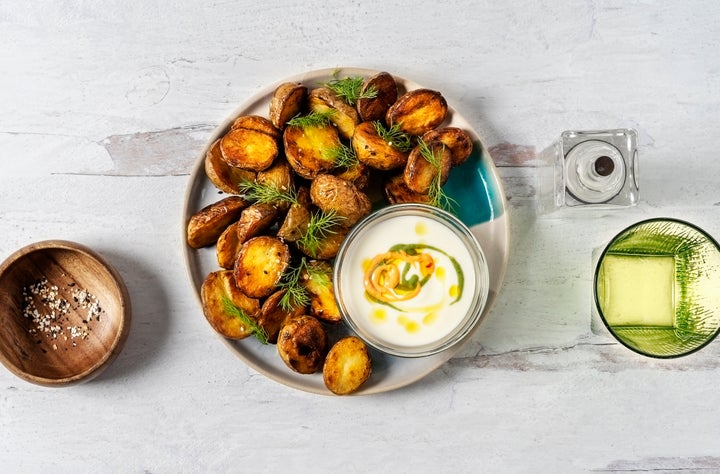
The potato is a vegetable, albeit a starchy one, that simply doesn’t get the nutritional credit it deserves. They contain tons of potassium and dietary fiber (if you eat the skin), as well as a healthy dose of vitamins C and B6 to boot.
“They are, yes, a high-carb vegetable. But they have tons of micronutrients, they have tons of fiber. They are nutritionally incredibly dense,” Resch said in her viral video.
Claudia Totir via Getty Images
Another bonus? They’re affordable, accessible and tend to be popular among adults and kids alike.
“If you are not counting potatoes as a vegetable, you are selling yourself short,” Resch added.
And just to be clear here, we’re talking about baked, roasted and boiled potatoes — not ones that have been deep-fried or turned into a bag of potato chips.
Fresh Herbs
You can also count fresh herbs like basil, cilantro and parsley as vegetables. While you may not typically eat them in large quantities, they are considered “nutritional plant powerhouses,” said Sassos, because they contain phytochemicals and antioxidants that support immune function and reduce inflammation.
“Plus, they can dramatically enhance flavor, helping you cut back on sodium, sugar or heavy sauces without sacrificing taste,” she added. “Don’t be afraid to be generous with them, a big handful can transform and boost both taste and nutrition.”
Sauerkraut
While you may associate sauerkraut with hot dogs (which are famously not a health food), it is made of fermented shredded cabbage, so it counts as a vegetable.
“It’s low in calories, high in fiber, and packed with nutrients like vitamin C,” Sassos said, noting that sauerkraut may also boast gut health benefits thanks to the fermentation process.
“You can enjoy it as a tangy side, in salads or even on sandwiches,” she added. “And there are some very unique sauerkraut brands now, like Wildbrine, which has a variety that features a blend of red cabbage, beets and pears.”

When buying sauerkraut, look for refrigerated products (as opposed to shelf-stable ones) because they are generally unpasteurized, which allows them retain their probiotic properties. But you can always double-check the label to make sure.
In the same vein, kimchi — a slightly spicy Korean side dish made of fermented cabbage and other veggies — counts toward your daily vegetable goals as well.
Unripened plantains
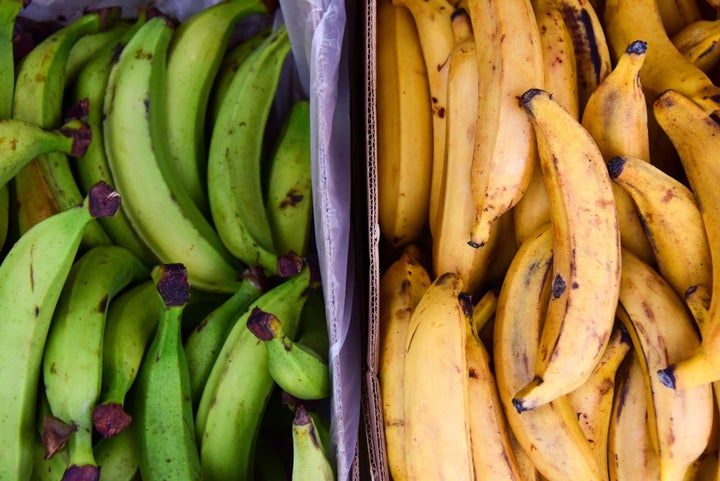
Botanically speaking, plantains are a fruit similar to a banana. But since they’re typically used like a vegetable in savory dishes, they are also considered a vegetable nutritionally, Resch told HuffPost.
Specifically, when they’re green and unripe, they fall into the starchy vegetable category, Resch said, “because their nutritional profile is more similar to potatoes than it is to fruit.”
Sergio Amiti via Getty Images
Plantains are a staple in Latin American, Caribbean, West African and some Southeast Asian cuisine.
“We boil, roast, mash, or fry them the same way we would potatoes or yuca,” Soto said. “They’re rich in fiber, potassium, and resistant starch — especially when still green — which supports steadier blood sugars and gut health. For many Latino families, plantains are a foundational vegetable.”
As plantains ripen and become sweeter, they behave more like a fruit. However, Resch said she wouldn’t “split hairs too much” because fruits offer important nutritional benefits as well.
“If you wait too long on the plantains, it’s still good in my book to be eating them and enjoying them,” she said. “But if you get in earlier in their ripening stage, then you can mentally categorize it as a starchy vegetable in your meal.”
How To Eat More Vegetables
If you’re looking to increase your veggie intake, start by tracking how much you’re already consuming, Resch said. Then set a small, attainable goal. So if you’re currently eating about one serving of veggies a day, maybe you commit to 10 servings per week to start, she suggested.
“Giving ourselves big goals that are tougher to achieve and that we struggle to reach is very demoralizing, and a lot of people give up,” Resch said. “So not overwhelming yourself with having to overhaul your diet but picking one new vegetable that you want to try, or one new recipe that you want to try … are going to be the baby steps that help get you there.”
Set yourself up for success by making vegetables as accessible and convenient as possible.
“Choose options that don’t require chopping, like baby carrots, mini cucumbers, cherry tomatoes or sugar snap peas for snacking,” Sassos said. “Pre-washed, pre-cut or frozen veggies can be nutritious options that save a lot of time.”
Another pro tip: Pair veggies with foods you already love.
“A tasty dip can be the perfect vehicle for getting more vegetables into your diet,” Sassos said. “You can easily toss them into smoothies, pasta dishes or soups as well. Even one salad a day can help you meet close to all of your veggie needs at one meal.”
You don’t have to think about vegetables “as a separate thing you force onto your plate,” said Soto. Incorporate them in ways that feel natural and fun to you instead.
“When we look at cultural foods — soups, stews, rices, enchiladas, picadillos, beans, sofrito — vegetables are already there,” she said. “Instead of thinking, ‘I need to eat more vegetables,’ I encourage people to think, ‘Where can I add flavor, color and texture?’”
She continued, “When vegetables become part of the base of how you cook, not a punishment or a chore, it’s much easier to meet your needs in a way that feels good, sustainable, and rooted in culture.”
And to keep things fresh — and nutritionally diverse — focus on eating a variety of colors and types of produce.
“Don’t be afraid to try something new each week, especially choosing what’s in season,” Sassos said. “Expanding your veggie variety keeps meals interesting and also ensures you get a mix of nutrients.”