

🔴 Website 👉 https://u-s-news.com/
Telegram 👉 https://t.me/usnewscom_channel
Let’s be honest — a visit to the dentist isn’t at the top of everyone’s list of favorite things to do, but oral health is just as important as other aspects of wellness, like your fitness routine and diet.
And while it’s tempting to do a few “quick fixes” right before your cleaning, those last-minute actions can actually irritate your gums, mask underlying issues or make your appointment less effective overall.
Below, we talked to dentists to break down the pre-appointment habits they wish you’d skip — and what to do instead for a smoother, healthier cleaning.
Eating And Drinking Certain Ingredients Right Before Your Appointment
“Eating right before a cleaning leaves behind food particles, plaque and staining pigments that make it harder for your hygienist to properly evaluate your teeth and gums,” said Andrew-Sunjun Kim, a Los Angeles-based dentist at Enzo Dentistry. “When the mouth is coated with fresh debris, it can mask early signs of inflammation, tartar buildup and even small cavities that would otherwise be easy to detect.”
The biggest culprits? Anything sticky, pigmented or odorous. Things like “coffee, tea and red wine can stain the teeth almost immediately, making it harder to assess the true shade of your enamel,” Kim said. Berries and tomato-based sauces are also a no-no, as Kim said their natural pigments cling to the enamel and tongue, leaving behind a film that’s tough to remove.
Other foods to steer clear of before a cleaning are anything sugary or starchy (they break down into acids that feed bacteria, accelerating plaque formation right before your appointment, Kim said), and acidic foods and drinks (Kim said they lower the mouth’s pH, temporarily soften enamel and make teeth more susceptible to sensitivity and erosion).
If you must eat before an appointment, try to time it at least one hour before your cleaning and do a quick rinse with water or a light brushing before the cleaning.
Whitening Your Teeth At Home
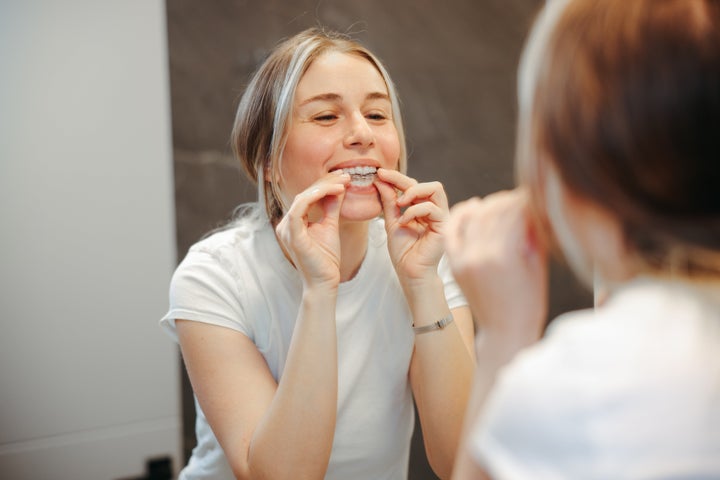
Whitening products temporarily open up the pores in your enamel. Doing this right before a cleaning can make every polish, scrape or rinse feel sharper and more uncomfortable.
ozgurcankaya via Getty Images
Dr. Ben Winters, a dentist and the founder of Something Nice, said that whitening can also cause irritation to your gum tissue, adding that the best time to whiten your teeth is two hours before you brush your teeth. “This gives your teeth at least an hour to start getting the pH of your mouth back to normal,” he said.
Flossing For The First Time In Months
While panic-flossing right before a cleaning won’t necessarily cause harm, Winters noted that it can lead to bleeding — something many people mistakenly interpret as a sign they’ve done damage.

“Flossing aggressively after months of skipping it can cause pain, irritation and bleeding,” he said, adding that this reaction is normal. The key, he emphasized, is to stick with daily flossing so your gums become healthier and less prone to irritation over time.
Like teeth whitening, shock-flossing can make the cleaning slightly more uncomfortable. Plus, it doesn’t remove the deeper plaque or tartar that’s been building between your teeth, so it doesn’t change what your dentist sees or needs to treat.
Skipping Appointments Until Pain Hits
Dental pain is a late symptom. By the time something hurts (whether it’s a cavity, infection, cracked tooth or gum disease), the issue has usually been developing for weeks or, possibly, months.
“Many patients assume that ‘if it doesn’t hurt, it isn’t serious,’ but dentistry is the opposite — most problems are silent until they become severe,” Kim said.
According to Kim, by the time pain shows up, you may be susceptible to advanced cavities, cracked teeth, gum recession, infection or abscess, significant bone loss from periodontal disease or worn-down teeth and bite issues. “These issues are more expensive, more time-consuming and more invasive to correct,” he said.
While anxiety, cost concerns or past negative experiences might tempt you to put off a cleaning, dentists stress that prevention and routine maintenance are what keep your teeth and gums truly healthy.
Also, keep in mind that preventative dentistry is more than just about having pearly white teeth — it’s about protecting your long-term health. “Oral health is deeply connected to systemic conditions like heart disease, diabetes and chronic inflammation,” said Kim. “When patients stay consistent with their visits, [they prevent] dental problems and [make] a meaningful investment in their overall well-being.”