

🔴 Website 👉 https://u-s-news.com/
Telegram 👉 https://t.me/usnewscom_channel
Tokenized stocks are gaining ground as a way for ordinary people to access investment opportunities long reserved for high net-worth individuals and other accredited investors. But while retail traders’ interest in the emerging asset class is accelerating, some experts are cautioning them to pump the breaks.
Tokenization refers to the process of creating a digital version of a real-world asset – for example, a stock, bond or real-estate deed – on a blockchain, or decentralized network. And as real-world asset tokenization booms, blockchain-based stocks have started to gain traction.
But, experts are divided on tokenized equities. The products have become popular with some as means of investing in private companies at early stages, potentially leading to outsized returns. But tokenized stocks are less regulated, and they can pose more legal and financial risks to inexperienced traders, some experts say.
“With a token, it is an instrument not issued by the company,” said James Angel, an associate professor at Georgetown University. “It’s a side bet on the future prospects of the company.”
The tokenized real-world asset market is booming. Its total value has more than quadrupled to roughly $18.2 billion over the past year, according to RWA.xyz data, with tokenized equities growing alongside the broader RWA market.
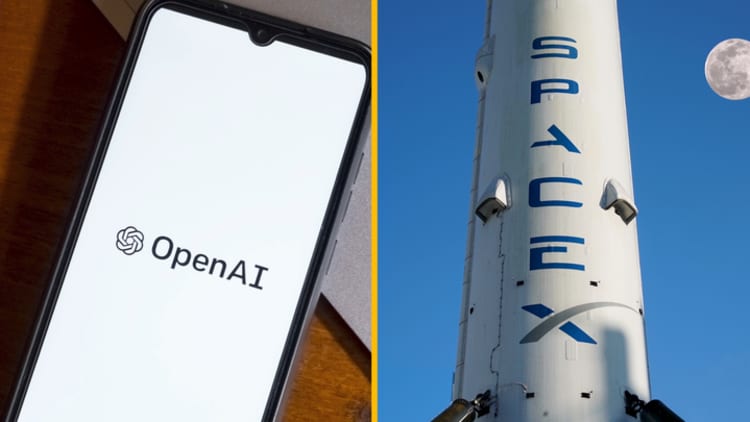
As a result, several tech companies have stepped up to meet demand for the growing asset class. Last summer, Robinhood rolled out support for more than 200 tokenized U.S. stocks like SpaceX and OpenAI to customers in the European Union. And in September, Ondo Finance launched a platform offering investors in Africa, Europe and other markets more tokenized versions of U.S. stocks and exchange-traded funds on the Ethereum blockchain. Coinbase also unveiled this year its own plans to offer tokenized stocks as part of its “everything-exchange” vision.
Tokenized stocks’ popularity has a lot to do with investors’ eagerness to access private markets, which have historically been more profitable for traders, Angel told CNBC.
“The allure of private companies is the desire to get in early on the wealth creation when a successful business is built,” Angel said. Typically, “retail investors basically get the exhaust when public companies finally do go public.”
But while demand is mounting, so too are calls for investors to exercise caution.

Tokenized stocks are not the same as traditional equities, according to Angel. Their holders do not have rights in, or dividends from, the companies their tokens represent, for example.
“If I own a share in the company, I’m a shareholder with well defined legal rights,” Angel said. “I can vote in the annual election. I can receive any dividends … [but] if I have a token in a private company, it’s not clear what legal rights I have.”
In addition, private companies that are accessible to retail investors through tokenized shares have more opaque financials than their publicly traded peers because they are not subject to the same reporting requirements. That makes it more difficult for retail investors to ascertain whether they’re making a judicious investment.
Those problems add to the fact that tokenized equities are relatively new and regulatory guidelines for the asset class remain largely undefined.
“We’re still in a place where the regulations and the government have not caught up with the innovation and tech,” Azeem Khan, co-founder of privacy-focused blockchain Miden, told CNBC.
And the tokens themselves “are for the moment rather untested,” Angel said. “Be like Warren Buffett, don’t invest in anything you don’t understand.”