

🔴 Website 👉 https://u-s-news.com/
Telegram 👉 https://t.me/usnewscom_channel
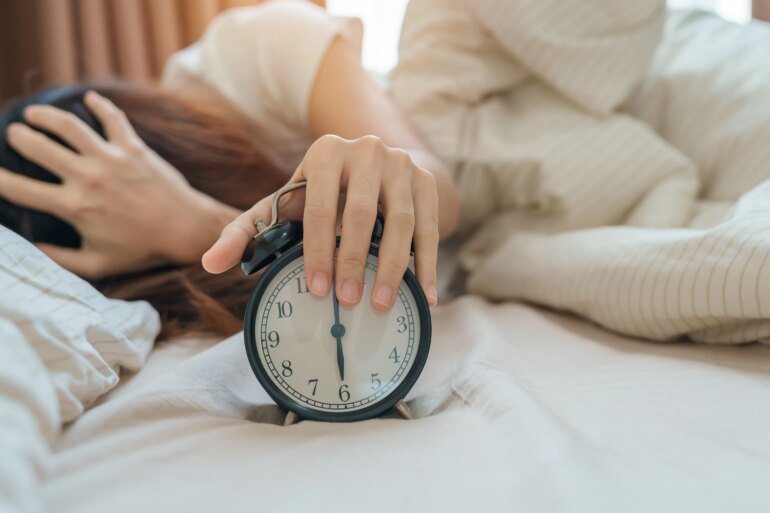
Turns out your relationship to your morning alarm doesn’t have to be so fraught — certain tunes and frequencies can even help start the day on an easier note.
A new analysis from audiovisual agency Startle reveals the best and worst options for a smooth transition into waking.
After sampling 140 smartphone alarms, the researchers found that over half of the iPhone’s default options could be wreaking havoc on your nervous system, making it harder to get out of bed in the morning.
That groggy feeling actually has a name, according to psychologist and Panda London sleep expert Ritz Birah. It’s called sleep inertia.
And it can last anywhere from a few minutes to more than an hour, depending on factors like how sleep-deprived you are, where in your sleep cycle you were when you were jolted awake and how you were woken up, including the sound of your alarm.
Biologically speaking, those aggressive, frantic, high-pitched alarm tones can literally launch the body into a state of fight or flight — the last thing you want upon waking.
“Sudden alarms can trigger a short stress response,” Birah told The Post. “Loud, jarring sounds activate the sympathetic nervous system, leading to a spike in heart rate, blood pressure and cortisol. While this reaction is brief, starting the day in that stressed state can leave people feeling groggy, irritable and mentally foggy.”
If those abrupt awakenings become a habit, the sleep inertia can get worse over time, “making it harder for the brain to fully transition into alertness.”
Conversely, a good alarm won’t try to shock you awake. Instead, it will have a melodic, rhythmic cadence that “works with the brain’s natural waking process” by gradually increasing the volume.
“Research suggests these types of alarms reduce the severity of sleep inertia compared with harsh beeping tones,” Birah explained. “When the brain is allowed to wake more gradually, people often experience clearer thinking, better mood and more stable energy in the first part of the morning.”
Based on existing scientific research, the team at Startle used the following as a baseline for the “perfect alarm”: one that “has a melody you can sing or hum along to, a dominant frequency around 500 hertz or in the key of C5 and is not too fast or too slow (100 – 120 beats per minute is ideal).”
Alarms with these melodic and rhythmic qualities “appear to engage wider cortical networks involved in attention and auditory processing, supporting a more gradual increase in arousal and better cognitive performance in the minutes after waking,” Birah explained.
Using that criteria, Startle then determined the smartphone alarm winners.
The best iPhone alarms
“Sencha” was deemed the top choice for iPhones, “thanks to its easy melody played in key C, bpm of 110 and low frequency (500 hertz).”
Other good options include “By the Seaside,” “Steps” and “Uplift,” which “all share many of the same characteristics that help the mind and body wake up gently and minimize the risk of unpleasant sleep inertia.”
The best Samsung alarms
“Synth Bell” and “Roller Disco” were winners for Samsung for similar reasons — both are in key C Major, have bpm ranging between 110 and 120 and feature relatively low frequency.
Non-iPhone option
For those who prefer not to use a phone, another good option is a sunrise alarm, which Birah says is effective because it “works more closely with the body’s circadian biology.”
“Gradually increasing light suppresses melatonin and signals to the brain that it’s time to wake, allowing the body to begin the waking process naturally,” she added.

Alarms that rely on sound alone are often more abrupt and therefore harder on the nervous system. That said, “some phone alarms and sleep-tracking features aim to wake you during lighter stages of sleep, which can also reduce grogginess and make waking feel easier,” Birah noted.
At the end of the day (or, in this case, the beginning), alarm tone and type can only do so much. There are dozens of other potential factors that can make it difficult to wake up, from genetics to mental health and sleep quality.
If getting out of bed in the morning is a daily battle, the best thing to do for your brain, in addition to swapping out your obnoxious alarm, is to prioritize a consistent waking routine.
“The brain loves patterns, and habit formation is driven by repetition and predictable cues,” Birah said.
She encourages groggy people to “anchor the morning with one small, reliable action straight after the alarm.” This can be as minor as opening the curtains to let the light in, drinking a glass of water or taking a few slow breaths while still in bed.
“These simple cues help the brain move from sleep to action more smoothly,” she said.
To truly stabilize your body’s internal clock over time, Birah says gentler alarm tones are helpful, but the real success will come with immediate light exposure and that consistent morning routine.
“The goal is not just waking up,” she said. “It’s training the brain to recognize the same pattern each morning so the transition into the day becomes easier.”