

🔴 Website 👉 https://u-s-news.com/
Telegram 👉 https://t.me/usnewscom_channel
By BERNARD CONDON and MATT O’BRIEN
Updated 3:06 PM PST, February 4, 2026
NEW YORK (AP) — Elon Musk vowed this week to upend another industry just as he did with cars and rockets — and once again he’s taking on long odds.
The world’s richest man said he wants to put as many as a million satellites into orbit to form vast, solar-powered data centers in space — a move to allow expanded use of artificial intelligence and chatbots without triggering blackouts and sending utility bills soaring.
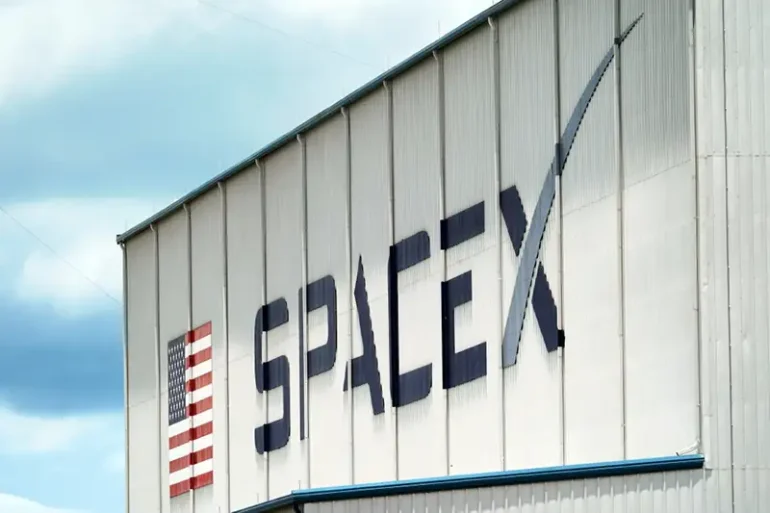
To finance that effort, Musk combined SpaceX with his AI business on Monday and plans a big initial public offering of the combined company.
“Space-based AI is obviously the only way to scale,” Musk wrote on SpaceX’s website Monday, adding about his solar ambitions, “It’s always sunny in space!”
But scientists and industry experts say even Musk — who outsmarted Detroit to turn Tesla into the world’s most valuable automaker — faces formidable technical, financial and environmental obstacles.
Here’s a look:
Feeling the heat
Capturing the sun’s energy from space to run chatbots and other AI tools would ease pressure on power grids and cut demand for sprawling computing warehouses that are consuming farms and forests and vast amounts of water to cool.
But space presents its own set of problems.
Data centers generate enormous heat. Space seems to offer a solution because it is cold. But it is also a vacuum, trapping heat inside objects in the same way that a Thermos keeps coffee hot using double walls with no air between them.
“An uncooled computer chip in space would overheat and melt much faster than one on Earth,” said Josep Jornet, a computer and electrical engineering professor at Northeastern University.
One fix is to build giant radiator panels that glow in infrared light to push the heat “out into the dark void,” says Jornet, noting that the technology has worked on a small scale, including on the International Space Station. But for Musk’s data centers, he says, it would require an array of “massive, fragile structures that have never been built before.”
Musk is undaunted.
“You can mark my words,” Musk said in a preview of a Cheeky Pint podcast episode airing Thursday. “In 36 months, but probably closer to 30 months, the most economically compelling place to put AI will be space. And then it will get ridiculously better to be in space.”
Floating debris
Then there is space junk.
A single malfunctioning satellite breaking down or losing orbit could trigger a cascade of collisions, potentially disrupting emergency communications, weather forecasting and other services.
Musk noted in a recent regulatory filing that he has had only one “low-velocity debris generating event” in seven years running Starlink, his satellite communications network. Starlink has operated about 10,000 satellites — but that’s a fraction of the million or so he now plans to put in space.
“We could reach a tipping point where the chance of collision is going to be too great,” said University at Buffalo’s John Crassidis, a former NASA engineer. “And these objects are going fast — 17,500 miles per hour. There could be very violent collisions.”
No repair crews
Even without collisions, satellites fail, chips degrade, parts break.
Special GPU graphics chips used by AI companies, for instance, can become damaged and need to be replaced.
“On Earth, what you would do is send someone down to the data center,” said Baiju Bhatt, CEO of Aetherflux, a space-based solar energy company. “You replace the server, you replace the GPU, you’d do some surgery on that thing and you’d slide it back in.”
But no such repair crew exists in orbit, and those GPUs in space could get damaged due to their exposure to high-energy particles from the sun.
Bhatt says one workaround is to overprovision the satellite with extra chips to replace the ones that fail. But that’s an expensive proposition given they are likely to cost tens of thousands of dollars each, and current Starlink satellites only have a lifespan of about five years.
Competition — and leverage
Musk is not alone trying to solve these problems.
A company in Redmond, Washington, called Starcloud, launched a satellite in November carrying a single Nvidia-made AI computer chip to test out how it would fare in space. Google is exploring orbital data centers in a venture it calls Project Suncatcher. And Jeff Bezos’ Blue Origin announced plans in January for a constellation of more than 5,000 satellites to start launching late next year, though its focus has been more on communications than AI.

Still, Musk has an edge: He’s got rockets.
Starcloud had to use one of his Falcon rockets to put its chip in space last year. Aetherflux plans to send a set of chips it calls a Galactic Brain to space on a SpaceX rocket later this year. And Google may also need to turn to Musk to get its first two planned prototype satellites off the ground by early next year.
Pierre Lionnet, a research director at the trade association Eurospace, says Musk routinely charges rivals far more than he charges himself —- as much as $20,000 per kilo of payload versus $2,000 internally.
He said Musk’s announcements this week signal that he plans to use that advantage to win this new space race.
“When he says we are going to put these data centers in space, it’s a way of telling the others we will keep these low launch costs for myself,” said Lionnet. “It’s a kind of powerplay.”
BERNARD CONDON
Condon is an Associated Press investigative reporter covering breaking news. He has written about the Maui fire, the Afghanistan withdrawal, gun laws, Chinese loans in Africa and Trump’s business.
MATT O’BRIEN
O’Brien covers the business of technology and artificial intelligence for The Associated Press.
What do YOU think? Click here to jump to the comments!
Sponsored Content Below