

🔴 Website 👉 https://u-s-news.com/
Telegram 👉 https://t.me/usnewscom_channel
I’ve been a PC gamer for over 30 years, and during that time, Microsoft’s operating systems (first MS-DOS, then various shades of Windows) have essentially been the default choice when building or buying a PC for gaming. Because of Windows’ ‘popularity’ on PC, compared to alternatives like Linux, any game developer that wanted to get as big an audience as possible would prioritize Windows as a platform. This had a snowball effect, which meant that if you wanted the largest library of games to play, you needed to have Windows installed.
This state of affairs continued for years, but a problem was brewing. The reason why I used quotation marks when talking about Window’s ‘popularity’ (see, I did it again), is because, despite it being the most widely-used operating system, no one really loves, or even likes, Windows. If someone claims they do, they either work for Microsoft or are a monster (maybe even both), and your safest option is to run away. If they specifically claim to love Windows 8, then I’m sorry: it’s already too late.
This complacency either meant, in the best case scenarios, that Microsoft seemed to forget about PC gaming altogether, leaving us with a bloated operating system that at least allowed us to play games with minimal interruptions and crashes, or in the worst cases, Microsoft used its position as market leader to bring in annoying, sometimes anti-consumer, features that no gamer ever asked for (those of us who remember the horrors of Games for Windows – Live can attest to that).
Some of us worried that this could continue for the foreseeable future, but it seems like, at last, the tide is turning, and while that could be bad news for Microsoft, it’ll be great news for PC gamers.
Microsoft, you blew it
Microsoft’s dominance in PC gaming was taken for granted by the company itself, but its rivals were certainly taking notes. The launch of Microsoft’s games console, Xbox, in 2002, didn’t help. While Microsoft was playing with its new shiny toy and trying to beat Sony and Nintendo (how did that go?) in the war for the living room, it seemed to forget about PC gaming for a while.
Valve, the devs behind Half-Life, didn’t, though, and in 2003 it launched Steam, a piece of software that started as a way to automatically update games and quickly turned into a storefront for third-party games.
At this point, it seems Microsoft didn’t take the threat of Steam seriously – after all, you still needed Windows to run games you bought on Steam, and Microsoft didn’t have a rival store.
To be fair to Microsoft, I remember not being too happy when I bought Half-Life 2 in 2004 and found that I needed to install Steam to play the game, and dismissed it as a gimmicky bit of enforced software that wouldn’t last long.
We were, of course, wrong to underestimate Valve and Steam. By 2013, Steam was responsible for about 75% of PC game sales, and its software was ported to Linux and macOS, and later Android and iOS as well.
In 2019, Microsoft started selling its games on Steam. As far as I can tell, there’s no way to buy any of Valve’s games on the Microsoft Store.
By the time Microsoft realized it needed to compete, it was too late. In 2007, it announced Games for Windows – Live (a terrible name, which isn’t rare for Microsoft), which brought console-like features such as friends lists and other social features that Steam had offered for a while.
Having put online multiplayer behind a paywall for its Xbox consoles (something I maintain is one of Microsoft’s biggest crimes against gamers), the company tried to do the same with Games for Windows – Live, with multiplayer only being available to people with an Xbox LIVE Gold subscription.
To say that this move proved unpopular would be an understatement, and just a year later, Microsoft dropped that requirement. That year, Microsoft claimed the changes would “improve Windows gaming,” but the damage was done. Along with a terrible user interface, unreliable software, and stringent rules on what games could be bought and played on Games for Windows – Live (plus that name), the service was widely derided, while Steam went from strength to strength.
By the time Microsoft attempted to sell games again via the Windows Store (now named Microsoft Store), Steam had become unstoppable. In 2019, Microsoft started selling its games on Steam. As far as I can tell, there’s no way to buy any of Valve’s games on the Microsoft Store. I’d chalk that up as a win for Valve.
Full Steam ahead
If Valve had limited its ambitions for Steam to simply be a leading place to buy PC games, that would have given Microsoft a black eye, but nothing fatal. Unfortunately for Microsoft, Valve had much bigger plans, and unlike Microsoft, it doesn’t seem to be too complacent about its position.
So, numerous Steam products and services have been released, and while not all of them have been successful (the less said about the original Steam Boxes, the better), three in particular are proving serious threats to Microsoft’s vice-like grip on PC gaming.
The first is SteamOS, a Linux-based operating system that launched in 2014. This operating system was designed as a gaming-centric OS that would allow gamers to launch and play games with console-like simplicity, and without the performance-sapping overheads that the increasingly bloated Windows OS suffers from.
SteamOS on its own would likely have just been yet another failed attempt to win over PC gamers from Windows if it weren’t for Proton, the next major blow against Microsoft.
Proton is a compatibility layer that allows Windows games to run in Linux (and, therefore, SteamOS), with minimal impact on gaming performance. With a stroke, this took away one of Windows’ biggest advantages, as you didn’t have to install Windows to play your games, and you didn’t need to wait for a Linux version of the game to be released (which would rarely happen due to the tiny market share of Linux for gamers).
The main reason PC gamers, including me, argue that we need to install Windows is to play our games. Thanks to Proton, this was no longer the case.
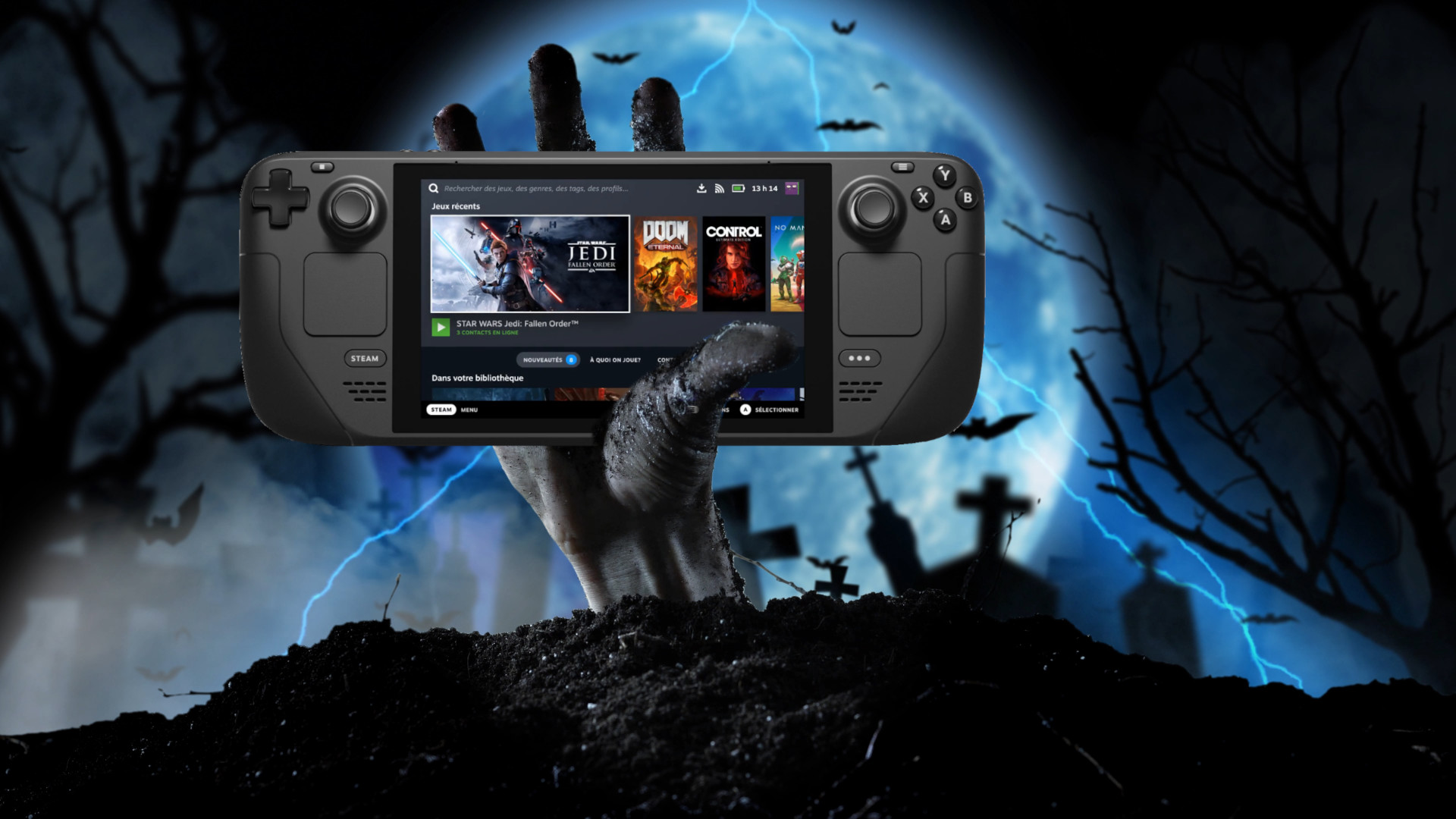
Finally, Valve released the Steam Deck, a SteamOS-powered gaming handheld that combined all those previous successes and served as a perfect demonstration of playing games on SteamOS rather than Windows. An increasing number of games became compatible with Proton, and the console-like experience was ideal for the Steam Deck’s small touchscreen.
Since then, plenty of Windows 11-powered, gaming handhelds have also been released (I’ve reviewed a few of them myself), and while they do a lot of things better than the Steam Deck, they have also highlighted just how unsuitable Windows 11 is for these kinds of devices.
Annoying pop-ups, strange design decisions, and a mix of modern touch-friendly interfaces nestled among legacy apps and menus that haven’t been changed for decades are annoying enough on a Windows 11 PC or laptop, but on a gaming handheld, they are unbearable.
I love my ROG Ally X, but Windows 11 continues to be a terrible experience, with pop-up messages appearing that minimize the game I’m playing, generally leading to death, and which display text that’s almost impossible to read on a small screen, being maybe the worst.
The one bright spot is that this seems to have finally shaken Microsoft out of its slumber.

Perhaps spurred on by the fact that its Xbox consoles have failed to compete with Sony and Nintendo’s offerings, Microsoft has remembered that PC gamers matter, and in an article titled ‘Windows PC gaming in 2025: Handheld innovation, Arm progress and DirectX advances’ (another great example of Microsoft naming), Ian LeGrow, Partner Director, Intelligent Edge Operating Systems at the company, highlights some of the improvements the company made this year, while looking ahead to what 2026 will bring for improving gaming on Windows. Sounds a bit 2008, doesn’t it? Sadly, I also think this again will be too little, too late.
Tinkering at the edges
Sure, some of the improvements LeGrow identifies are welcome (he mentions Advanced Shader Delivery (ASD) and system-level performance in particular), but they often feel like plastering holes to fix Windows 11’s inadequacies.
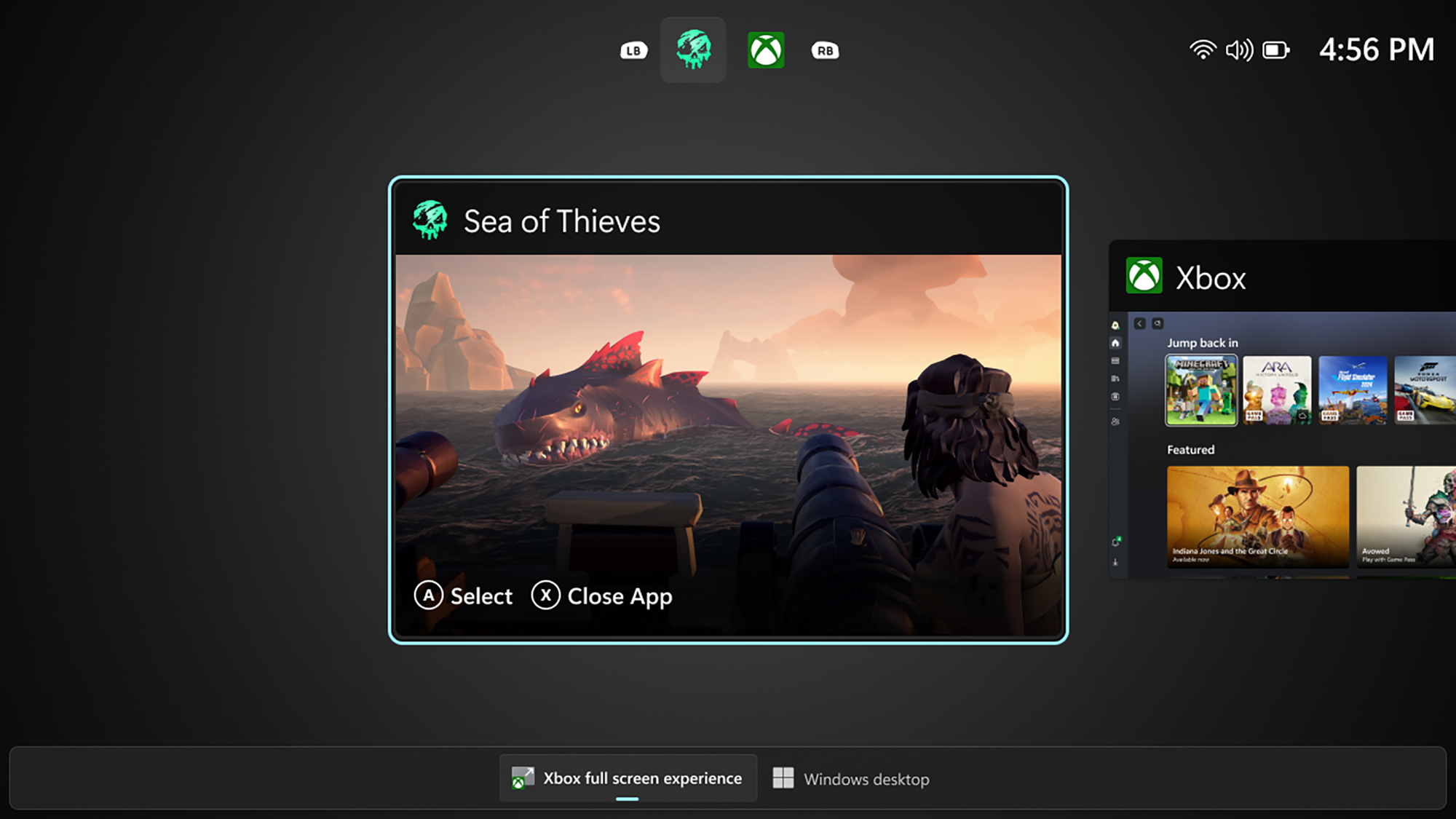
The Xbox full-screen experience (FSE) is a case in point. This is a brand-new interface that is supposed to give a console-like experience and a much more touch-friendly menu, while also preventing Windows 11 from getting in the way of your games.
The problem is that rather than being a brand-new operating system dedicated to gaming, it just sits on top of Windows 11. During my ROG Ally X review, I found that while it is an improvement in some aspects, it simply doesn’t go far enough, and in some cases, just makes things more complicated.
These are early days, and I hope the FSE gets improved, but I do get flashbacks to Games for Windows – Live, I’m afraid.
LeGrow claims that “The enhancements and improvements we introduced this year are shaping the future of gaming,” but to me, it feels like Microsoft is playing catch-up.
Looking ahead to 2026, LeGrow highlights some upcoming changes. The Xbox full-screen experience (FSE) is coming to more devices, and if you sign up for early access, you’ll be able to run it on desktops, laptops, 2-in-1s, and other Windows 11 gaming handhelds.
This move will only be worthwhile if Microsoft continues to improve the FSE, and as it’s no longer tied to a single set of products, that at least is a bit more realistic.
Advanced Shader Delivery (ASD) is being expanded. This preloads game shaders during download, so you can launch some games more quickly, and support for ASD is coming to more games. Again, welcome, but hardly something that will get your pulse racing.
More interesting is Auto SR, an OS-level upscaling feature that uses AI to upscale games to higher resolutions, much like Nvidia’s DLSS, AMD’s FSR, and Intel’s XeSS. I’ve found these features, especially DLSS, make a huge impact on improving gaming performance, and it’ll be interesting to see what Microsoft does here – though, it’s also worth pointing out that this is once again an area where Microsoft seems to be playing catch-up.
Meanwhile, Valve looks set to try to win even more PC gamers away from Windows 11 with the announcement of a new generation of Steam Machines that are powered by SteamOS.
The problem for Microsoft is that not only is Valve making SteamOS more attractive for gamers, but Microsoft is making Windows 11 less attractive. We are continuing to get Windows 11 updates that appear to break more things than they fix, for a start. Only this weekend, I wanted to play a game, only for Windows 11 to crash numerous times, something that I hadn’t experienced for a while.
And, while Microsoft seems to be losing interest in the Xbox, it’s now being distracted by a newer, shinier thing: AI. Rather than fixing fundamental issues with Windows 11, and I’m not just talking about gaming-centric issues here, Microsoft is cramming unwanted AI features into the operating system.
So, I’m afraid that when Microsoft says that 2026 will be the year it improves PC gaming on Windows 11, I’m not going to believe it until I see it.
The best graphics cards for all budgets
Follow TechRadar on Google News and add us as a preferred source to get our expert news, reviews, and opinion in your feeds. Make sure to click the Follow button!
And of course you can also follow TechRadar on TikTok for news, reviews, unboxings in video form, and get regular updates from us on WhatsApp too.