
🔴 Website 👉 https://u-s-news.com/
Telegram 👉 https://t.me/usnewscom_channel
I have a confession to make: I haven’t played the first Pathologic. Actually, I have another confession: I have played it, but gave up after a few hours at most, but since it was about a decade ago, I can barely recall any of it, so don’t feel it counts. To play and quit on a game somehow feels worse than not having played it at all, especially when it’s a much-loved cult classic.
I feel I should share my lack of experience with the original, given the fever with which its fans cling to it, with a smugness of having played an obscure game that’s a secret masterpiece only the gaming literati know about. Not that I’m criticizing this attitude: judging by everything I’ve read and seen, I wish I had the fortitude to stick with it.
Thankfully, as I understand it, Pathologic 3 is a quasi-remake of the original, and I have played that. It’s an experience quite unlike anything else, another platitude wheeled out by the evangelists. More importantly, though, it’s a decidedly messy, human-made affair that could be exactly the kind of game the industry needs right now, given the specter of Generative AI slop looms large on the horizon.
First steppes
You play as Doctor Daniil Dankovsky, mainly known as Bachelor throughout, on the hunt for a supposedly immortal man in an eastern steppe town, in the hopes of learning his secret. But before he gets a chance to meet him, a plague breaks out, and Bachelor is trapped in a lockdown. The only way out is to find a cure and save the town — all within 12 days.
But our hero is seemingly thwarted at every turn from the very beginning, with his vital medical equipment stolen as soon as he arrives. Things only get worse from here, as the situation escalates quickly and he’s met with cryptic answers at best and hostile reactions at worst from the townsfolk.
The outright mechanics of the game are nothing spectacular: you’ll trudge along in first-person, talk to non-player characters (NPCs) via dialogue options, and fight monsters and deadly miasmas with a prototype weapon and some matches to light warding bonfires. So far, so AI-replicable. But beneath the surface, there’s so much more to Pathologic 3.
Back to the future… and back again
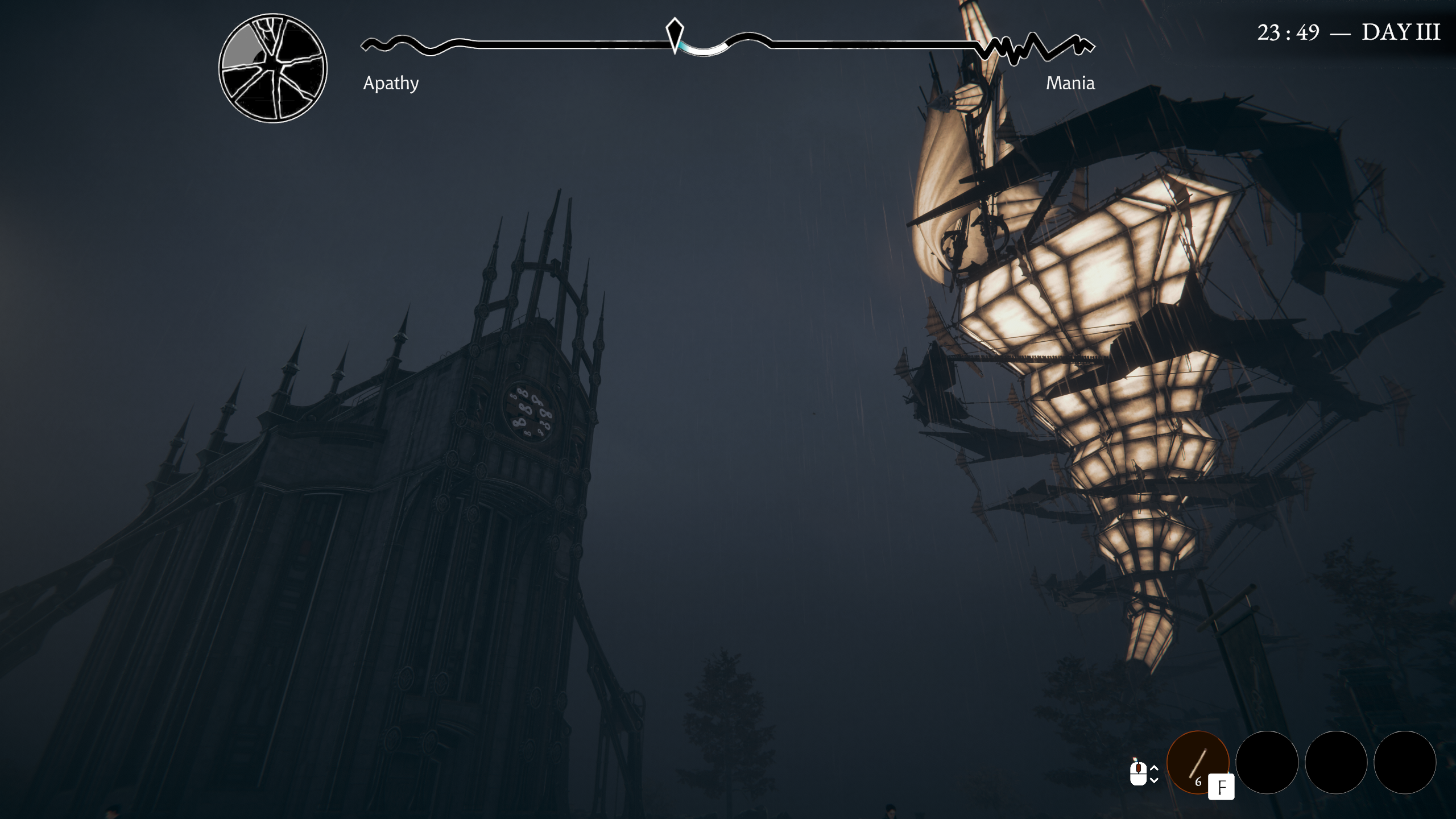

For one thing, there’s the apathy/mania bar to contend with. This acts as a kind of survival mechanic, requiring you to balance these dangerous mental states to stay sane and alive. However, striking the perfect balance between the two isn’t always desirable, given that mania can increase movement speed considerably; always useful to avoid threads, but at the cost of depleting health.
The time-jumping narrative of Pathologic 3 is perhaps the starkest illustration of its craft, though. You start out lost in the chaos, unable to understand much of anything going on, and there’s seemingly very little you can affect. This is when my Bachelor felt the most apathetic — a truly frustrating state to be in, given how much it slows your movement.
Inevitably, you fail, but then you’re given a chance to relive previous days to fix your mistakes, with the new insights gleaned from your past exploits. Suddenly, the pace of the narrative ramps up. You no longer wander the town in utter bafflement with no real leads to follow. With this reinvigoration comes shifts in gameplay, and you find yourself playing a melange of genres.
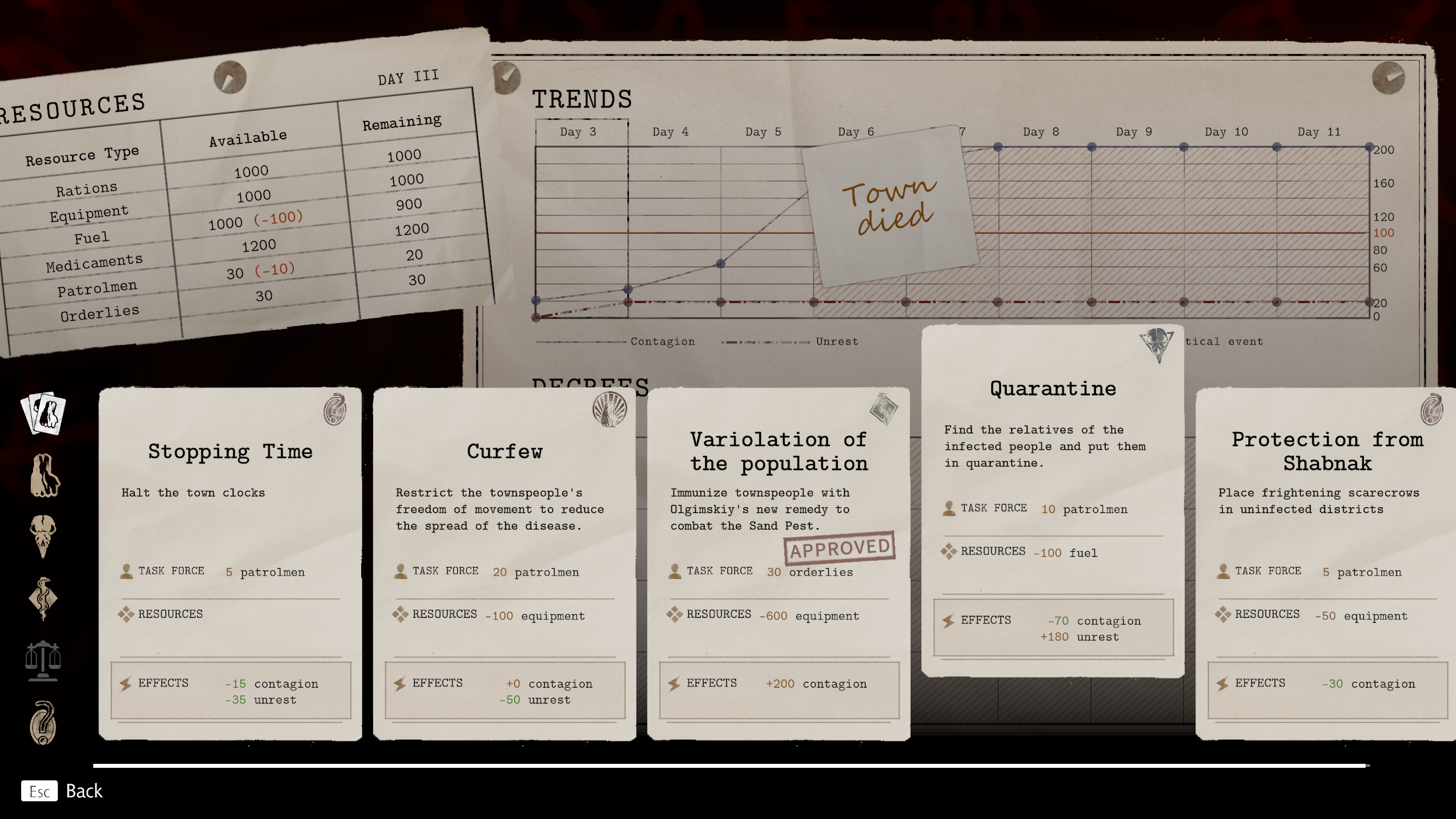
One moment, you become a full-on medical detective, examining bodies and making formal diagnoses; the next, you’re in a management sim, as you work to tight schedules and issue various decrees to combat the pandemic. How the game swings masterfully between these modes is a real feat.
You also feel that as the player more of a grip on the situation, even as the town is overcome with panic and rioting in some cases, as you race to contain the spread. Although, at the back of your mind, you know that things could easily spiral out of control at any moment. With the town’s capricious nature and the unexpected time-jumps, Pathologic 3 constantly keeps you on your toes, and there’s no way to predict what might happen next.
Real and unreal
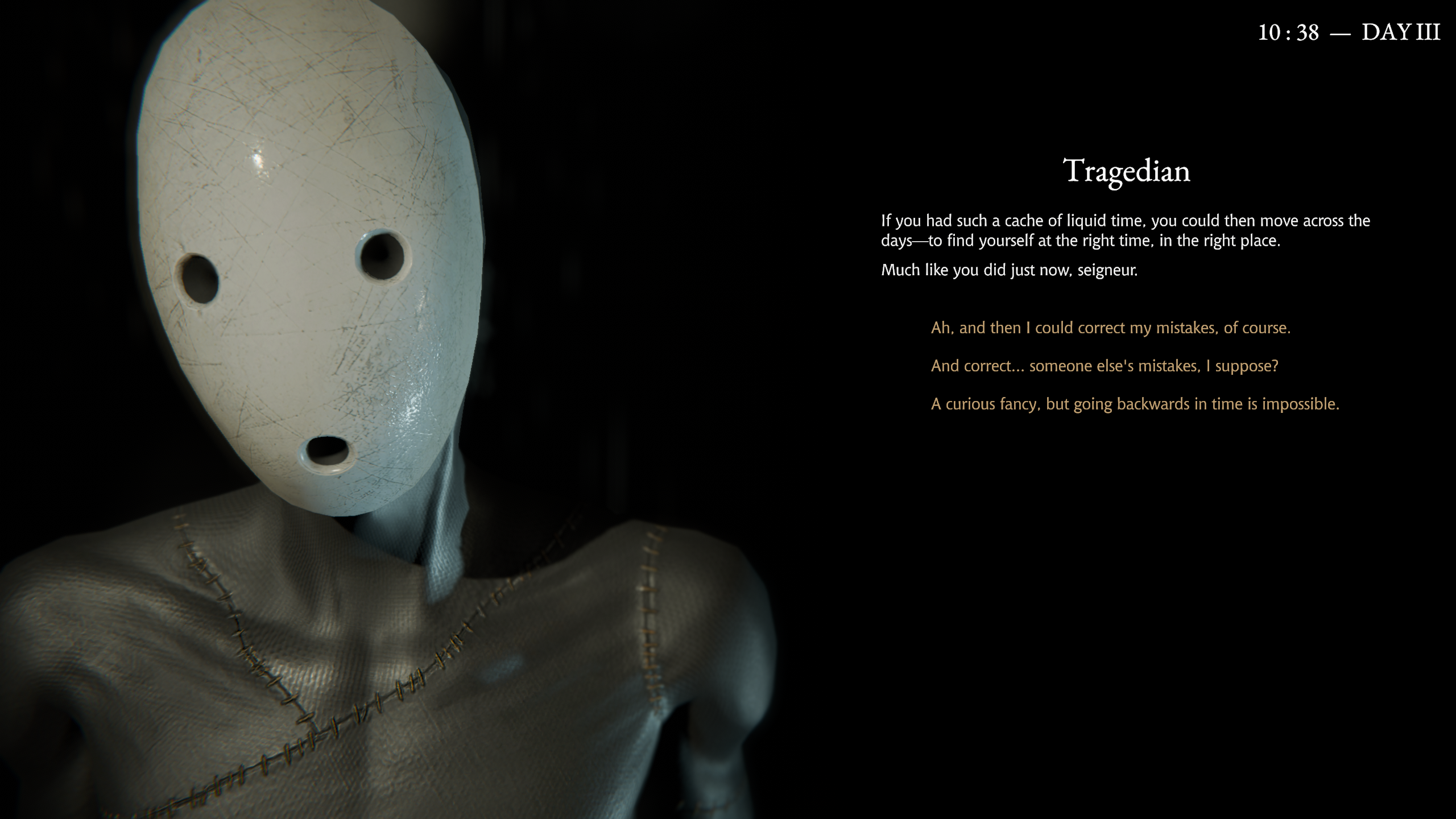
Then there’s the writing of Pathologic 3. In a story that deals with heavyweight aspects of the human condition, it’s no surprise that character dialogue can easily spill over from the profound to the pretentious. But the great thing is that when it does, there’s nearly always a chance for Bachelor to prick their pomposity. This is even possible outside of dialogue: I particularly enjoyed Bachelor labeling a point in his internal mindmap (which acts as the game’s progress tracker) as a ‘bunch of nonsense’, in reference to a particularly esoteric and unhelpful interlocutor.
For the most part, though, the writing helps to paint a convincing portrait of a town that isn’t governed by the same rationale and logic Bachelor (and, in turn, the player) is used to. Their understanding of time, death, and the nature of reality is fundamentally different. As I progressed, I was sure I could detect a change in the tone of Bachelor’s dialogue options.
As a straight-ahead man of science, most of his options express frustration at the less-than-concrete answers to his questions. But as he begins to realize this approach fails to elicit helpful information from many characters, the choices become more tolerant, open to the prospect that this town simply operates on a different plane.
Despite the otherworldly nature of the town, the writing in Pathologic 3 also helps to make its situation believable. It does a tremendous job detailing the panic and terror of an outbreak, depicting the full spectrum of behaviors you might expect of real-life citizens beset by plague, from fear and desperation to foolhardy acts and violence. I’m sure we all recognize these from a certain recent pandemic.


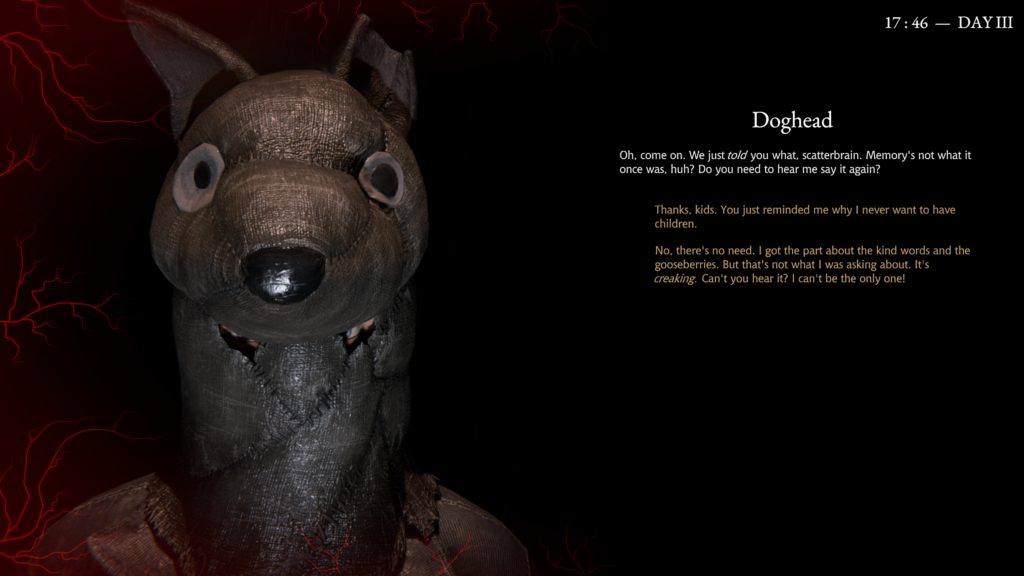
Conversations also reveal complex inter-family dynamics and societal politics. Various power struggles are at play, with competing philosophies and pseudo-religious beliefs coming head-to-head, as the elite attempt to control the town’s fate. Naturally, as you’re caught up in these situations, the game gives you some degree of freedom in dealing with them, letting you play the diplomat or pour fuel on the fire.
The art direction of Pathologic 3 also does plenty of heavy lifting. Like the best horror games, Pathologic 3 produces plenty of stark images and moments that’ll live long in the memory. These range from the moving to the absurd. From masked theatrical performers hugging clocks, to women in pagan garb dancing around cows with homunculi in tow; from a stage appearing out of nowhere depicting an apparent flashback in real time, to a cathedral housing a giant clock with raindrops cascading through the middle.
The AI antidote?
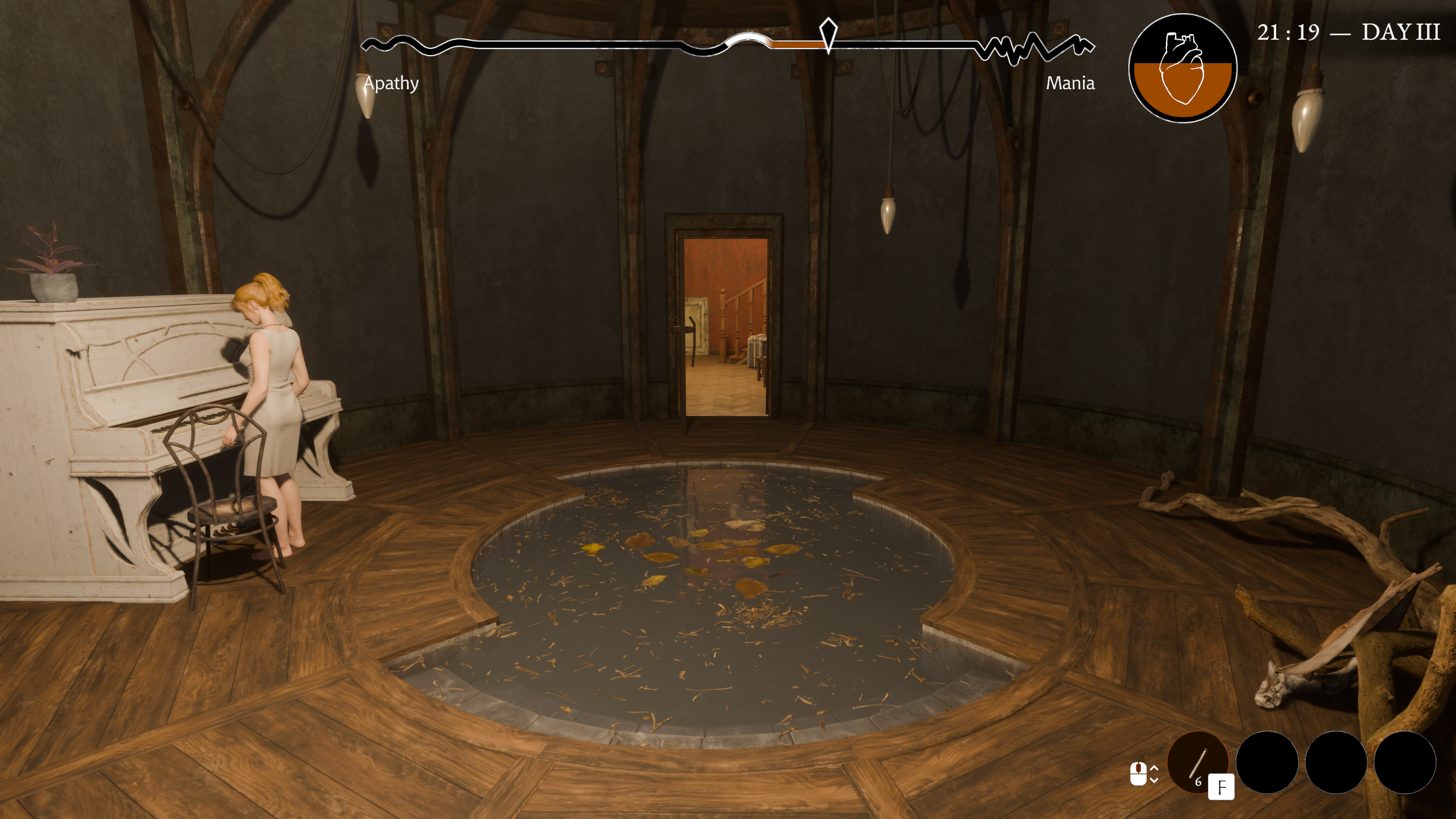
For all its greatness, though, Pathologic 3 isn’t perfect. As much as I admire its wilful obscurity for the most part, I’d prefer some clarity in certain areas. For instance, there’s no option to revisit tutorial hints, so if you haven’t taken in some key information about the game’s mechanics, you’re on your own. Time-jumping isn’t sufficiently explained, either.
As many have noted, it’s also punishing at times. The mania/apathy meter can swing wildly and catch you off-guard, and having to deal with the extreme sides of either state without restorative items — which are few and far between — can easily make you quit — almost for good. I have enough trouble keeping this balance in my own life, let alone trying to do so virtually.
But at its heart, Pathologic 3 is a singular experience that simply couldn’t have been made by another developer other than Ice-Pick Lodge, let alone by a non-human entity. I struggle to imagine any AI model, no matter how ridiculously large its data set is, being able to conjure anything but a diluted version of a game like this.
With companies from Level-5 to Remedy and Take-Two Interactive open to the idea of using Generative AI in game development, Pathologic 3 reminds us that a bunch of humans with their creativity dialled up to 11 can make a truly unique and unforgettable gem that will stay with players longer after they’ve put down their controller.
Pathologic 3 feels like an antidote to the plague of AI slop the games industry might soon suffer from. Playing it makes you feel like the real-world Bachelor: fighting the good fight to stop the spread of some malicious infection. If we get more games like this, perhaps we can stop the AI contagion in its tracks. Until then, I’ll just have to keep an eye on my undulating apathy and mania.

The best horror games for scares, frights, and screams
Follow TechRadar on Google News and add us as a preferred source to get our expert news, reviews, and opinion in your feeds. Make sure to click the Follow button!
And of course, you can also follow TechRadar on YouTube and TikTok for news, reviews, unboxings in video form, and get regular updates from us on WhatsApp too.