
🔴 Website 👉 https://u-s-news.com/
Telegram 👉 https://t.me/usnewscom_channel
Getting your audio player ready…
Sumerian craftspeople in Mesopotamia didn’t simply scoop up natural bitumen and slap it on boats or bricks. A new materials study suggests they followed repeatable “recipes” that controlled strength, flexibility, and waterproofing in ways that look surprisingly familiar to modern asphalt engineering.
The research focuses on Abu Tbeirah in southern Iraq and shows that additives such as plant fibers and mineral inclusions were not random contamination, but part of deliberate composite design. That finding helps explain how Sumer’s cities and trade networks functioned in a landscape of marshes, waterways, and mudbrick architecture.
A study that reads bitumen like an engineer
The underlying substance is Sumerian bitumen: a naturally occurring petroleum material (often called an asphalt-like “black goo”) long associated with waterproofing and adhesion, and even with far-reaching trade. Readers may already know how bitumen shows up in unexpected places, from Mesopotamian rivercraft to later “bitumen trade networks.”
To move beyond chemistry alone, the team examined 59 archaeological bitumen composites using digital microscopy and automated image processing. They focused on mesostructured – pores, plant fibers, and mineral fragments – because these features can preserve how a material was mixed, heated, and reworked.
Importantly, Abu Tbeirah sits in Iraq’s Dhi Qar region, near major Sumerian centers such as Ur, where bitumen-based products would have been crucial for building and transport in a wet floodplain environment.
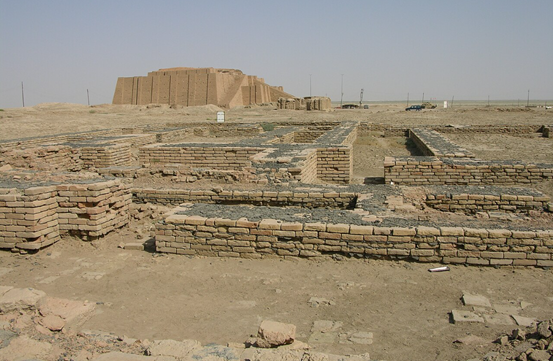

Ruins in the Town of Ur, Southern Iraq. (M.Lubinski/CC BY-SA 2.0)
Four “recipes” for glue, sealant, and trade blocks
By clustering the microscopic features, the researchers identified distinct formulations tied to different functions. Some composites were fiber-rich, others mineral-heavy, and each mix changed how the bitumen behaved under stress, heat, and repeated use, according to the study writers.
One clear case is adhesive material used to haft tools, where added vegetal matter could make the compound tougher and less prone to cracking. Another set of samples came from standardized ingot-like blocks, which were consistent enough to suggest planned production, possibly a semi-finished “stock” that could be reheated and adjusted later reports Arkeonews.
The study also hints at a practical recycling economy: bitumen composites appear to have been reheated and reused, but repeated heating could make them too hard and brittle. That limitation would have forced craftspeople to tweak recipes with fresh fillers or fibers, turning “waste” into usable material again.
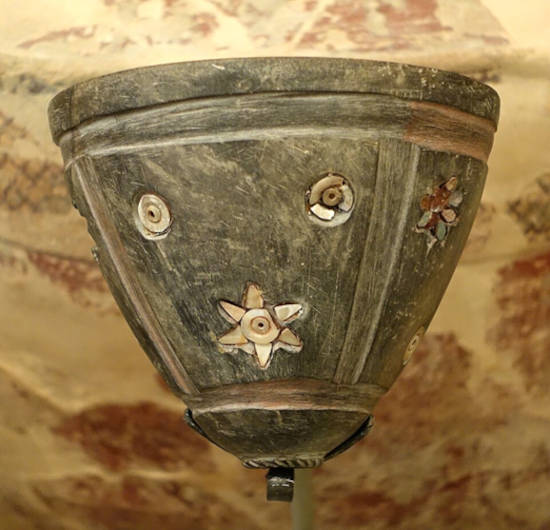

Bitumen wasn’t only for waterproofing, it also helped fix decorative inlays in elite objects and artworks. (Daderot / CC0)
Why Mesopotamia had the “black gold” advantage
Bitumen was abundant in parts of Mesopotamia thanks to natural seepages along the Tigris and Euphrates. A well-known historical account notes that the springs around Hit (on the Euphrates) were so famous that “Id” (Hit) became tied to the very idea of bitumen in Akkadian usage.
That geological advantage mattered because Sumer was short on timber and building stone, making engineered mudbrick and water management essential. Bitumen helped solve a basic problem: keeping reed boats, brickwork, and floodplain infrastructure from falling apart in wet conditions.
When you view Sumerian bitumen as a designed composite rather than a simple sealant, it becomes easier to see how technical know-how traveled with goods and people.


What this changes about Sumerian technology
The headline here isn’t that Sumerians used bitumen, this has been known for a long time, from boats to mosaics to mortar. The more interesting shift is the evidence for standardized Sumerian bitumen formulations: repeatable mixtures that were tuned for specific tasks, and likely shared across craft traditions and generations.
It also suggests that “Sumerian bitumen” should be discussed the way we talk about engineered materials today. In other words, it wasn’t just a raw resource, but a managed technology, one that helped hold together the world’s earliest cities.
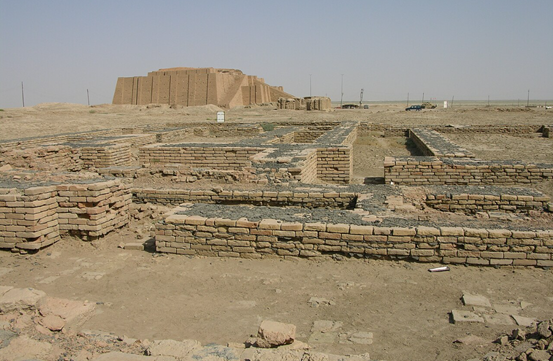
Top image: The Ziggurat of Ur in southern Iraq, a landscape where waterproof building materials mattered. Source: Amjedha95/CC BY-SA 4.0
By Gary Manners
References
Bilkadi, Z. 1984. Bitumen – A History. Available at: https://archive.aramcoworld.com/issue/198406/bitumen.-.a.history.htm
Caruso, V. 2026. Decoding Sumerian craft technologies: morphological image processing and mesoscopic feature analysis of archaeological bitumen-based composites. Available at: https://www.sciencedirect.com/science/article/abs/pii/S2352409X26000428?via%3Dihub
Altuntaş, L. 2026. How Sumerians in Mesopotamia Perfected Asphalt-Like Materials 4,000 Years Ago. Available at: https://arkeonews.net/how-sumerians-in-mesopotamia-perfected-asphalt-like-materials-4000-years-ago/