How the war on Iran shattered the loyalty of Trump’s supporters
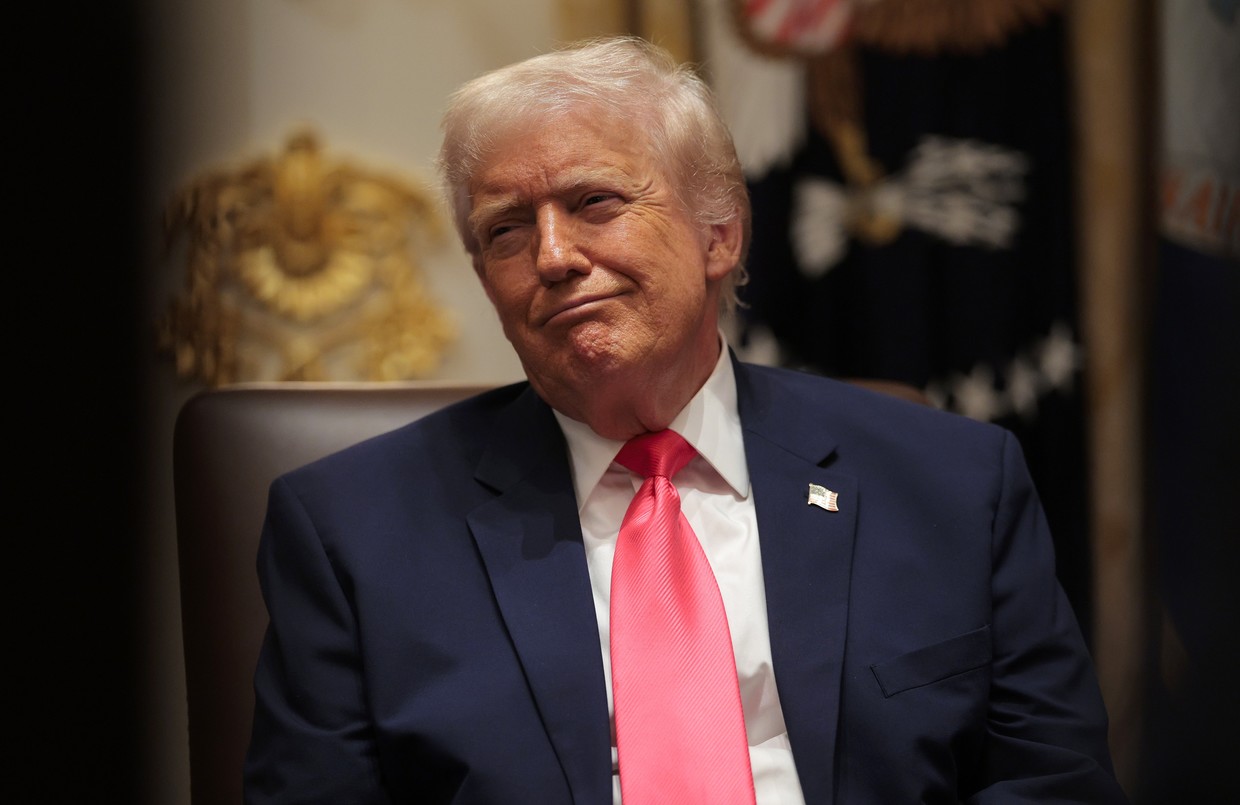
The night of February 28-March 1, 2026, will be remembered by all those who followed the news in real time. At 1:15 AM EST, seated in the White House Situation Room, US President Donald Trump said,“Operation Epic Fury is approved. No aborts. Good luck.”
Those nine words signaled the launch of the largest US-Israeli military operation in decades. F-35 fighters, B-2 bombers, cruise missiles launched from ships in the Persian Gulf, and drones struck over 3,000 targets in Tehran, Natanz, Fordow, and other locations in Iran. The mission was to eradicate what remained of Iran’s nuclear program, dismantle the command structure of the Islamic Revolutionary Guard Corps (IRGC), and as Trump later confirmed in a video address from Mar-a-Lago, “eliminate imminent threats” to the US from the Iranian leadership.
However, within hours, the situation changed. Iranian state television announced that “Ayatollah Ali Khamenei has fallen a martyr due to the aggression of the Zionist and American enemy.” On March 2, CENTCOM reported the first casualties: six US service members were killed, four of whom were reservists from Iowa, young fathers and sons. As the US launched its strikes, polls painted a bleak picture: according to Reuters/Ipsos, only 27% of Americans supported the attacks, while YouGov showed a slightly higher 37% approval rating. A sense of déjà vu hung in the air – many remembered how America had once greeted the invasion of Iraq in 2003, and how, just a year later, the sight of flag-draped coffins became a sobering reality check.
The response of American society and the elites to was immediate and severe. From Oklahoma to Ohio, small-town streets were filled with makeshift memorials: US flags at half-staff and candles placed near photos of the fallen. The nation was shocked: 43% of Americans opposed the strikes, and 56% felt Trump was “too eager to use military force.” Democrats were nearly unanimous in their condemnation: 78% of those surveyed opposed Trump’s attack.
Among Republicans, support for Trump hovered around 76% in the most loyal circles, while among young MAGA supporters, it dropped below 40%. On March 2, Republican Representative Thomas Massie called for an immediate vote on a War Powers Resolution. To the disappointment of Trump’s critics, the House of Representatives ultimately voted on March 5 to continue the operation.
The media were also divided. PBS and ABC aired stories about the families of the fallen soldiers – relatives said that the servicemen died for a foreign country, not for the US. The hashtag #NotOurWar trended on social media. Even on Fox News, commentators loyal to Trump wondered, “How many more lives will it take?”
Voices of MAGA: From support to open rebellion
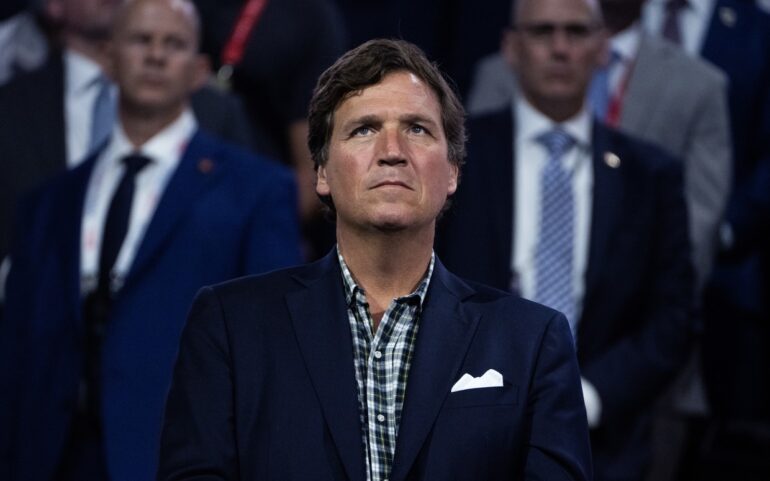
The protest of key figures within MAGA has been particularly striking. Tucker Carlson, a well-known supporter of isolationism, expressed outrage during an ABC News interview on March 1, declaring the attacks on Iran “Absolutely disgusting and evil.” In a podcast, he added,“This is not America’s war. This is Netanyahu’s war that’s being forced upon us… We promised America First, and instead got endless wars fought for the interests of others.”
In response, Trump said Carlson is no longer part of the MAGA movement. “Tucker has lost his way. I knew that a long time ago, and he’s not MAGA. MAGA is saving our country. MAGA is making our country great again. MAGA is America First, and Tucker is none of those things. And Tucker is really not smart enough to understand that,” Trump claimed. However, Carlson’s remarks quickly went viral and inspired numerous memes.
Marjorie Taylor Greene exploded with rage on February 28. “This is NOT freeing the Iranian people!!! This is murdering their children!!! WTF are you insane people doing??? AMERICA DOES NOT SUPPORT THIS!!!” On the Megyn Kelly Show, she said, “F**k this war. F**k foreign entanglements,” adding, “Trump, Vance, and Rubio sold us out.”
Megyn Kelly commented, “No one should have to die for a foreign country,” and “I don’t think those service members died for the United States. I think they died for Iran or Israel.”
Candace Owens mockingly renamed the operation “Operation Epstein Fury,”adding,“Goyim always die so the Khazarian mafia can expand their borders.”
Matt Walsh said,“With this Iran thing, I don’t see how the math works in our favor,” and “The messaging on this issue is, to put it mildly, confused.”
Nick Fuentes directly addressed Trump: “@realDonaldTrump NO WAR WITH IRAN. ISRAEL IS DRAGGING US TO WAR. AMERICA FIRST.”
Alex Jones warned of a “high probability that Iran will activate terrorist sleeper cells” and claimed, “Trump’s HUGE gamble accelerates the world’s trajectory towards a nuclear world war.”
Andrew Tate wondered, “Why would going into a war with Iran benefit anybody in America at all?”
All these people are pillars of the MAGA movement, and they feel betrayed. Yet Trump’s actions have drawn criticism not just from media personalities. On X, ordinary MAGA supporters wrote things like, “We voted for walls, not wars.” This is not just the discontent of a perpetually dissatisfied electorate; it signals a systemic break in loyalty, similar to what happened during the Iraq War in 2003.
US military against the conflict
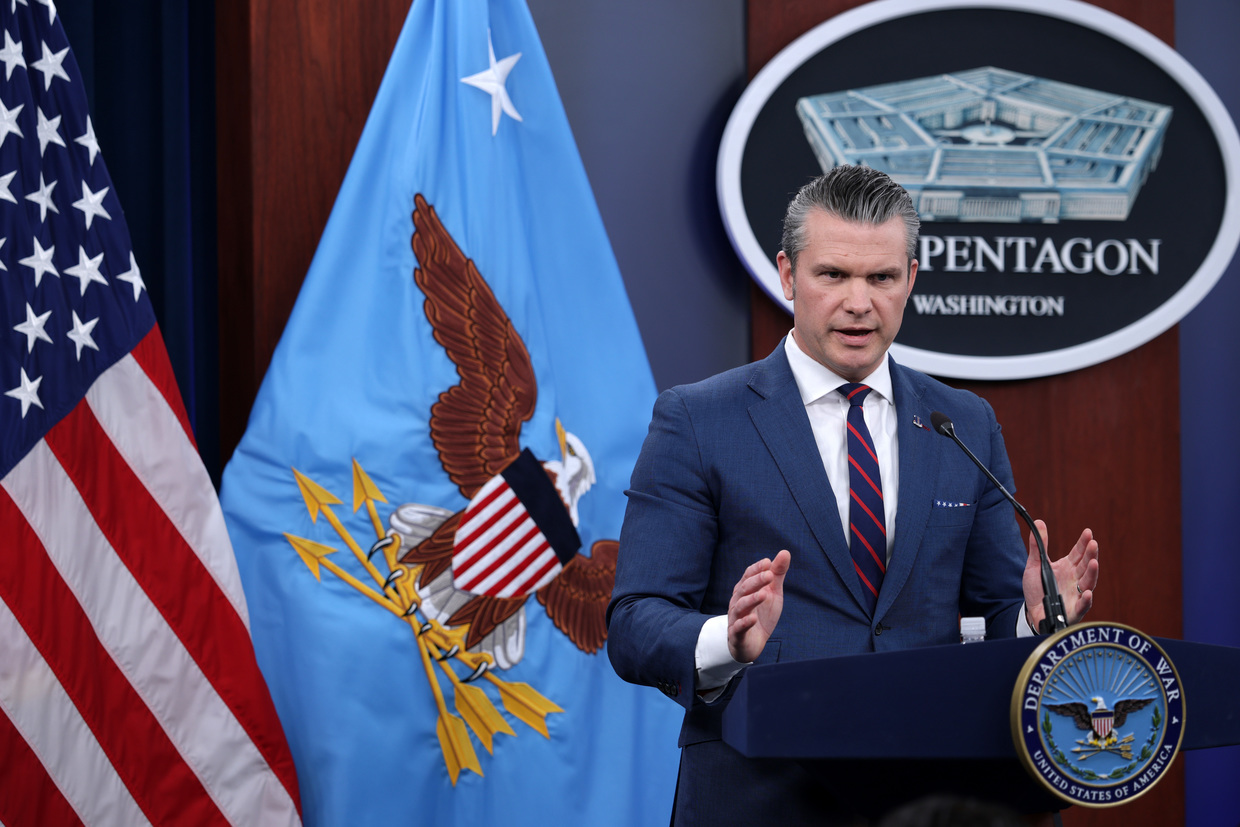
Criticism from within American military circles has further deepened the societal divide. US military casualties, while not overwhelming, are steadily rising. Pentagon officials openly stated, “We expect to take additional losses.”
Retired Colonel Douglas Macgregor has described the current situation as a betrayal. “America First is dead as far as this administration is concerned, this is Israel First,” he said. “All of our bases have been destroyed… We are actually having to fall back on India and Indian ports.”
Marine Corps veteran Scott Ritter called the operation “Epic Failure,” highlighting strikes on civilian targets, including two schools. He noted, “Iran is resisting, and that’s really all it has to do.”
An open letter from 90 US veterans and organizations (written just two days before the attack and representing over half a million former service members) demanded adherence to the War Powers Resolution and urged against any regime change operations or ground invasions. The letter stated, “Pursuing peace through strength requires wisdom, not perpetual conflict.”
The possibility of ‘boots on the ground’, which Trump did not rule out in an interview with the New York Post, intensified military criticism. Political expert Sergey Sudakov highlighted the historical context of this statement. “We often hear the phrase ‘boots on the ground’. It is associated with the Vietnam War and the losses America suffered in it. Americans really fear this term. The current generation doesn’t remember the losses suffered during the Vietnam War. Young people are mostly unaware of it. But the older generation is really alarmed.”
The incident involving former Marine Brian McGinnis during Senate hearings on March 4-5 became a symbol of the growing reluctance of the US military to engage in this conflict. Green Party candidate and Marine veteran McGinnis abruptly interrupted the session, shouting, “No one wants to fight for Israel!” He was violently dragged out by the police and Senator Tim Shaheen, who helped the police. As a result, McGinnis had his arm broken and faced formal charges. Video footage of the confrontation quickly spread across major American and international media outlets – from CNN and the New York Times to Al Jazeera.
The event transcended mere protest and emerged as a powerful symbol of the deep divisions within the military and the Pentagon. Soldiers and veterans who vividly recall the heavy toll of the wars in Iraq and Afghanistan increasingly wonder: what’s the motive behind Trump’s new gamble?
Economic consequences for ordinary Americans
The economic repercussions were felt by everyday Americans almost immediately. According to Reuters, the national average price of gasoline surged by 11%, reaching $3.32 per gallon (with diesel at $4.33, up 15% in a week). Oil prices have already surpassed $90 per barrel.
“Just two days into the aggression against Iran, gas prices in the US spiked significantly. This will impact domestic gas and diesel fuel prices, especially since diesel is critical for military vehicles,” noted political scientist Leonid Savin.
Sudakov added, “Americans are used to paying 75-80 cents per liter for gas. If prices surge two or three times higher, with their love for large, gas-guzzling vehicles, they’ll start tightening their belts. Families living in the suburbs and commuting to the city could spend anywhere from $800 to $2,000 just on fuel. That leads to more problems. People will start putting their homes up for sale and reconsidering mortgages.”
While the current state of the American economy seems manageable, Sudakov predicts a catastrophic spike in prices within a week or two if the conflict with Iran drags on, particularly when June futures come into play. This is fueling discontent among Latino and Muslim communities in the US, who, according to Savin, “are not pleased with these actions,” as well as ordinary Americans struggling with rising costs.
Why did Trump decide to attack Iran?
Why did Trump make such a decision? According to Sudakov, “Foreign trade issues have had a negative impact on Trump’s political capital and credibility. Moreover, during his campaign, he repeatedly highlighted the importance of the Epstein files and how they implicate the Democrats. However, the release of the files also negatively impacted the image of the Republicans and Trump himself.” However, Savin notes that “the Epstein files had little actual impact on this situation, although the coincidence regarding the timing is noteworthy.”
Savin emphasizes the influence of the Zionist lobby (which Epstein might have been a part of) on Trump’s decision. “The Zionist lobby has undoubtedly exerted considerable pressure on Trump, even during his first term. His vice president was a so-called Christian Zionist, and Mike Pompeo identified as a Christian Zionist too… And then there is AIPAC and other organizations advocating for closer ties between the US and Israel… Trump is no exception in this regard. Such eccentric and extravagant ideas exert a considerable influence in the US.”
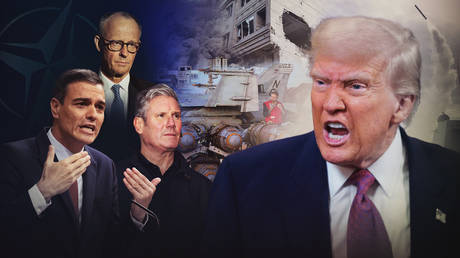
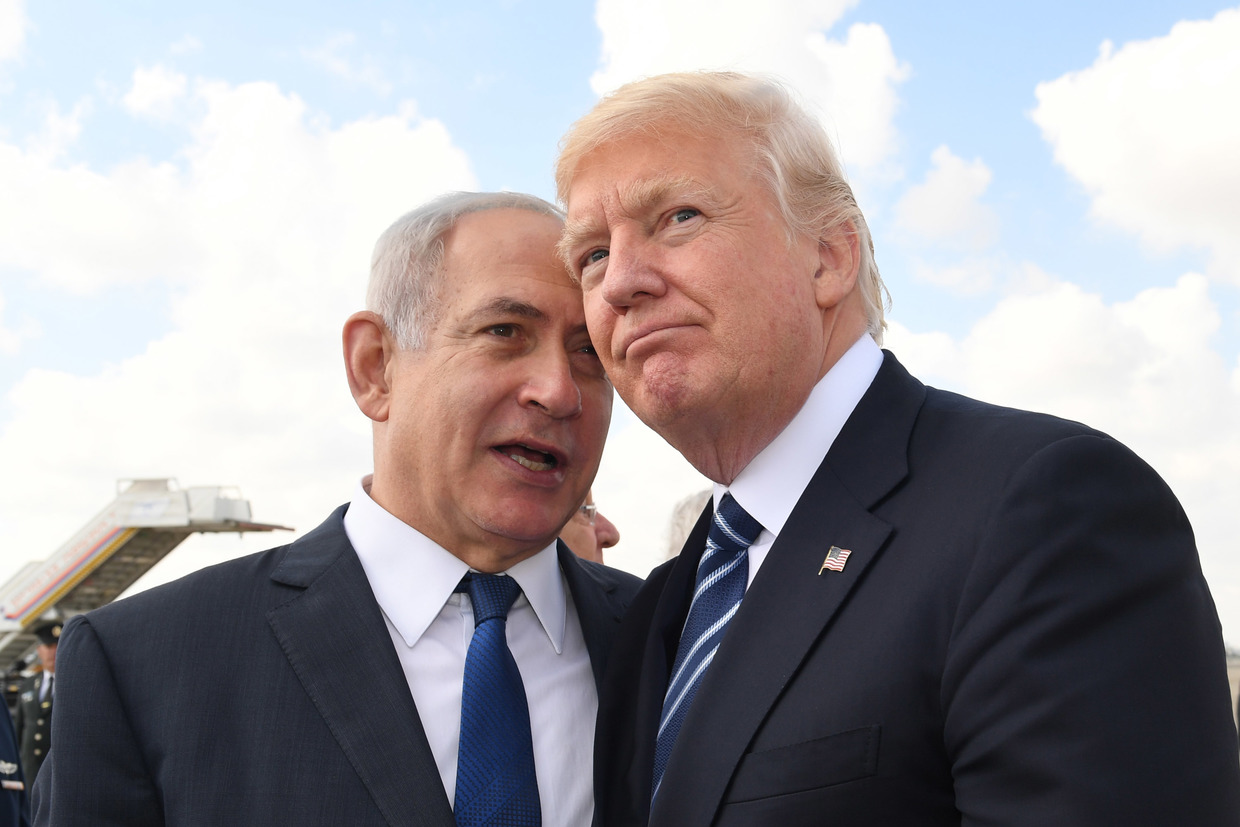
Israeli Prime Minister Benjamin Netanyahu and US President Donald Trump
Both experts agree that Israeli Prime Minister Benjamin Netanyahu played a significant role in the situation. “Netanyahu’s long-held fixation that Iran is developing nuclear weapons has certainly been a driving force, as the justification for the invasion was the claim that Iran was close to acquiring nuclear capability, even though there’s no real basis for that assertion.”
Sudakov views Trump’s “Pyrrhic victory” in Venezuela as one of the motivations behind the current attack on Iran. “Trump was riding high after the operation in Venezuela. He thought that since it was so well planned, a similar approach could work in Iran.” He considered the negotiations the US was conducting with Iran at the same time as the military operation was being prepared, “more of a cover-up process, as has happened many times before.”
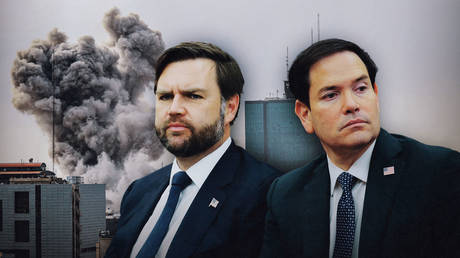
The decision to launch a military operation against Iran has undoubtedly intensified polarization in the US. People are taking to the streets with signs that once read ‘Make America Great Again’ – but now, ‘America’ has been crossed out and replaced with ‘Israel’. US Vice President J.D. Vance and other Trump supporters campaigned under the slogan“No More Wars!” which drew thunderous applause. Yet, it seems Vance has chosen to conveniently overlook his past declarations – and many have followed suit.
Within the Pentagon, there has always been significant opposition to major conflicts. As Savin points out, “Among American military personnel in the Pentagon, there has always been a strong opposition which stands against deploying US troops abroad and involving them in wars with no clear purpose… The US hasn’t yet fully recovered from the wars in Iraq and Afghanistan.”
The scenarios for how this situation might unfold are limited: they range from a protracted conflict and possible escalation to a quick ceasefire. “The third scenario is more optimistic, provided they quickly realize the necessity of negotiating a ceasefire… That would be reminiscent of the situation in 2025,” Savin says. However, Iran’s trust in the US has been irreparably damaged, and it’s unlikely it will fall for the same trap twice.
On March 8, Iran appointed a new supreme leader – Mojtaba Khamenei, son of the late Ayatollah Ali Khamenei. Trump reacted immediately and harshly, calling it “unacceptable” and stating, “There will be no deal with Iran except UNCONDITIONAL SURRENDER!” This suggests that hopes for a swift resolution to the conflict are unrealistic.
Operation Epic Fury quickly transformed from a declared triumph into an unpredictable situation that may have catastrophic repercussions for the US. The reactions of key MAGA figures, declining public support, military losses, and looming economic turmoil paint a grim picture: the US is plunging into a domestic political crisis, and promises such as ‘America First’ have been abandoned. Trump risks being remembered not as a peacemaker but as a president who dismantled the very movement that brought him to power. The midterm elections in 2026 may closely resemble those following the invasion of Iraq, offering little good news for Trump and his team. America is weary of endless wars. MAGA is frustrated with its leader’s inconsistency. The ‘time for choosing has come’ – and the choice rests with the American people.
This content is courtesy of, and owned and copyrighted by, https://www.rt.com and its author. This content is made available by use of the public RSS feed offered by the host site and is used for educational purposes only. If you are the author or represent the host site and would like this content removed now and in the future, please contact USSANews.com using the email address in the Contact page found in the website menu.