

🔴 Website 👉 https://u-s-news.com/
Telegram 👉 https://t.me/usnewscom_channel
The death of Ayatollah Ali Khamenei has detonated a volatile mix of grief, fury, and vows of revenge across the Shiite world, sparking Iranian strikes, regional violence, and warnings of terror at home. This piece lays out who was killed, how Iran is responding, the strikes that followed, who has been hit, and the immediate fallout in the region and inside the United States. Read on for a clear, direct accounting of events and why they matter now for American security and global stability.
Ayatollah Ali Khamenei stood as Iran’s supreme leader and a figure with deep religious significance for many Shiite Muslims. His lineage and black turban marked him as a direct descendant of Muhammad in the eyes of followers who view such heirs as the rightful spiritual and political successors. Killing a figure with that kind of stature is not just a strategic blow, it is a symbolic rupture that transforms a military strike into a catalyst for broader retaliation.
The strike that took Khamenei also killed close family members, and that amplifies the emotional and cultural impact. Family deaths in such an attack make reconciliation politically impossible and set the stage for demands of severe retribution from Tehran’s hardline elements. The scene has pushed Iran’s security apparatus into a war footing and hardened public sentiment in ways officials inside the United States and allied capitals must account for.
Iran has confirmed that Ayatollah Ali Khamenei died in joint US and Israeli strikes.
The Supreme Leader’s daughter, grandchild, daughter-in-law and son-in-law were also killed in the bombardment on his home in Tehran in the early hours of Saturday.
The family deaths were reported by state media on Sunday, just hours before Iran’s military made a promise to lead its most ferocious counterattacks on the US and Israel in history.
Beyond Khamenei, a significant number of Iranian commanders and officials were reportedly eliminated in the coordinated assault. U.S. leadership has characterized the operation as taking out senior targets involved in terrorism and regional aggression. That calculus—removing senior operatives while accepting the chance of wider conflict—reflects a posture many on the right believe was necessary to degrade an increasingly aggressive Tehran.
President Donald Trump boasted on Sunday that 48 Iranian leaders had been wiped out ‘in one shot’ after confirming to the world Saturday that Iran’s Supreme Leader Ayatollah Ali Khamenei was dead.
He also said in a Truth Social post that US forces ‘destroyed and sunk’ nine Iranian Navy ships.
‘We are going after the rest – They will soon be floating at the bottom of the sea, also! In a different attack, we largely destroyed their Naval Headquarters. Other than that, their Navy is doing very well!’ Trump wrote.
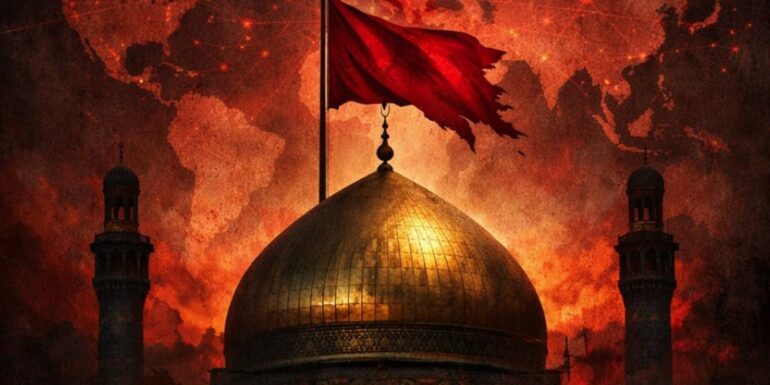
The Islamic Revolutionary Guard Corps has vowed a ferocious response and Iran raised the red flag over the Jamkaran Mosque as a traditional signal of vengeance. That symbolic act signals a shift from mourning to mobilization and makes it clear Tehran intends to retaliate. Military planners in the region are now operating under the assumption that Iran will use both proxy networks and direct strikes to punish its perceived enemies.
Following the death of its Supreme Leader Ayatollah Ali Khamenei, Iran has raised the red flag of revenge above the Jamkaran Mosque in the city of Qom.
According to several media reports, a red banner, which symbolises justice and revenge in Shiite tradition, was seen atop the Jamkaran Mosque.
Iranian ballistic strikes have already produced civilian casualties in Israel and targeted American bases across the Middle East. Reports from the region describe damage to residential areas and infrastructure, and footage shows explosions at multiple sites. Those attacks have real human costs and they broaden the conflict beyond boardroom strategy sessions into hospitals and morgues.
Nine people were killed and more than 40 were injured in Beit Shemesh, near Jerusalem, on Sunday afternoon by a direct Iranian ballistic missile impact.
The missile struck a residential area in the city, destroying a synagogue and causing extensive damage to a public bomb shelter beneath it and surrounding homes.
The Magen David Adom ambulance service said it declared the deaths of eight victims at the scene and took 28 others to hospitals, two in serious condition. The death of the ninth victim was declared a short time later.
U.S. Central Command has confirmed American casualties from the strikes, with deaths and serious injuries among service members reported. Those losses underscore the fact that retaliation can cut directly into U.S. military presence and morale in the region. For policymakers, this raises urgent questions about force protection, escalation management, and the rules of engagement going forward.

Three American service members were killed in action amid the ongoing conflict with Iran, U.S. military officials confirmed, one day after the United States and Israel launched airstrikes and Tehran quickly hit back.
Five others were seriously wounded, according to U.S. Central Command, which didn’t provide further details. The service members were not immediately identified.
On the home front, federal agencies are warning of possible terror plots tied to the conflict, and a violent shooting in Texas linked to a suspect with apparent sympathies shows how the war’s ripple effects can land domestically. Law enforcement is boosting alert levels and counterterrorism teams are watching known threat networks closely. Americans should expect elevated security measures at public venues and critical infrastructure for the foreseeable future.
The FBI has issued a chilling warning to Americans as fears grow Iran will strike the US through its terrorist proxies.
FBI counterterrorism and counterintelligence teams are on elevated alert across the country, according to an agency official.
Terrorism fears are surging in the wake of Donald Trump’s military strikes on Iran, as reports circulate that the Islamic regime’s supreme leader was killed.
Meanwhile, Shiite Muslims in Pakistan are .
Protests have turned deadly in several countries, with attempts to breach U.S. diplomatic missions and violent clashes in cities from Karachi to Baghdad. Those incidents show how quickly local unrest can escalate into attacks on Western targets and personnel. This conflagration will test alliances, intelligence sharing, and the capacity of nations to protect their citizens abroad.
https://x.com/amuse/status/2028086674303918117
This crisis is dynamic, dangerous, and far from over. Officials in Washington and allied capitals will have to make hard choices as Iran pushes back and regional partners respond. For now, American security services and military forces are braced for a period of sustained tension and retaliatory danger.