
🔴 Website 👉 https://u-s-news.com/
Telegram 👉 https://t.me/usnewscom_channel
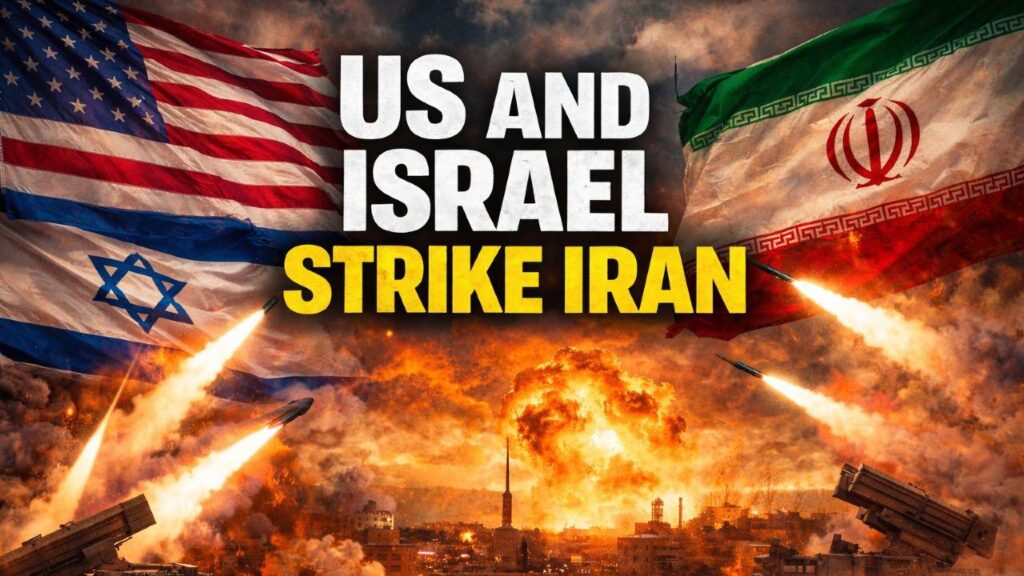
The United States and Israel launched coordinated strikes against Iran early Saturday after diplomacy failed and intelligence showed Tehran rebuilding its nuclear and missile programs. Explosions rocked multiple cities as leaders warned of serious retaliation and the White House framed the campaign as necessary to eliminate imminent threats. This piece walks through the decision, the context since June 2025, the regional posture beforehand, and the immediate risks on the ground.
At 2:30 in the morning on Saturday, February 28, 2026, President Donald Trump appeared in a video posted to Truth Social and told the American people what was already happening over Tehran: “A short time ago, the United States military began major combat operations in Iran. Our objective is to defend the American people by eliminating imminent threats from the Iranian regime.” He repeated the administration’s absolute line on Iran’s nuclear capability, making the case for decisive action. Supporters argue this is the kind of clarity and resolve needed when diplomatic patience runs out.
He then said what his administration has repeated as an absolute, non-negotiable line for months: “It has always been the policy of the United States, in particular my administration, that this terrorist regime can never have a nuclear weapon. I’ll say it again — they can never have a nuclear weapon.” Those words were meant to underline a policy that rejects a nuclear-armed Iran, and to justify operations that aim to halt enrichment and missile production. The message is simple: national security comes first.
Explosions were reported across multiple Iranian cities as the announcement hit, with journalists in Tehran describing large blasts and thick plumes of smoke over central and eastern districts. Israel and the United States coordinated strikes across a range of targets, signaling a campaign larger than a single night of hits. Observers on the ground described the scale as significant, not a limited test of force.
Israeli leaders moved quickly to protect their people, declaring an emergency and ordering civilians to stay near shelters. A senior Israeli security official warned plainly: “Prepare for Iran’s response, don’t underestimate what they can do. It will be substantial and lethal.” Defense Minister Israel Katz said retaliation is expected, and Israeli alerts pushed people to protected spaces across the country.
The current operation follows the June 2025 conflict that removed Iran’s top military leadership and saw the U.S. strike nuclear sites in a targeted campaign. That showdown produced a ceasefire, but Iran used the pause to rebuild hardened facilities, accelerate work at buried sites near Natanz, and reconstitute its missile stockpile. Intelligence and imagery suggested Tehran did not allow inspectors into the most sensitive sites for months, eroding trust in any renewed diplomatic deal.
Talks continued until late February, but Tehran refused to transfer its highly enriched uranium abroad and would not discuss its ballistic missile program. Secretary of State Marco Rubio called that refusal “a big, big problem.” After a ten-day ultimatum failed and three rounds of talks collapsed, the administration concluded diplomacy had been exhausted and that action was the remaining option to protect Americans and allies.
Warnings mounted in the days before the strikes: embassies pulled staff, commercial flights were canceled, and U.S. carrier groups were repositioned in the region. A visible naval and air presence, plus photographed refueling tankers at Ben Gurion, signaled planning and resolve. These pre-positioning moves were meant to deter but also to be ready if deterrence failed.


Iran’s capacity to strike back is real, with proxies and rebuilt medium-range missiles posing threats to regional bases and cities. Kataib Hezbollah, Hezbollah, and the Houthis have all signaled readiness to act in response, complicating any campaign with multi-front risks. That danger is part of the calculus: act now to blunt a growing threat or allow Iran more time to perfect capabilities that would be harder to stop later.
The internal stress on the regime matters too; Tehran had brutally suppressed protests and imposed widespread blackouts months earlier, while senior leadership reportedly planned continuity options in the event of decapitation strikes. Economic collapse and elite capital flight left the government fragile, which could shape both its military response and the chance for internal upheaval. For the administration, the prospect of regime change was an implicit goal behind the pressure applied.
This operation is being described as sustained, not merely surgical, with the stated intent to degrade missile production, launchers, stockpiles, and air defenses so Iran cannot mount effective retaliation. The aim is to remove imminent capabilities before they become existential threats to U.S. forces and allies. For Republicans and national security hawks, the argument is straightforward: when diplomacy is used as cover to rebuild a direct threat, force becomes the responsible alternative.
“They can never have a nuclear weapon,” the President asserted. “I’ll say it again — they can never have a nuclear weapon.” With U.S. and Israeli forces now engaged, the next hours and days will test whether this campaign achieves its stated goals without widening into a broader regional war.