
🔴 Website 👉 https://u-s-news.com/
Telegram 👉 https://t.me/usnewscom_channel
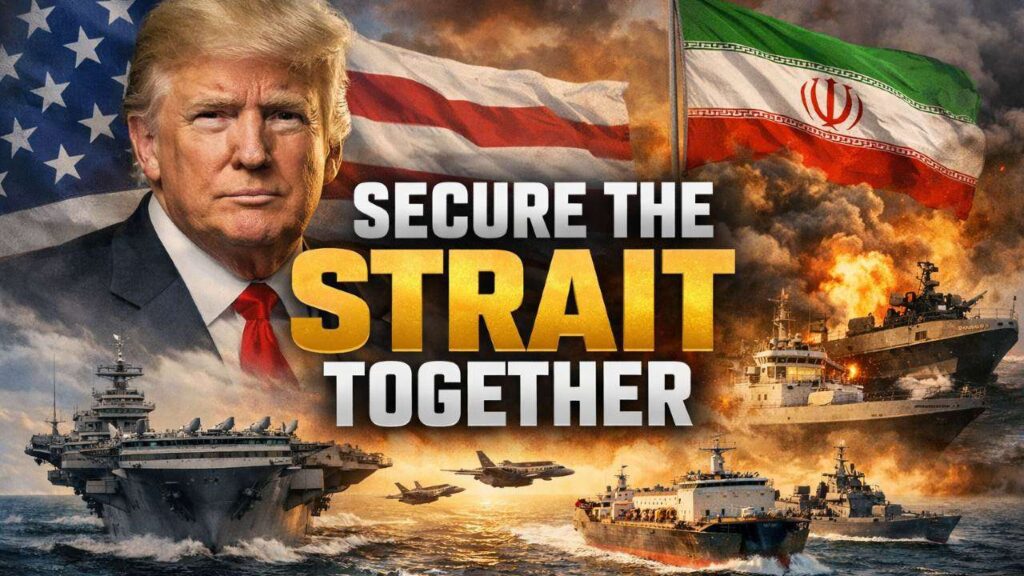
The Strait of Hormuz sits at the center of a crisis that proves a simple, urgent point: a narrow waterway can strangle world markets if hostile actors are allowed to treat it like a weapon. This article argues that President Trump’s call for collective action is correct, explains the real economic fallout, calls out diplomatic hesitation, and lays out why a standing international framework is the only responsible long-term answer.
For years the narrowness of the strait has been a strategic vulnerability, and that vulnerability is now a costly reality. A substantial portion of global oil flows through this tight choke point, and when it is threatened, prices and supply chains respond immediately. The present conflict shows what happens when a hostile state leverages geography to inflict economic pain on nations far beyond its shores.
The economic consequences are already severe and visible. Oil has surged above $100 a barrel, U.S. pump prices have jumped sharply, and hundreds of tankers sit unable to transit without risking seizure or attack. Consumers and businesses in countries with no direct role in the conflict are paying the bill because we tolerated a situation where one regime could threaten the flow of commerce.
This is not an abstract academic worry; it is real and growing day by day. When a militarily weaker actor can still impose a strategic chokehold, it succeeds by fiat rather than by force of arms. That perverse result is unacceptable for any country that values both its prosperity and its security.
President Trump framed the response the right way: burden-sharing by those who benefit from the passage. On Truth Social, Trump wrote that “the Countries of the World that receive Oil through the Hormuz Strait must take care of that passage,” calling it a “team effort” and pledging that the United States would coordinate and help “A LOT.” Those words cut through diplomatic hedging and remind allies of their obligations.
Trump pushed the point further and made the logic plain: “We’re always there for NATO. We’re helping them with Ukraine. It’s got an ocean in between us. Doesn’t affect us, but we’ve helped them. And it’ll be interesting to see what country wouldn’t help us with a very small endeavor, which is just keeping the strait open.” That argument is straightforward and hard to refute; collective security has to mean something.
Responses from allies have been mixed and often cautious, sometimes for legal or political reasons rather than strategic clarity. Japan and Australia signaled restraint, and some European states framed their deployments as defensive or limited in scope. As tempting as legal caution may be, it risks leaving the free world dependent on inconsistent promises instead of durable commitments.


There are, however, promising signs that sensible options exist and are being discussed. The United Kingdom has indicated a more active posture, with its energy official saying it is “intensively looking with allies at what can be done because it’s so important that we get the strait reopened.” That type of practical cooperation is exactly what’s needed, not endless debate about who has legal authority to act.
The right answer is not a temporary flotilla or a headline operation; it is a lasting principle baked into defense and diplomatic architecture. The free world should adopt a standing mechanism to guarantee transit through critical maritime corridors, whether through treaty guarantees, a permanent escort mission, or a treaty-based freedom-of-navigation framework. This is about preventing future blackmail, not scoring immediate political points.
History shows that open seas support open markets and relative peace, so allowing a hostile government to repeatedly hold the global economy hostage is reckless. The crisis at Hormuz should force policymakers to move from emergency responses to durable policy. Keeping the strait free must become a clear, enforceable commitment among nations that benefit from its commerce.