
🔴 Website 👉 https://u-s-news.com/
Telegram 👉 https://t.me/usnewscom_channel
The myth that America somehow provoked Japan into attacking Pearl Harbor continues to distort our understanding of one of the most pivotal moments in American history.
Japan’s Path of Conquest Before Pearl Harbor
Japan embarked on a systematic campaign of territorial expansion years before America imposed any meaningful sanctions. The Japanese invasion of Manchuria in 1931 marked the beginning of their imperial ambitions, followed by the full-scale invasion of China in 1937. These weren’t defensive actions or responses to American aggression—they were part of Japan’s calculated strategy to dominate the Pacific region through military force.
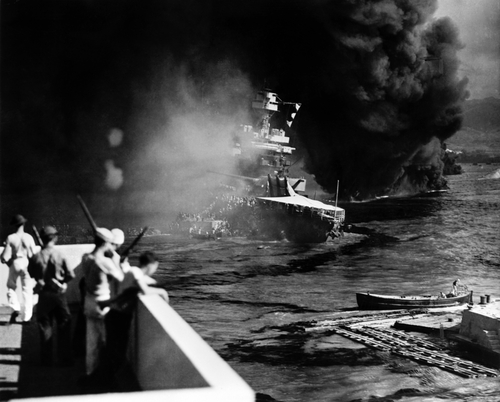
December 7, 1941: A date which will live in infamy.
84 years ago, the attack on Pearl Harbor thrust the United States into World War II, forever changing our Navy and nation.
Today we remember the heroism and sacrifice of those lost on that fateful day. Their courage echoes… pic.twitter.com/YQd9w9KxKD
— U.S. Navy (@USNavy) December 7, 2025
The Brutal Reality of Japanese Occupation
The scale of Japanese atrocities across occupied territories defies any attempt to portray them as victims of American provocation. The Rape of Nanking in 1937 alone resulted in hundreds of thousands of Chinese civilians murdered and countless women assaulted.
Japanese forces systematically terrorized populations across Korea, the Philippines, and Southeast Asia, implementing policies of forced labor, sexual slavery, and mass execution that continued right up until their surrender in 1945.
America’s Measured Response to Escalating Aggression
American sanctions against Japan came as a direct response to their expanding war crimes, not as unprovoked economic warfare. The oil embargo of 1941 followed Japan’s invasion of French Indochina and its clear intention to continue southward expansion.
America had every right to refuse to sell strategic materials to a nation actively committing genocide and threatening American allies. The idea that economic sanctions constitute provocation worthy of military retaliation fundamentally misunderstands international law and moral responsibility.
The Strategic Calculation Behind Pearl Harbor
Japan’s attack on Pearl Harbor represented a calculated gamble to neutralize American naval power before the United States could fully mobilize its industrial capacity. Japanese military leaders understood they couldn’t win a prolonged war against America’s manufacturing capabilities, so they chose a preemptive strike, hoping to force a quick negotiated settlement. This wasn’t the desperate act of a cornered nation—it was an aggressive power grab designed to secure Japanese dominance across the Pacific while eliminating the primary obstacle to their imperial ambitions.
Sadly, this is the first year at the commemoration ceremony at Pearl Harbor that no Pearl Harbor survivor has attended. We have lost so many over the past few years and as few as 12 remain living today. From one generation to the next. Remember Pearl Harbor. Remember those lost.… pic.twitter.com/8Oxegt9qHF
— USS Arizona (@USSArizona) December 7, 2025


Why Historical Accuracy Matters Today
Rewriting Pearl Harbor’s history to suggest American culpability serves dangerous purposes in our current geopolitical climate. When authoritarian regimes today claim their aggressive actions are merely responses to Western provocation, they’re using the same twisted logic that attempts to blame America for Pearl Harbor.
China’s expansion in the South China Sea, Russia’s invasion of Ukraine, and other acts of aggression all get rationalized through this same victim-blaming narrative that portrays democracies’ defensive measures as the real problem.
The facts remain clear and undisputed: Japan chose war through a series of increasingly aggressive actions spanning over a decade. America’s response was measured, proportional, and entirely within our sovereign rights. Any attempt to suggest otherwise ignores the mountains of evidence documenting Japanese atrocities and their explicit imperial ambitions. We honor the memory of those who died at Pearl Harbor not through historical revisionism, but by telling the truth about who attacked whom and why.
This content is courtesy of, and owned and copyrighted by, https://www.conservativecardinal.com and its author. This content is made available by use of the public RSS feed offered by the host site and is used for educational purposes only. If you are the author or represent the host site and would like this content removed now and in the future, please contact USSANews.com using the email address in the Contact page found in the website menu.