

🔴 Website 👉 https://u-s-news.com/
Telegram 👉 https://t.me/usnewscom_channel
The Senate has stalled funding for the Department of Homeland Security for a fifth time, leaving the agency limping at 35 days and tying the second-longest partial shutdown in U.S. history. Airports are clogged, TSA workers are unpaid, and national security functions are constrained just as domestic shootings and international tensions ratchet up. This article lays out who is blocking what, how travel and safety are affected, and why Republicans say the choice is between funding security and rewarding ideological limits on enforcement.
Senate Democrats repeatedly filibustered clean DHS funding after a continuing resolution expired in mid-February, rejecting bills that would have kept basic operations running. House Republicans sent simple funding measures to the Senate that would have ensured pay and core services, but each attempt has been blocked now five times. The result is an intentional standstill, not a technical glitch.
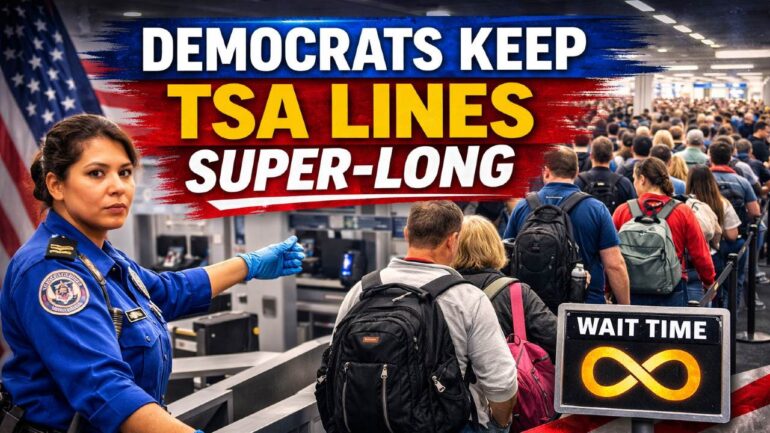
The immediate impact hits travelers and frontline workers. TSA lines are stretching through terminals during peak spring break travel, flights are delayed and canceled, and many agents have already walked away rather than work without pay. Those disruptions are not mere inconveniences; they erode the routine protections that let commerce and travel function smoothly.
Security warnings have sharpened at the worst possible moment. Recent domestic shootings have raised alarms at home while officials also warn of retaliatory steps tied to the Iran conflict, including cyber risks and proxy violence. DHS was built to coordinate responses in crises like this, yet its capacity is dulled by emergency conservation measures and paused programs.
Republicans argue the obstruction stems from Democrats trading homeland funding for policy concessions on immigration enforcement. Negotiators on the left insist on measures that would require judicial warrants for home entries and restrictions on activity near schools and churches, and some in the activist wing still chant “abolish ICE.” Those demands, Republicans say, would handcuff agents and hollow out border security tools voters prioritized last election.
Political theater has replaced steady governance in the negotiations. Senate Minority Leader Chuck Schumer framed the standoff around whether Republicans would “help the TSA workers get paid,” while others point to Democratic proposals that attach broad operational limits to funding bills. Closed-door talks this week included the first face-to-face session with Border Czar Tom Homan and a bipartisan cohort of senators, but a White House-described counteroffer was dismissed as unserious by negotiators on both sides.
Senate Majority Leader John Thune captured the tension bluntly by saying Democrats remain “beholden to their base,” and he warned Congress might forfeit its planned Easter recess if lawmakers do not resolve the fight. These procedural votes and headline-grabbing offers suggest showmanship is crowding out compromise, with workers and travelers left to bear the cost. The legislative calendar now contains a hard deadline that could force action or cancel much-needed downtime for members.

Leadership changes at DHS add another layer of uncertainty. Sen. Markwayne Mullin advanced in the confirmation process to lead the department while it struggles to operate, signaling a pragmatic streak in hearings where he accepted warrants in most cases for home entries. Still, agency morale and operational readiness won’t be repaired by a confirmation alone if funding remains uncertain and core missions are curtailed.
The constitutional duty to provide for the common defense is clear, and DHS was created after 9/11 to prevent failures born of political fragmentation. Treating funding as leverage for unrelated policy shifts turns a security appropriation into a bargaining chip. When FEMA is reduced to bare bones and counterterror programs are frozen, the practical result is less protection for ordinary Americans.
The human toll is visible and growing. TSA families skip bills, airport service workers burn through savings, and small businesses near major hubs see revenue vanish as travelers cancel plans. The political posture from those who created the impasse often reads as sympathy in public statements and obstruction in private actions, which only deepens the distrust driving this crisis.
There is a clear choice on the table: restore full funding for homeland functions and let policy debates over immigration play out through regular legislative channels, or continue to make funding conditional on sweeping enforcement changes. Anything less looks like gamesmanship that risks lives and infrastructure rather than statesmanship that protects them. The public is watching how Congress answers that choice.