

🔴 Website 👉 https://u-s-news.com/
Telegram 👉 https://t.me/usnewscom_channel
The video “The 24 Elders Prove Something Most Christians Miss” sparked a closer look at Revelation’s throne room and the surprising idea that the 24 elders point to a restored divine council and humanity’s role in God’s rule. This piece walks through the biblical clues, the ancient Near Eastern background, and what it means for believers to be more than passive onlookers. It’s not offered as doctrine but as a thoughtful reading that leans on broader scripture patterns. Read with an open mind and a willingness to see familiar scenes in a new light.
For context, this is an exploration rather than a creedal statement, and it leans on some of the same trajectory found in scholars who examined divine council themes. The core suggestion is simple: the 24 elders are not a throwaway detail but a signal about how God governs creation and how redeemed humanity participates. If that sounds bold, the text itself supplies several hints that deserve attention.
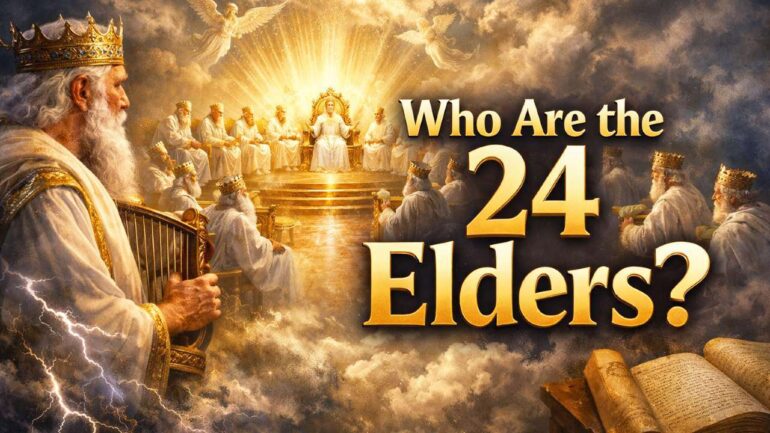
The video “The 24 Elders Prove Something Most Christians Miss” draws you straight into John’s Revelation 4-5 vision and keeps your focus on those seated around the throne. Below the roar of living creatures and the sweep of worship, John notices 24 crowned figures who join in presenting the prayers of the saints and extolling the Lamb. To bring the argument home visually, consider this presentation:
One of the most striking details is the number itself: 24. That figure invites interpretation through biblical patterns where 12 signifies covenant representation. Put two symbolic twelves together and you get both continuity and completion: the 12 tribes of Israel and the 12 apostles fused into a single, cosmic assembly. That fusion points to the full scope of God’s people across both covenants, but the elders’ position and function hint at something beyond mere human representation.
The scriptural backdrop presses the point. Images of a heavenly court recur across the Old Testament, and several passages frame God as presiding over a gathered assembly. Psalm 82 pictures God standing in the “congregation of the mighty” and judging among the “gods” (elohim). Deuteronomy 32:8-9, especially in its older manuscript readings, speaks of the nations being apportioned by the number of the “sons of God.” These phrases show that the Bible borrowed and transformed a familiar ancient Near Eastern motif to make a theological claim about Yahweh’s unique sovereignty.
Other texts add texture: Job 1 shows the “sons of God” presenting themselves before the Lord, with the adversary among them; 1 Kings 22 stages a heavenly council deliberating matters of judgment; Daniel 10 depicts spiritual figures vying over national destinies. Taken together, these scenes suggest an ordered spiritual administration under God’s ultimate authority, an image the prophets and poets used to explain how the unseen world interacts with the seen.

Viewed in that light, the rebellion at Babel and subsequent hostile principalities can be read as a rupture in the original arrangement, a fracturing of delegated stewardship into disorder. The New Testament then speaks of Christ’s decisive victory over these powers—Colossians 2:15 pictures disarming them, and Ephesians 1:21 locates Christ above rulers and authorities. The thread linking those claims back to the throne room in Revelation helps explain why redeemed humanity is pictured not as anonymous worshipers but as enthroned elders.
If the elders are the restored council in miniature, their regalia makes more sense: crowns, thrones, harps, and bowls of incense that represent the prayers of God’s people. They do more than sing; they stand within the governance of God’s kingdom. That reshapes how we picture our place in redemptive history—no longer only spectators waiting for escape but participants invited into Christ’s rule and stewardship over creation.
The practical consequences are striking. Scripture repeatedly pairs kingdom promises with shared authority: sit on thrones judging the tribes (Matthew 19:28), judge angels (1 Corinthians 6:3), hold nations in stewardship (Revelation 2:26-27), and reign forever (Revelation 22:5). Pentecost’s reversal of Babel’s fragmentation also frames the church’s mission as restoring nations to God’s rule rather than retreating from public responsibility.
This perspective nudges readers to explore divine council theology and to reexamine familiar passages with attention to the unseen courtroom language the Bible uses. It keeps Revelation’s apocalyptic imagery serious and sober while opening a hopeful horizon where the Lamb’s victory means restoration, shared rule, and a single, gathered people around the throne.