

🔴 Website 👉 https://u-s-news.com/
Telegram 👉 https://t.me/usnewscom_channel
Story at a Glance:
•Cells have a variety of adaptive processes they undergo to handle stress. One of the most consequential ones is cells ceasing their normal functioning to enter a defensive mode (the cell danger response) and then initiating a healing cycle to repair themselves.
•Cells in the body are always in different stages of healing, health, and stress. However, when too many cells in an area get trapped in the cell danger response (CDR), the function of their tissue declines and can create a variety of disabling impairments. Likewise, in chronic inflammatory illnesses like Lyme or COVID-19 spike protein injuries, these impaired tissues are often the first spot that fails.
•Regenerative medicine stumbled upon how to restore non-functional tissue by initiating the CDR’s cellular repair cycle and resolving frozen CDR repair cycles. Because of this, many of the tools the regenerative medicine specialty has refined over decades for repairing non-healing injuries can also be applied to the understanding and treatment of debilitating inflammatory disorders.
•This article will discuss the physical regenerative therapies that rebuild the body such as prolotherapy and PRP, forgotten biophysics-based approaches which use specific packets of light to initiate the healing cycle throughout the body, and neural therapy (targeted injections of local anesthetics), one of the most potent modalities I have encountered for rapidly restoring nervous system health and functionality throughout the body.
•Understanding these forgotten medical approaches provides unique insights into what ultimately regulates the physiology of the body and why other restorative therapies (e.g., DMSO) are also able to revive disabled cells.
In the first part of this series, I introduced Robert Naviaux’s concept of the Cell Danger Response (CDR), a primitive defensive mechanism cells enter in response to environmental stressors. The CDR is orchestrated by the mitochondria, which switch from a metabolic type that produces energy that sustains the cell to a metabolic state focused on defending the cell (thereby making the cell much more resistant to otherwise lethal injuries). Once the CDR is activated, the cell enters a partially dormant state (as many cellular functions depend upon the regular activity of the mitochondria) and signals other cells in its vicinity to also enter the CDR.
Ideally, the CDR should proceed through three phases (with the third, CDR3 being where the cell reintegrates with the body) and then terminate. Unfortunately, it often fails to do so, leaving the cells in a chronically impaired state where they are disconnected from the body.
Although the protective role of the CDR has a vital role in sustaining life, in the modern age, people frequently are exposed to a volume of stressors that significantly exceeds what the CDR originally evolved to handle. This results in a chronically activated CDR, which in turn gives rise to a wide range of chronic and complex illnesses.
The medical field (particularly those practicing integrative medicine) has become more and more open to the idea that mitochondrial dysfunction is the root cause of many illnesses. The CDR provides important context to that paradigm, as it illustrates mitochondrial dysfunction is not something that “just happens” and needs to be treated with supplementation; instead, it often needs to be viewed as an adaptive response, and to treat the mitochondrial dysfunction, the CDR itself must be the focus of treatment.
My focus was drawn back to the CDR after I realized that the most effective treatments I had found for spike protein injuries (e.g., within minutes, they created a dramatic shift in the well-being of the patient—in some cases restoring functionality which had been lost for months) worked by either repairing the zeta potential of the body or treating the cell danger response. In turn, I’ve come to believe these are two of the primary issues in patients with spike protein injuries (along with other vaccine complications like autism).
Unfortunately, while the CDR provides an excellent framework for understanding complex illnesses, the available tools for treating the CDR are still quite limited and require a comprehensive understanding of the CDR to use correctly. Fortunately, another field, regenerative medicine, regularly works with dormant cells and has found a variety of ways to reactivate them.
Note: no model in medicine is perfect. In the case of the CDR, I frequently observe cells in a state resembling that produced by the CDR, which I believe are being affected by something else, and likewise, other medical models I employ in practice have different frameworks to describe this general cellular inhibition. However for brevity, I use the phrase “CDR” to describe many of the degenerative processes which produce chronic disease.
Often, we run into the problem that a part of the body doesn’t work right (to the point it significantly impacts someone’s quality of life), and the only available option to address the issue is a surgical procedure. Unfortunately, surgeries often fail to fix the issue (or only offer a temporary alleviation) and, in many cases, have significant complications that are much worse than the original issue.
Note: spinal surgeries are among the most problematic surgeries, and unfortunately due to their lucrative reimbursement, are often pushed on patients who will not benefit from them (discussed further here).
In turn, I regularly meet people who state they wish they had never had a surgery they received. I thus am always looking for ways to undo the side effects of surgeries (unfortunately, many are permanent), seeking out competent surgeons to send patients to (as there is immense variability in outcomes depending on who does a surgery), and always questioning which surgeries are actually necessary or provide a net benefit to the patient.
Some of the complications from surgeries are very easy to recognize (e.g., chronic spinal pain worsening after a spinal surgery), but many others are far more subtle and difficult to recognize. For example, over the years, we’ve noticed one function of the appendix is to keep cells out of the CDR, and as a result, we’ve observed autoimmune disorders (e.g., in the thyroid) onset after appendectomies and a gradual decline in the functionality of the body matching that seen in aging as more and more cells enter the CDR.
Note: while I believe the risks of many surgeries greatly outweigh their benefits, I very much support certain ones (e.g., laminectomies for a spinal nerve being compressed by bone). Conversely, there is a wide range of issues with what surgeries do to the body that few people (including most surgeons) are even aware of. For this reason, I am relatively conservative in recommending surgeries.
Fortunately, there are often superior alternatives to surgery, many of which come from regenerative medicine. Many of these come from the field of regenerative medicine. Regenerative medicine is typically associated with “stem cell therapy” and encompasses a broad range of therapies, including:
•Neural Therapy
•Prolotherapy
•Prolozone
•Placental Extracts
•Extracellular Matrix Materials
•Platelet-Rich Plasma (PRP)
•Exosomes and Stem Cells
•Energy therapies directed at weakened tissue.
•Electrical or ionic stimulation of tissue (this method was pioneered by orthopedic surgeon Robert Becker to heal non-healing tissue and bone).
Note: while these treatments are often incredible (e.g., PRP accelerates the healing of fractures and can often heal a wide range of tears—particularly those in areas with a poor vascular supply that prevents them from healing otherwise), it is very common for excessive doses to be given, which trigger rather than resolve the CDR or leave patients with months of inflammation afterwards (in part because of the inherent incentive to sell these profitable therapies to patients). Additionally, the benefits obtained are highly dependent on which version of a therapy is used (e.g., many cheaper PRP kits do not work as consistently). Finally, since many of these treatments provoke an inflammatory response as part of the healing process, care often has to be taken with giving them to certain populations like Covid vaccinated patients (e.g., by giving lower doses) as greater inflammatory responses can occur in them.
These treatments are typically applied with minimally invasive targeted injections, although some are directly implanted during surgery, some are used as topical patches, and some are injected intravenously. Since the most common application for regenerative medicine is as an alternative to orthopedic surgeries (e.g., a knee replacement or a shoulder repair) many of these therapies are used by orthopedic surgeons.
There are thus two ways regenerative medicine can be practiced:
•As a protocol-based approach where regenerative therapy is directly administered to an injury, the existing evidence states it can help (with PRP being one of the best examples).
•As a system that tries to understand where cellular dysfunction is preventing health from emerging so the body’s momentum can be shifted back towards wellness and health.
I appreciate the first approach because it has allowed many to avoid surgeries (often also providing a much better outcome) and because its compatibility with the conventional medical paradigm has created an interest in developing and commercializing more and more regenerative therapies (along with developing a robust body of literature for the practice).
However, the second approach is where I often see miracles occur (e.g., restoring a failing organ that otherwise required a transplant or creating a life-changing restoration of functionality) and thus what I want to draw awareness to.
When the second approach is practiced, it requires determining why a failing tissue has not regenerated on its own—something that typically happens in the background without one’s knowledge due to the immense self-healing capacity of the body. This, in turn, requires assessing if the issue is the cells having turned off (e.g., they are no longer dividing) or if there is a lack of viable tissue that requires external replacement.
Additionally, regardless of which is the case (reviving existing tissue versus creating new tissue), achieving a consistent result with regenerative therapy also requires doing the following:
•Providing the nutritional support necessary for the tissue to heal or regenerate.
•Identifying and addressing what is preventing the system from healing (e.g., commonly the issue is insufficient circulation which cannot bring the tissue the nutrients it needs or drain the waste products which are interfering with healing).
•Identifying at the current time which area of the body will produce the most significant benefit from receiving a regenerative therapy, getting it to the target area, and knowing which regenerative treatment is appropriate to use at the time (rather than being too much for the moment), along with how the indicated therapy will change in the future.
•Using a good quality regenerative medicine product (e.g., many of the cheaper PRP kits do not work anywhere as consistently).
Understanding how to do each of these (discussed further here) requires a great deal of clinical experience, and I feel very fortunate to have spent years working with colleagues well-versed in all of it. One of the most important things I learned from my them is that, in the majority of cases, the primary issue is the cells having “turned off” rather than a lack of viable tissue (hence making the issue much easier to fix). The rest of this article will explore how pockets of cells turning off relates to the CDR.
A common observation when treating patients with spike protein injuries is that pre-existing areas of weakness in the body (e.g., a site of recurrent inflammation or an old injury like a surgery) tended to be disproportionately affected by the vaccines.
This phenomenon was the first thing that clued me into how big of a problem the vaccines were going to become, as immediately after they hit the market, I began to have patients show up with searing pain at the sites of old surgeries or intermittent arthritis. Given that I had previously seen something similar happen to patients with Lyme disease (where the mantra is “Lyme first shows up in the weakest point in your body”), this was quite concerning to me.
Note: typically the issue was pain and a lack of function (e.g., many people shared an old scar they’d forgotten about was suddenly “on fire”) but in most extreme cases, I saw multiple instances where a tendon had previously been surgically repaired a long time ago rupture.
After I started investigating this more, I discovered rheumatologists and neurologists I knew were observing something similar. For example, in addition to the vaccines causing new autoimmune disorders, pre-existing autoimmune diseases frequently flared in vaccinated patients. I heard estimates ranging between 20-25% from (open-minded) colleagues in practice, and the most detailed study I came across, found 24.2% of patients with a pre-existing autoimmune disease experienced an exacerbation after receiving a booster (along with 26.4% of those with anxiety or depression—two other conditions linked to the CDR).
Note: another early red flag—friends and patients reporting sudden deaths after vaccination to me—started happening about a month into the vaccine rollout.
The rate of autoimmune complications is very high, and concerns about these effects have led to various hypotheses over why it is happening. The most common one is that the spike protein is inflammatory, something that, while correct, doesn’t explain the complete picture. Similarly, I previously put forward the theory that the spike protein’s ability to freeze fluid circulation in the body played a role as methods that restored that circulation (e.g., restoring zeta potential) either improved or resolved their symptoms.
However, I believe the CDR provides the best explanation for why all of this was happening.
One motto in certain schools of regenerative medicine is that the body defaults to a patch-and-repair approach for healing injuries. As a result, injuries often fail to heal completely (hence requiring regenerative medical therapies to address that issue—especially as those patches begin to fail in old age). As I observed all of those old injuries flare after vaccination, my immediate thought was that those patches (which are created by the immune system) were where the flares were occurring.
Note: sites of continual immune activation can persist for years. For example, if white blood cells can’t eliminate an invader, they often wall it off (forming a granuloma). A variety of animal studies have shown that the immune system will create granulomas around vaccine adjuvants (e.g., aluminum), which can persist for years, and often that macrophage immune cells will pick up the adjuvants and then deposit them in other parts of the body (presumably because the adjuvant containing macrophage died there). This has been most studied in humans with macrophagic myofasciitis (MMF), a condition characterized by “specific muscle lesions assessing abnormal long-term persistence of aluminum hydroxide within macrophages at the site of previous immunization.”
Naviaux likewise has concluded patches of incomplete healing (i.e., cells trapped in the CDR) exist throughout the body:
Healing is necessarily heterogeneous and dyssynchronous at the cellular level. This occurs for three reasons:
1) all differentiated tissues and organs [e.g., the liver or brain] are mosaics of metabolically specialized cells with differing gene expression profiles that permit the metabolic complementarity needed for optimum organ performance
2) physical injury, poisoning, infection, or stress do not affect all cells equally within a tissue
3) once a tissue is injured, cells that have not yet completed the healing cycle [cannot] reintegrate back into the tissue mosaic [and sometimes never do], creating chinks or weaknesses in tissue defenses from the old injuries that makes a tissue more vulnerable to new injuries [repetitive injuries increase the likelihood of a prolonged or permanent CDR]. This process gradually decreases organ function and cellular functional reserve capacity as we age.
The proportion of cells lost or left behind in Phase 1, 2, or 3 of the healing cycle determines the risk of a given chronic disease…Xu, et al. showed that as few as 1 senescent [non-dividing] cell in a tissue mosaic of 350 other cells will objectively diminish the function of that tissue.
Note: different organs in the body can also simultaneously exist in different phases of the health and healing cycles.
Naviaux believes this failure to heal completely creates chronic disease because cells trapped in the CDR lose their ability to communicate with or receive support from the rest of the body (e.g., those cells stop responding to neurological or hormonal signals) and switch a metabolism that is more cell-autonomous and self-reliant. As such, cells sacrifice much of their functionality by not being integrated with the entire body. This, in turn, can lead to those cells dying, becoming senescent, or becoming cancerous. Furthermore, when the metabolic rate of a single cell is decreased relative to neighboring cells, the local clock of biological time within that cell slows, permitting it to resist maturation and outlast the cells unable to use fewer resources for survival.
Conversely, through purinergic signaling, cells trapped in the CDR instruct cells surrounding them to enter the CDR and communicate to the entire nervous system (predominantly, according to Naviaux, via the vagus nerve) that a threat is present that cannot be addressed locally and must be addressed systemically. Conversely, cells being cut off from the vagus nerve (e.g., following an injury) can trigger them to enter the CDR.
In short, this previous paradigm provides a mechanism that explains why chronic illnesses inexplicably remain long after their initial trigger has disappeared. Furthermore, Naviaux has argued that within a few months, being trapped within the CDR becomes unsustainable as the energy, material, and mental health resources it consumes become depleted, leading to chronic symptoms of pain, disability, and multicausal disease. For example, if much of a cell’s ATP goes to signaling danger, it cannot be used to sustain or heal the cell.
This is a diagram Naviaux made to summarize the entire cycle:
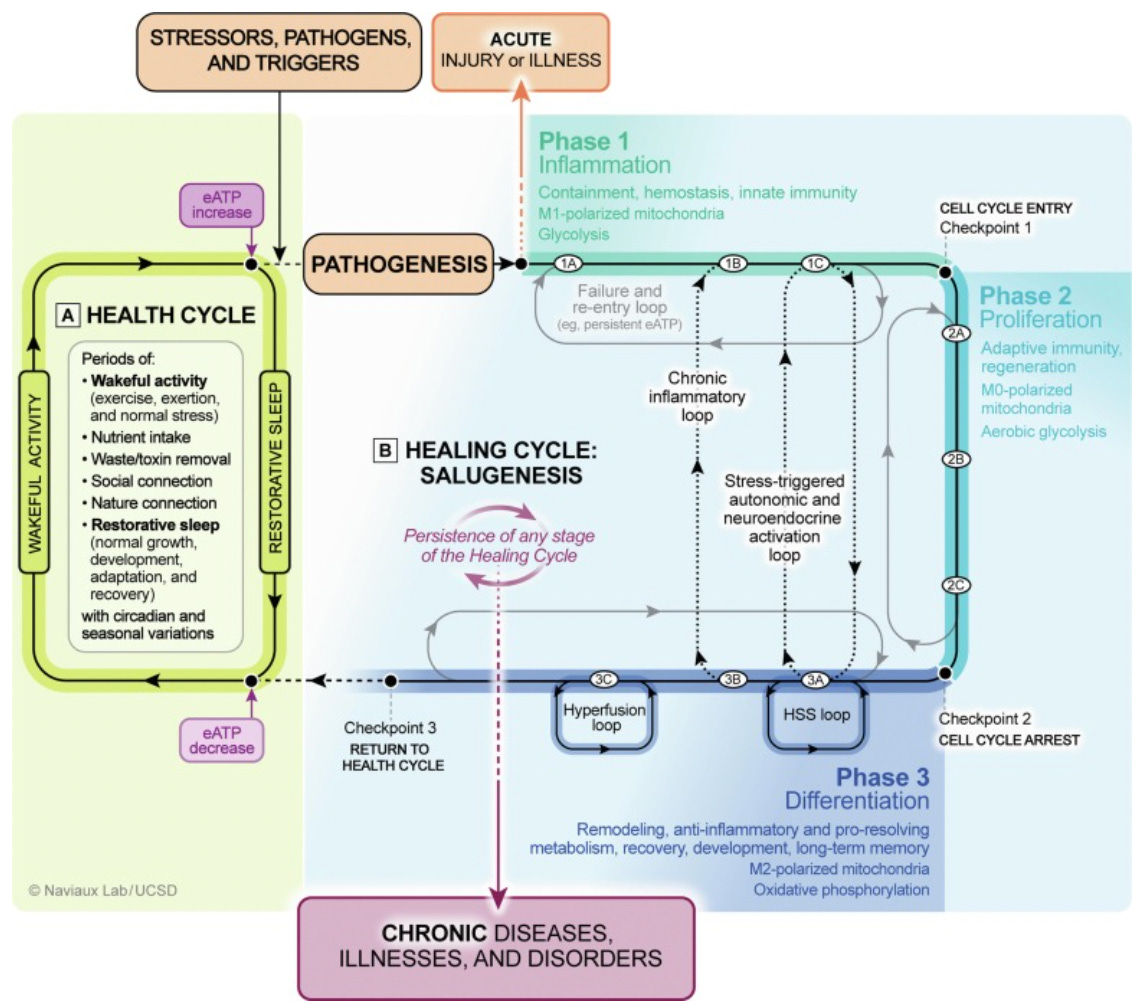
Note: Multiple persistent phases of this cycle can co-exist. For example, Naviaux argues that coronary artery disease results from the combination of local vascular inflammation (Phase 1), proliferation (Phase 2), and altered differentiation (Phase 3).
The CDR model hence argues the treatment goal in many chronic illnesses should be to resume the normal healing cycle.
For example, fibrosis, gliosis, and scarring occur when cells divide in a region of unresolved inflammation or mechanical stress. To varying degrees, these complications can be improved with regenerative therapies that restart the healing cycle in those tissues. Likewise, early antipurinergic therapy (which treats the CDR) being administered after an injury has been shown to prevent pathological chromatin remodeling, inhibit inflammation, and rescue damage in spinal cord neurons, microglia, and astrocytes.
Beyond ending the illness, many other benefits emerge from completing the healing cycle. One of the most important is hormesis, which encapsulates the observed phenomenon that stressors in moderation (e.g., exercise, small amounts of radiation, cold showers, or partial blood ozonation) are beneficial instead of harmful. This is why in many instances, completing CDR3 improves baseline physiologic performance and reserve capacity (when compared to what existed before the stress or injury).
The rise and fall of eATP release are regulated during acute and chronic illness as principal drivers of the stages of the healing cycle. Reinjury before complete healing after an acute injury can lead to episodic exposures to elevated eATP that inhibit healing, delay recovery, and contribute to chronic illness.
Note: hormesis helps to explain why excessively comfortable lifestyles can be detrimental to one’s health (as they lack a moderate number of stressors). This is somewhat analogous to individuals who were shielded from dealing with adversity then having great difficulty overcoming obstacles (e.g., emotional ones) that arise later in life.
Many of the benefits of hormesis are thought to result from the changes that occur in the mitochondria during the healing cycle:
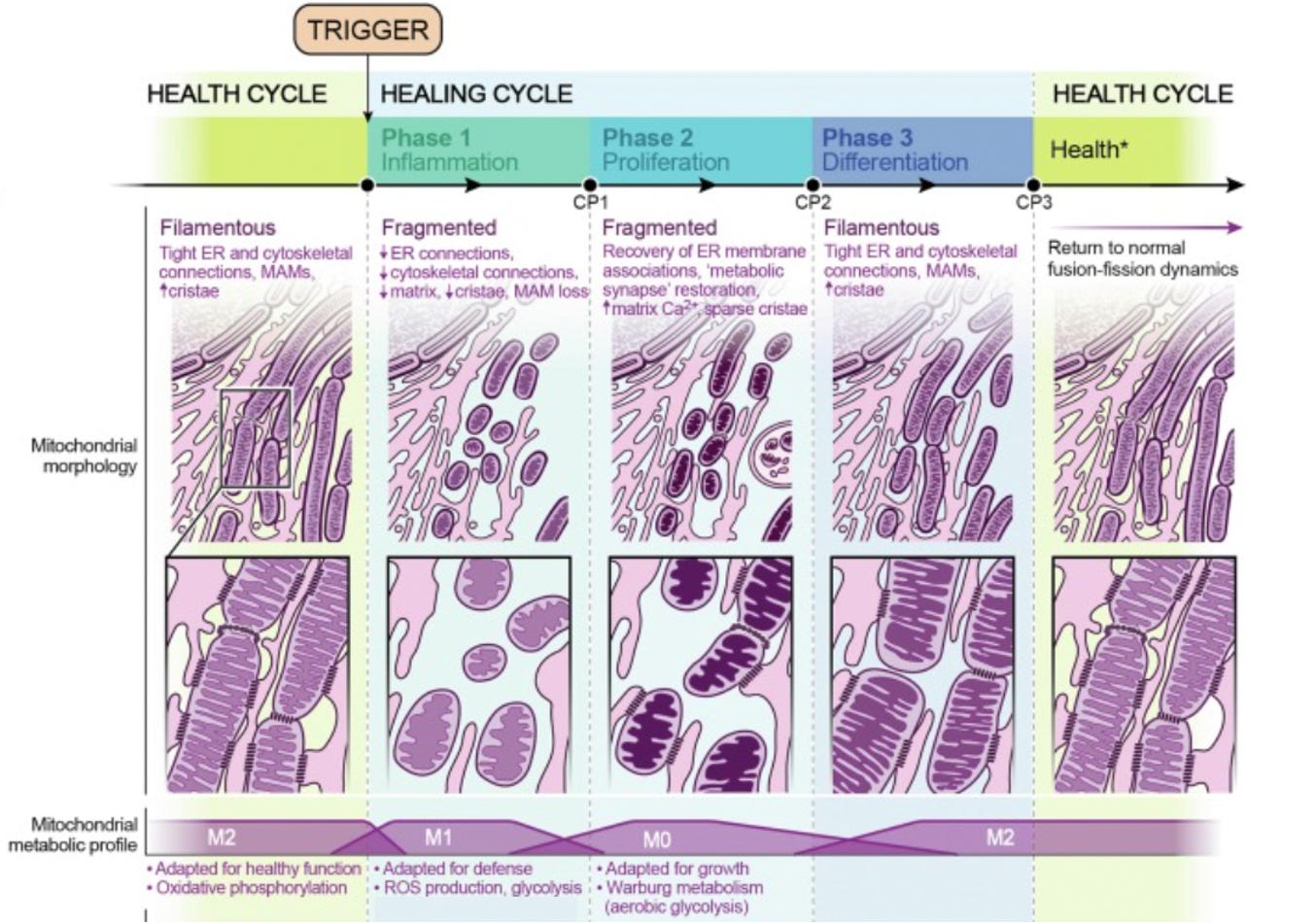
When mitochondria join together (fusion) and then separate (fission), their internal contents are rearranged so that after they all join together during fusion, during fission, all the functional components go to one mitochondrion (which reproduces), while the nonfunctional ones go to the other (which is then eliminated)—making it possible for cells to maintain the critical functionality of their mitochondria.
Note: the speed of mitochondria within tissue transitioning between the M1 to M2 state and joining or separating varies significantly depending on the rate at which cells in a specific tissue divide—which can lead to the CDR persisting for more extended periods in more slowly dividing tissues. For example, heart muscle (which has slowly dividing cells) can remain alive and perfused but non-contractile for months after a heart attack.
There are many other vital effects of the mitochondria’s M2-M1-M0-M2 transition. These include:
•M1 (inflammatory) mitochondria increase the rate of damaged organelle removal via intracellular quality control methods. This allows the functional components of the cells to be the components that are then replicated.
•A total of 789 of the 1158 mitochondrial proteins indexed in MitoCarta 3.0 are enzymes or transporters with catalytic functions. Naviaux found that at least 433 of the 789 enzymes (55 %) were regulated by nucleotides like ATP (which also triggers the CDR). This suggests the CDR signals the mitochondria to produce many of the components required by the cell (e.g., for growth), something facilitated by CDR2 (the phase where you rebuild tissue—something frequently required after injury).
Note: One protein activated during CDR2, HIF1α (which activates in response to low oxygen), has recently been shown to be responsible for regenerating tissue (at normal levels) and also to play a pivotal role in cancers (where it is chronically upregulated). Furthermore, it was discovered that continued up-regulation of HIF1α (through inhibiting the enzyme that typically breaks it down) regenerates an incredible range of lost or damaged tissue in mammals (which in many cases could not otherwise regenerate), while down-regulating it instead creates a scarring response.
Two of my favorite therapies are injecting a local anesthetic (e.g., preservative-free lidocaine) into a target area and injecting a mixture of concentrated sugar (D50), salt water (to dilute it), and a local anesthetic.
Both of these can trigger remarkable responses, and various mechanisms exist to explain why each works. At this point, I (and experienced mentors) believe one of the primary mechanisms is the ability of both to address the CDR, a mechanism not typically considered by those who practice these modalities.
Neural Therapy
Neural therapy was developed from the observation that injecting a local anesthetic into a scar would sometimes create profound improvements in a wide range of complex issues for the patient. It was eventually concluded these benefits arose because nerves would become overly sensitized by an external stressor (e.g., a surgery), leading to the nerve erroneously firing on a repeated basis (which scrambled the body), and that the anesthetic (once it wore off) would reset the nerve cells to a normal level of sensitivity.
Note: these issues are much more likely to occur following electrocautery, which is gradually displacing the scalpel in surgery because it is much easier to perform surgeries with something that does not need as precise incisions due to the cautery’s heat sealing any accidental bleeding (discussed further here).
Initially, the neural therapy field injected every scar on a patient’s body to see what would happen (which often worked). Over time, some practitioners moved to injecting the nerves and ganglia (nerve centers), which could to logically linked to a patient’s issue (which also often worked) and gradually incorporated acupuncture principles into their model (e.g., certain acupuncture points have an excellent response to injections of local anesthetics).
Eventually, they realized that “interference fields” would form throughout the body (rather than just in scars), and that if the problematic interference field could be injected, profound health improvements would occur. It should be noted that many characteristics that neural therapy attributes to “interference fields” mirror what is described for tissue trapped in the cell danger response, but it is still not clear to me if both are describing the same or related phenomena.
Note: in some cases, the interference field is in an obvious area (e.g., an irritated scar) but in other cases, the signs of it are more subtle and require an advanced diagnostic technique to identify (such as those discussed here). For this reason, the outcomes with neural therapy heavily depend upon the practitioner, and as the years have gone by, I’ve become more and more attuned to noticing interference fields because of how problematic they are for patients.
More than anything else, I have been astounded by many of the effects observed with neural therapy, particularly when the correct spots are identified for injection (e.g., it treats tinnitus, burning pain throughout the body, and a few people I know have been repeatedly able to free chronically ill patients from a debilitating chronic illness linked to the CDR simply by resetting the nervous system or relaxing an overactive sympathetic ganglia).
Note: decades ago, a close colleague worked at one of the top natural medicine clinics in the country. She told me that after going through everything with a lot of patients, in that era, they found seven things commonly were the root cause which set off the patients chronic illness. One of those was “toxic scars” which required neural therapy (with the others being dental work—particularly root canals, past vaccine injuries, vaccine injuries, chemical toxicity, heavy metal toxicity, electrosmog [EMFs] and unresolved conflicts in the generational family system).
Lastly, I have come to suspect the reason many other therapies sometimes work (e.g., corticosteroids injections) is because of the local anesthetic which is administered concurrently with them.
Prolotherapy
Prolotherapy (short for proliferative therapy) mimics the natural wound healing process and is one of the simplest but simultaneously most reliable regenerative therapies. It is based upon injecting an irritating substance (I use hypertonic dextrose, but many others are used, too) into a tissue (most commonly a ligament) to provoke a healing response that restores and strengthens that issue. This can be extremely helpful since many impairments result from weak, lax, or partially healed ligaments (e.g., beyond classic ligamentous injuries, appropriately applied prolotherapy can often treat various other issues such as disc herniations and vertigo which ultimately result from weakened ligaments).
Classically prolotherapy is believed to work by initiating an inflammatory response, as a critical part of the inflammatory response are the macrophages repairing the site they are recruited to. While this is true, I also believe prolotherapy treats the CDR by providing provocative stimuli that restarts a frozen CDR (such as that seen in fibrotic tissue) and repairs dysfunctional tissue through initiation of a CDR. Consider for a moment how Naviaux’s description of CDR2 overlaps with the process of prolotherapy:
Successful reactivation of CDR1 in the surrounding normal cells, followed by entry into CDR2 for biomass replacement and CDR3 to facilitate tissue remodeling, may result in functional cures for the major symptoms of some CDR2 disorders, even if some limitations remain because of imperfect biomass replacement and tissue remodeling.
Note: CDR2 requires cells to enter the Warburg (non-oxygen using) form of metabolism so the focus of the mitochondria can be directly towards rebuilding cellular tissue rather than using oxygen to extract energy from food.CDR2 is also the stage in which fibroblasts and myofibroblasts are recruited to help close wounds or “wall-off” an area of damage or infection with scar tissue that could not be completely cleared in CDR1.
Within this framework, prolotherapy serves as an irritating stimulus that resets the CDR, allowing a frozen one to move to completion and damaged tissue to begin healing itself. Additionally, prolotherapy (as it is somewhat cytotoxic) eliminates no longer viable cells, making it possible for newly dividing (and functional) cells to take their place that no longer signal neighboring cells to enter the CDR. While prolotherapy is recognized to work by triggering the immune system to repair tissue, it is less recognized that part of that process is the immune system first killing the non-viable cells, and then having the macrophages clean up by removing their debris from the injection site.
Note: one of the reasons it is so essential to dose prolotherapy correctly is because, when given excessively (which does happen with some doctors), it can pathologically trigger the CDR—something individuals become more susceptible to each time the CDR is triggered (especially in a systematic fashion). Likewise, Naviaux believes re-injuring a cell before it has time to complete its recovery through the CDR can be problematic.
Additionally, in many cases, we have observed the same beneficial effects created by injecting a local anesthetic into a scar can be obtained just by injecting the correct concentration of dextrose there (typically around 10%). This suggests that treating the CDR is a pivotal mechanism of both neural therapy and prolotherapy.
Note: Other regenerative therapies mentioned earlier in this article can also turn off the cell danger response when used appropriately.
One of the central themes in this article has been to answer the question, “Why did a tissue turn off or stop working in harmony with the body?” This is a challenging question that requires looking outside the conventional paradigm for mechanisms to explain it.
One (largely forgotten) branch of biology, biophysics, posits that many things that occur in our body are due to energetic mechanisms rather than biochemical ones. Biophysics has produced numerous invaluable insights about the body few are aware of, which I attribute to our system of science instead being biased towards finding biochemical mechanisms (as the unique shape of each enzyme around makes it possible to create an infinite number of patentable drugs to target the biochemical reactions of those enzymes). Conversely, biophysical approaches to medicine tend to be much more universal and hence are predominantly studied by countries with more limited financial resources as this makes their marketplace support low-cost innovations (e.g., a lot of the research I cite in this field originated from Russia or former Soviet nations).
A fundamental principle within biophysics is that cells emit very faint photons (predominantly within the ultraviolet spectrum) that they use to control growth and communicate with other cells and that when biophoton transmissions go awry, disease results. For example, cancers have abnormal biophoton emissions, and (when studied) carcinogenic substances significantly disrupt the wavelength of critical biophotons.
Note: that “optical toxicity” and the observation similar compounds that do not disrupt those biophotons are not carcinogenic led Fritz Albert Popp created the discipline of biophotonics.
One of the most interesting observations made within biophotonics was that the cytopathic changes caused in a cell by viral infections or toxin exposures could be “transferred” to another cell in the immediate vicinity when the cells had no physical connection but were optically connected (while conversely, as this Russian study shows, cells injured by radiation could be healed by being placed by healthy cells). If this observation holds, it suggests some of the changes observed in the CFS study discussed in the first part of this series (where serum in the CDR with no virus present could induce the CDR in another serum) might be occurring due to optical transference.
Note: Naviaux mapped out the phases of the CDR to photon emission in a 2023 paper. He found that both the proinflammatory mitochondria (which predominate in CDR1) had a high photon emission, while the mitochondria supporting the CDR (CDR2) proliferative phase had an intermediate photon emission. In contrast, the anti-inflammatory mitochondria in CDR3 had a low photon emission. When he looked at the biophoton emission of each phase, it was high in CDR1, high in CDR2, and low in CDR3. Conversely, in health, it cycled with the circadian rhythm (the biophoton community has also observed that in health, biophoton emission cycles with the circadian rhythm). Naviaux suggested these changes could be used to diagnose what phase of the CDR was active and I believe their emission (especially in CDR2) is due to the cellular growth that is occurring. Additionally, I recently learned the integrative gastrointestinal community have found that biophoton emissions appears to be one of the most practical way to assess the functional health of the human microbiome.
Before Popp, in 1923, another researcher, Alexander Gurwitsch, discovered that living cells emitted faint emissions, which triggered other cells to enter divide (leading him to call it mitogenic radiation [MGR] as mitosis denotes cell division). Furthermore, he found that ordinary glass but not quartz glass blocked it, leading him to conclude that MGR was ultraviolet.
Note: MGR is very faint (making it difficult to detect), and its emission from biological systems typically requires the system to be illuminated with light (which makes the faint mitogenic emissions much more difficult to spot).
Gurwitsch and others (many of whom were within the Soviet Union) made a variety of compelling discoveries with MGR that included the following:
1. Both living things (e.g., cells or tissues) and enzymatic reactions (e.g., the synthesis of amino acids) can emit mitogenic radiation. MGR (and UV light) can also catalyze the synthesis of biochemical molecules.
2. The effect of MGR was much stronger if it was intermittent or pulsed. Too much of it being applied negated the effect and, in time, became counterproductive (this was a very easy threshold to pass). For example, light UV exposure simulated the growth of yeasts, while stronger UV exposure killed them.
I suspect this is why many therapies which use non-biological sources of MGR are so inconsistent with the results they provide, as they often exceed the amount of mitogenic radiation that is helpful (artificial sources of MGR are much less effective than natural ones).
Note: we also find some of the supplements that provide the most significant benefit to patients need to be given in a pulsed or intermittent dosage rather than being consumed daily.
3. MGR predominantly affected cells by causing them to terminate their lag phase and resume dividing. For context, the stages of the cell cycle (where cells build up material and then divide into two new cells during mitosis) are as follows:
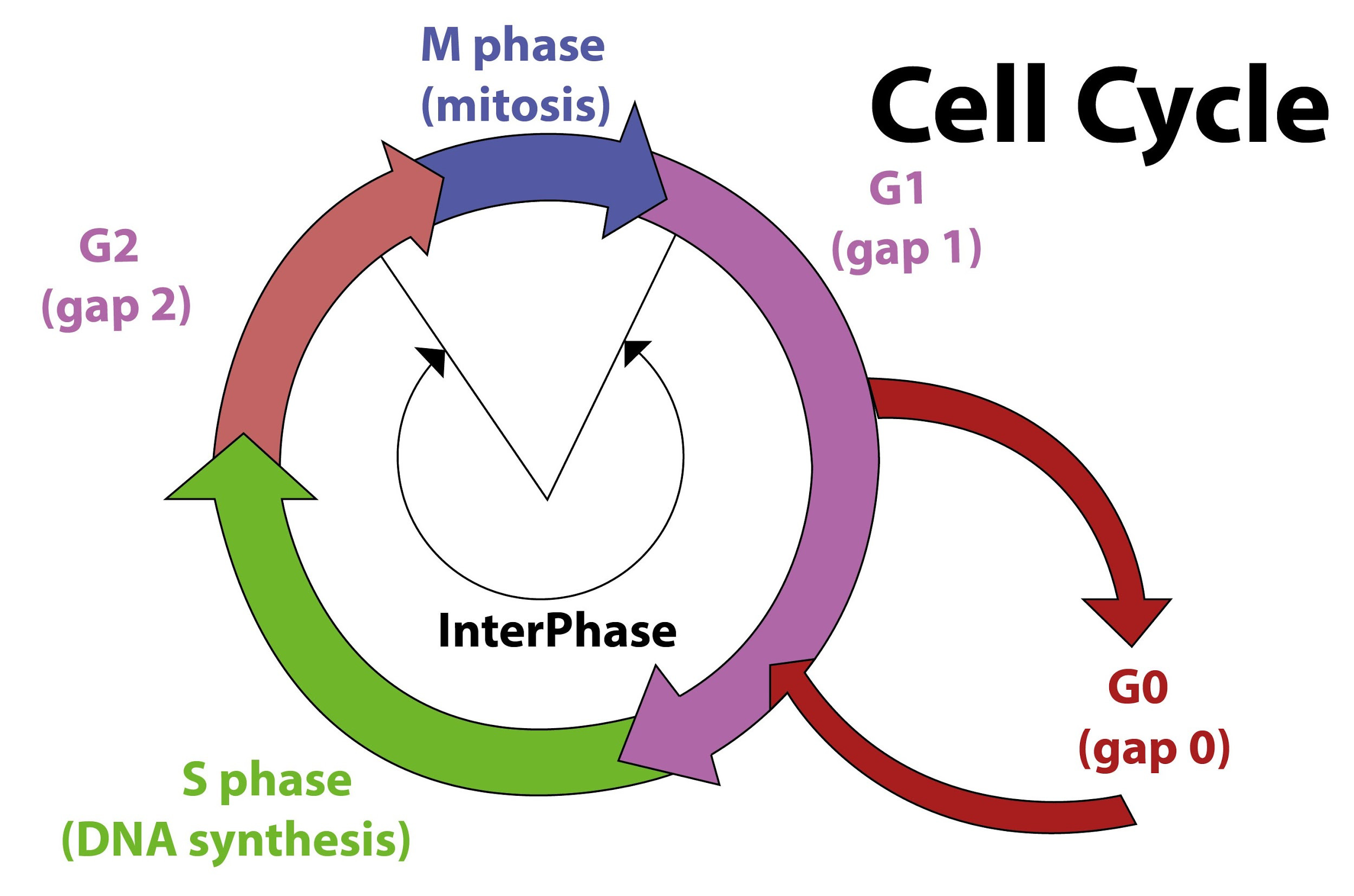
The CDR, in turn, causes cells to predominantly be in certain phases of the cell cycle:
•CDR1 is characterized by preferring G0 and G1.
•CDR2 (the proliferative phase) goes through all four phases (G1, S, G2, and M).
•CDR3 prefers G0 and G2.
This suggests that MGR is a signal that causes cells to exit the G phase they are stuck in due to the CDR and resume dividing. Based on reading the work of the time, I believe the “lag phase” MGR affected most likely referred to G0, but it may have also referred to G1 or G2.
4. Cells exposed to MGR would, in turn, radiate MGR in a process known as secondary MGR—which could significantly exceed the initial energy input they received. I suspect this and the previous points help explain why one of my favorite therapies (ultraviolet blood irradiation) can create significant systemic effects in the body but only works when a small portion of the blood is irradiated. It may also explain some of the benefits that result from sunlight exposure.
5. Irritating or injuring a biological system (e.g., a cell) with various stimuli (along with killing it) would cause it to release an intense flash of MGR. This emission lasts for minutes, has a very different spectrum from typical MGR, and cannot be triggered to activate again until the biological system relaxes (assuming it is still alive).
Note: I suspect the flash is generated by exosomes being released from the cell (while conversely it is recognized biophoton signaling will cause cells to release exosomes1,2).
6. Faster-growing cells tended to be mitogenic; slow-growing cells were not. The primary exception to this rule was cancer cells.
7. The mitogenic emissions of a tissue change with the developmental stage of the tissue, which implies that mitogenic radiation plays a pivotal role in guiding growth and differentiation. I have always felt some type of energetic mechanism has to guide the developmental process, as there is still no biochemical mechanism that can explain the mystery of how each cell knows precisely where to go and what cell type to become (and over the years, I’ve come across numerous pieces of evidence which suggest energetic fields guide tissue development).
Note: I also suspect these energetic fields allow cells to overcome the entropy which should prevent a coherent development of order.
8. Most parts of the body have minimal mitogenicity. The ones found to have significant mitogenicity were brain tissue, the cornea, active muscles, and blood.
Note: blood vessel walls were found not to block the transmission of mitogenic radiation, and within the blood vessel, MGR was best conducted when the vessel itself was energized, a quality likely imparted into the blood by the electrical charge of the heart. Similarly, a dissected optic nerve was found to radiate mitogenic radiation throughout the optic tract when the eye was exposed to sunlight (much of which is blocked by the glass—which, when blocked, Thomas Ott demonstrated could cause disease). These observations suggest the body is designed to utilize its mitogenic emitters to sustain life, and I believe is ultimately one of the key reasons why being outside and seeing natural (UV containing) light is so essential for health.
9. Blood typically was mitogenic but would lose some or all of its mitogenicity under the following circumstances:
•When the individual had cancer. When tested, this proved to be a remarkable diagnostic tool as in the facilities where it was tested, a complete lack of mitogenicity in the blood always correlated with cancer being found in the patient, while mitogenicity being present consistently ruled out the presence of cancer, and in some cases, after a tumor was treated, the mitogenicity of the blood would return.
Note: when this research was conducted, most of the modern technology we had for detecting cancers (e.g., PET scans) did not exist, so it’s hard to say exactly how accurate this test was. Nonetheless, I think even now, it potentially has a great deal of value, as we do not have a reliable way to determine if cancer (of any type) is or is not present in someone (the only other methods I know of which potentially can somewhat do that are either an MRI that looks for areas of concentrated deuterium, or a circulating tumor cell test). Cancers also correlate with increased blood sludging (a consequence of low zeta potential) in the body, but since so many things can cause that change, it is not a reliable measure to use.
•As individuals aged, the blood gradually lost its mitogenicity. Given that the rate at which the body heals and repairs declines with age, this somewhat makes sense.
•After periods of stress and exertion, the mitogenicity of the blood temporarily declined. To some extent, this correlates with the Chinese Medical concept of “post-heaven qi.”
•During menstruation, where in addition to losing mitogenicity, the blood would directly inhibit cellular division in microbes (e.g., fermented foods prepared by someone during menstruation often would not ferment correctly)— which I suspect was an evolutionary adaptation to prevent bacterial infections during menstruation.
For those wishing to learn more about the subject, it can be found in the attached 1936 book by Otto Rahn and this more recent book.
One of the significant challenges with medicine is our culture’s need to know things with certainty—which, in most cases, is impossible and, I believe, results from our desire to dominate nature so that an illusion of control can be created to shield us from our deepest insecurities.
Because that need for control is so great, I frequently observe the medical field fall into what I term the “mechanistic trap.” This describes when something is observed to occur within the body (e.g., a substance causing a positive or negative effect) and there is a reflexive tendency to immediately dismiss the observation unless a plausible scientific mechanism exists to explain what occurred. For example, drug regulators typically will not approve clinical trials (let alone approve drugs) unless a mechanism (which fits within their paradigm) is proposed for the therapy. Likewise, many of my MD colleagues, including those who are exceptionally well-versed in the literature and highly skeptical of the narrative, simply cannot bring themselves to consider that a therapeutic approach we are all seeing works actually works unless we can also provide a mechanism to explain it.
Note: soon after the vaccine hit the market, people begin noticing instances where the vaccines appeared to “shed” and cause less severe spike protein injuries in unvaccinated individuals around them. This correlation was immediately dismissed because it was “mechanistically impossible” for mRNA vaccines to shed. As such, I was initially hesitant to approach this subject, but did so after I was able to compile an extensive body of data (e.g., thousands of reader reports) showing it followed consistent patterns (indicating causality) and unearth unorthodox mechanisms which explained how shedding occurred and at last allowed this topic to enter the general discourse. While writing this article, I realized two of those mechanisms (mitogenic radiation disruption and poisoning the exosome system cells use to communicate) are directly related to how the body controls the cell danger response.
This trap becomes problematic since many of the things which occur within the body do not have an existing scientific mechanism to explain them, which is often due to one or more of the following being true:
•The area has not yet been sufficiently researched, something particularly true when a variety of mechanisms and changes coincide (e.g., consider the immense importance of the CDR in so many different aspects of medicine and yet at the same time just how little research has been conducted on it).
•The mechanism has been scientifically validated but was dismissed because it did not fit into the profit-centered focus of medical research (e.g., consider what happened to the decades of research on blood sludging, blood stasis, and zeta potential).
•The mechanism is at the fringes of existing scientific understanding (e.g., memory within water).
•The mechanism is a non-physical phenomenon incompatible with the existing scientific framework.
With many existing pharmaceuticals (and other medical interventions), I have seen mechanisms proposed to explain how they work I believe to be incorrect. In some cases, I’ve also seen those mechanisms subsequently be discarded (e.g., the marketing myth that antidepressants “treat a chemical imbalance of serotonin in the brain”) once evidence that disproves the mechanism emerges or a more plausible one is brought forward.
Thus, I often feel that the proposed mechanism for why a medical therapy works is more of a declaration than a fact. Conversely, I love to think about why many things I observe actually work and find myself stuck in the position of either not having an explanation or one that is far outside people’s paradigms—which given the prevailing biases of the medical field, is often a very difficult position to be in.
DMSO and the Cell Danger Response
In this newsletter, I have provided extensive evidence that DMSO rapidly heals tissue injury and revives compromised tissues or organs which had “turned off” and stopped working (e.g., for the brain after a stroke). I’ve hence spent a long time trying to figure out why that occurs and presently, my best guesses are as follows:
•Tissues with compromised blood supply can sometimes have remarkable recoveries when the blood supply is restored, even if it was absent for a very long time. For this reason, DMSO’s ability to restore microcirculation likely accounts for some of its ability to “turn cells back on.”
•A build up of metabolic waste products can trigger inflammation, tissue dysfunction, and in many cases, the cell “turning off.” As DMSO’s ability to restore circulation results from physical effects upon fluid, it is also able to restore blocked lymphatic drainage and restore the cells.
Note: it is believed within the German DMSO field that DMSO also increases the circulation within the cells and allows them to expel metabolic waste products trapped within them (which I think is plausible, but I have not yet found a paper demonstrating this indeed occurs—although there may be one within a subset of the studies I’ve collected over the last four months I have not yet had time to go through).
•Many papers show DMSO alters the characteristics of the cell membrane. This could conceivably terminate the cell danger response, either by making the cells more able to generate energy, or by reversing the hardening of the cell membrane which is seen in the CDR. Like the previous, I suspect this plays a role, but I am still not sure of the degree to which it is applicable (as I have not reviewed all the papers I’ve identified on this topic).
•Microtubules, the cell’s structural framework, dynamically switch between growing (polymerizing from tubulin subunits) and shrinking (depolymerizing), with the polymerized state being necessary for cells to divide and replicate (e.g., many classic chemotherapy drugs block microtubules polymerization to stop cancerous cells from dividing). In the case of DMSO, a wide body of literature shows that DMSO causes microtubules to polymerize, so in theory, it can also allow “frozen” cells to restart mitosis.
Note: a variety of other theories also exist regarding how microtubules power the cell or cellular consciousness, but these are more speculative.
•Water within the body can exist in a liquid or gel state. The gel state (often described as a liquid crystal) plays a pivotal role in biology, and among other things creates the structural integrity of cells and tissues, generates spontaneous fluid flows in the body, and creates an energy gradient cells can harvest for energy (all of which is discussed further here). I’ve presently identified a large body of literature (I still need to read through in detail) which shows that DMSO promotes water forming gels. This I believe likely accounts for one of the key reasons why DMSO can increase microcirculation, “restart cells” (as the liquid crystalline water is the energy gradient they harvest) and rapidly heal wounds (as a gel forming is one of the initial ways tissue heals).
Note: if you simply observe DMSO when it’s mixed with water, it’s very evident it has this effect upon water.
Lastly, my observation with DMSO is that it tends to work much better for local issues, than systemically (where it definitely can still work, particularly if given intravenously). This suggests that DMSO’s effects on the CDR are concentration dependent (as much higher concentration can be reached with local applications).
Neural Therapy and The Cell Danger Response
As mentioned before, when interference fields are released, dramatic changes are frequently observed in patients. In many cases, these result from excessive sympathetic tone dissipating in the affected areas (including areas far away in the body), which causes small blood vessels to relax (bringing long lost blood back to impaired tissue) and lymphatic vessels to relax (allowing normal drainage of impaired areas to resume and healthy function of the cells and tissue to reactivate).
Furthermore, much in the same way neural therapists attribute excess and discordant sympathetic function to a variety of chronic diseases, CDR proponents also believes excessive sympathetic signals and a lack of parasympathetic input to counterbalance them is a common trigger for the cell danger response (and as such, treatments for the CDR frequently involve eliminating stress from the patient’s life and restoring a relaxing lifestyle).
While the above likely plays a major role in why neural therapy addresses the cell danger response, I also believe another mechanism is pivotal. One of the many observations Gerald Pollack (the pioneer of the liquid crystalline water model) made is that local anesthetics temporarily disrupt the liquid crystalline water around neurons. As such, he argued that since neurons cannot fire while their gel is absent, and that when nerves fire, the gel will temporarily disperse, this argues for the phase transition away from a gel state (and the energy it produces) being the source of nerve impulses.
In turn, many people I have spoken to over the years have shared that they’ve observed when neural therapy is done in the right spot, it will cause a small rush of fluid to flow in the body (after which the patient has a clinical improvement). Assuming this observation is correct, that suggests the anesthetics dispersed a clump of fluid which was effectively serving as a dam blocking normal circulation in the body (e.g., within the interstitial fluid).
Additionally, neural therapy often causes patients to release deep trauma (e.g., sometimes injected patients re-experience forgotten past traumas and I’ve seen vets with significant PTSD who had scars from IED explosions be injected, after which their PTSD resolved). While it’s possible all of this is stored within the sympathetic nervous system, I strongly suspect it’s stored within aggregations of gel state water within the body, particularly since body workers who work with fascia (a tissue that disproportionately forms liquid crystalline water around it) sometimes report very similar psycho-emotional treatment responses to what I’ve seen with neural therapy.
Given all of this, I suspect an underlying mechanism in many treatments which restore the function of cells is that they “reset” the state of water in them by first dispersing the (pathologic) aggregation which had been there, after which it spontaneously reforms in a more healthy state. However, like many other things mentioned here, there isn’t clear data to prove or disprove this theory (likewise to the best of my knowledge, the state of water within cells during the CDR has not been directly studied).
Note: I have also read that ATP will concentrate in the liquid crystalline layers surrounding cells. Assuming this is true, dispersing that would also reduce the cell danger response as external signaling from ATP is one of the primary things which sustains the cell danger response (and hence is a common treatment target for it).
Light Therapies
Many different light therapies (e.g., red light therapy, lasers, ultraviolet blood irradiation) have been developed which appear to restore the function of cells that previously could not work. Typically this is attributed to them increasing circulation (by increasing nitrogen oxide production) and increasing mitochondrial function (due to mitochondrial cytochrome c oxidase and the electron transport chain absorbing the photons).
While this is likely correct, I think these therapies also directly treat the cell danger response by:
•Providing mitogenic signaling to restart cell division. This most likely applies to ultraviolet blood radiation (as the UV light is within the mitogenic frequency) and may also apply to certain regenerative therapies, as all of these can cause a rapid systemic shift in the vitality of the body which happens at a speed I think can only be explained through a biophysical rather than biochemical model.
•Building liquid crystalline water in the body (as the root energy source for its formation is visible, UV and infrared light), thereby recreating the battery for the cell (which seems to more frequently apply to red light therapies directed at restoring neuronal function).
That all being said, all of these mechanisms represent my best guess to explain what we’ve observed over the years. All I can really say is that properly targeted neural therapy can frequently produce immediate, dramatic and almost unbelievable results for patients. Likewise, the other therapies I’ve mentioned here (e.g., DMSO, systemic regenerative therapies, and light therapies) also can, although the responses are typically not as immediate. Likewise, there are so many overlaps in the models and mechanisms behind each of these therapies (e.g., DMSO also functions as a temporary anesthetic) that there ultimately isn’t a clear dividing line where I can say one thing or another is actually the primary mechanism.
Note: it has also been observed that very specific light frequencies can be used to replicate the effects of neural therapy (e.g., I accidentally discovered one frequency in a specialized cold infrared laser sedates nerves, and now periodically use it on otherwise difficult to inject ganglia which are overactive). However while it works, I still really don’t know why.
One of the largest complaints patients have about the costly modern medical system is that it frequently cannot meaningfully improve the quality of their life. I believe a key reason for that is a general lack of understanding within conventional medicine of how tissue in the body regenerates and why it often doesn’t. I greatly appreciate the support each of you has given which has made this newsletter possible, and I hope the ideas throughout this article can provide useful tools each of you can incorporate for reclaiming your health.
As life goes on, this becomes increasingly important, as one of the key things that has been recognized by every party seeking to understand the healing cycle (e.g., the regenerative medicine profession) is that it worsens with age. To quote Naviaux:
The healing process is a dynamic circle that starts with injury and ends with recovery. This process becomes less efficient as we age, and reciprocally, incomplete healing results in cell senescence and accelerated aging. Reductions in mitochondrial oxidative phosphorylation and altered mitochondrial structure are fundamental features of aging.
In this article, I tried to focus on how treatments for the CDR can be applied locally to address key concrete pathologies. In many cases (e.g., for systemic illnesses or when it is challenging to identify which dysfunctional tissues need to be targeted with a local injection), systemic regenerative therapies are instead necessary. This holds particularly true for reversing the effects of aging (the systemic illness which we all will eventually have to deal with).
In the final part of this series, we will review the systemic methods Naviaux (along with my colleagues who also specialize in it) have utilized to address the CDR systemically, along with the approaches within regenerative medicine which can do the same. I thank you for the effort each of you has made to understand this complex subject.
Author’s note: this article is the second part of a three-part series. The first part, which can be read here discusses how provides a much more detailed explanation of the CDR and how it relates to healing. The third part, which discusses the available options for systemically treating the cell danger response and how to appropriately use regenerative therapies to address illness, can be read here.
To learn how other readers have benefitted from this publication and the community it has created, their feedback can be viewed here. Additionally, an index of all the articles published in the Forgotten Side of Medicine can be viewed here.
This content is courtesy of, and owned and copyrighted by, https://amidwesterndoctor.substack.com and its author. This content is made available by use of the public RSS feed offered by the host site and is used for educational purposes only. If you are the author or represent the host site and would like this content removed now and in the future, please contact USSANews.com using the email address in the Contact page found in the website menu.