
🔴 Website 👉 https://u-s-news.com/
Telegram 👉 https://t.me/usnewscom_channel
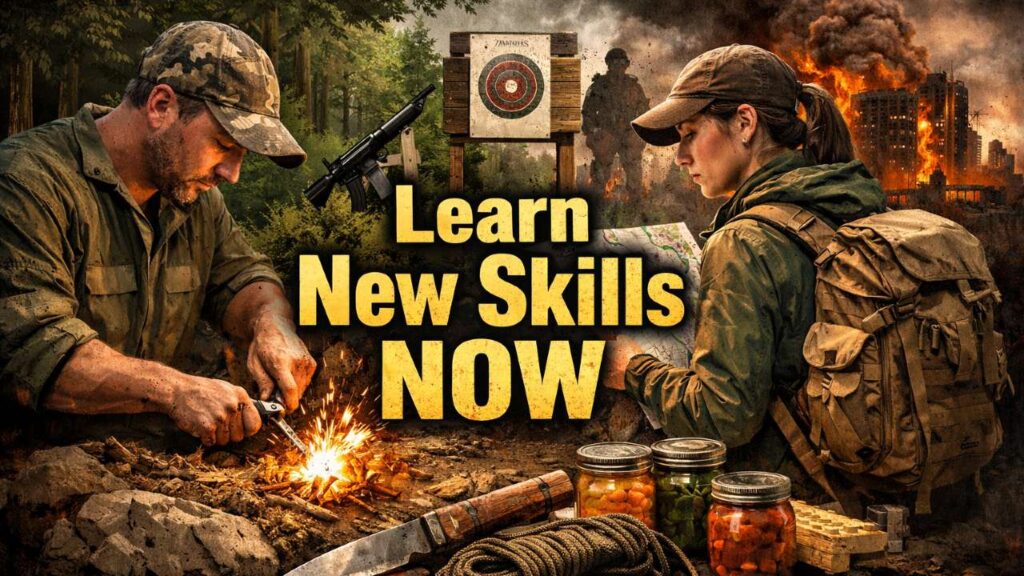
This piece argues that modern comfort has left Americans dangerously dependent on fragile systems and makes the case for relearning practical skills that can save lives when those systems fail. It covers medical self-care with plant medicines and first aid, food production and foraging, water sourcing and purification, mechanical trades and household repairs, fire and shelter basics, reliable communication methods, and the mental toughness and community ties that make survival possible. The tone is direct and pro–self-reliance, urging readers to use current tools to prepare before they are unavailable. Practical examples and concrete skills are described so you can put knowledge into practice today.
There is a quiet arrogance in expecting lights, medicine, and food to always arrive on schedule, and that arrogance is the vulnerability we should all see. Modern life has outsourced competence to a web of services most people cannot repair or explain, which makes dependence a design feature of convenience. That fragility means a severe storm, a cyberattack, or a supply-chain collapse quickly becomes a life-or-death test of personal readiness.
Medical care without a functioning system depends less on miracles and more on practical knowledge of plants and basic trauma care. Many traditional remedies have real, tested effects: garlic has antimicrobial properties, elderberry shows antiviral activity, and yarrow has been used to staunch bleeding. Beyond herbs, wilderness first aid training teaches how to manage wounds, reduce shock, recognize sepsis, and improvise under pressure — skills that turn panic into action when ambulances are hours away. “A prudent man foreseeth the evil, and hideth himself: but the simple pass on, and are punished” (Proverbs 22:3, KJV).
Learning to produce and preserve food is the most direct hedge against a beaten supply chain, and it requires both immediate and long-term effort. Foraging turns fields and hedgerows into a pantry when you can identify edible plants and avoid toxic look-alikes, while gardening and seed-saving build seasonal resilience. Protein comes from hunting, fishing, and trapping, and knowing how to butcher, smoke, salt, and cure meat without refrigeration stretches every calorie. Canning, fermenting, drying, and root cellaring convert one season’s abundance into months of stability.
Water is the single most urgent need and the most easily overlooked vulnerability in a grid-dependent home. Boiling kills pathogens, chemical treatments and mechanical filters are reliable backups, and UV works when power and batteries are available. Rainwater harvesting, locating natural sources, and knowing how to dig or extract water from vegetation are lifesaving skills when municipal supply fails. Treat water sourcing as the priority it is; three days without clean water is a hard limit for human survival.
Practical trades are the currency of any community that needs to rebuild: people who can fix engines, frame walls, patch roofs, wire circuits, and repair plumbing are invaluable. Basic automotive mechanics and older vehicles that can be repaired with hand tools preserve mobility when the shop disappears. Carpentry and construction knowledge let you fortify shelter and build storage for food, while metalworking and sewing turn raw materials into reusable goods. These are not hobbies; they are work that sustains a neighborhood or a small group when markets freeze.
Fire making, shelter building, and navigation are ancient, non-negotiable proficiencies that modern life has mostly pushed into the background. Practice with ferro rods and tinder, learn to construct insulating shelters from natural materials, and refresh map-and-compass skills until they are second nature. GPS can fail or lose power, but contour lines, terrain recognition, and simple triangulation do not. These fundamentals keep you alive long enough for higher-order plans to work.
Reliable, off-grid communication is community insurance: a working radio can connect isolated pockets of people and coordinate aid. Amateur radio provides access to regional and long-distance networks without internet or cell towers, and practicing on regular nets makes emergency use effective. Non-electronic signaling — mirrors, whistle codes, and basic Morse — requires no batteries and can save lives in remote conditions. Radio gear must be used and maintained; equipment in a drawer is only junk when disaster arrives.


>
Mental resilience and strong local ties are the soft skills that determine whether practical skills are actually applied under stress. People with gear but no ability to manage fear, prioritize, or lead often fail in survival scenarios despite resources. Deliberate stress training, scenario rehearsal, and building reciprocal relationships with neighbors create a social system capable of cooperating under pressure. The lone-wolf fantasy is harmful; real preparedness is communal and disciplined.
Right now the internet and open markets make gaining these skills far easier than at any prior moment, which is the paradox we must act on: use the grid to become independent of it. Learn how to identify medicinal plants, preserve food, repair a water pump, and run a radio while resources are still accessible. “Go to the ant, thou sluggard,” counseled Solomon; “consider her ways, and be wise: which having no guide, overseer, or ruler, provideth her meat in the summer, and gathereth her food in the harvest” (Proverbs 6:6–8, KJV).
The choice is simple and immediate: cultivate competence and community before an emergency forces the lesson on you. The technology that could fail us today is the tool that lets you prepare for its failure — use it with urgency and humility while the window is open. Skills become durable assets the moment they are learned; they cannot be taken by a denial-of-service attack or a broken supply chain.