

🔴 Website 👉 https://u-s-news.com/
Telegram 👉 https://t.me/usnewscom_channel
Attention high-school seniors: Deadlines are coming up! Polish your dream-college applications, hit send, and hope the admissions game isn’t rigged with “race proxies”!
To stay ahead of the curve, consider including your “subjective social status” — what’s good enough for the governor of California should be good enough for admissions officers.
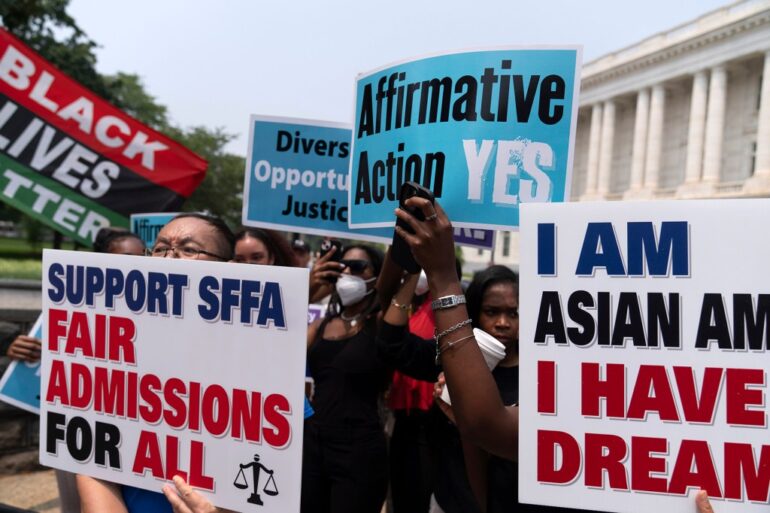
Education gatekeepers are always hunting for fresh metrics to cherry-pick students, especially after the Supreme Court’s 2023 Students for Fair Admissions v. Harvard ruling banned racial preferences in college admissions.
Some elite schools produced expected racial shifts post-SFFA, others amazingly kept racial proportions similar to pre-SFFA. Was this by feigning compliance using stealthier “socioeconomic status” preferences?
“Socioeconomic” is deceptive. It sneaks in the term “economic” to win over generous Americans who support helping those with genuine financial need.
Then “socio” takes over, shunting aside tax returns and bank statements apparently to favor racial outcomes.
Big-data reverse engineering using social factors such as “single-female-headed household,” “neighborhood housing turnover rate” and “criminal-justice involvement” turns out to predict race quite well.
But SES is just the beginning. It may be facially race-neutral yet doubles as a proxy, but at least it uses ostensibly objective social attributes.
Next, with subjective factors, we’re entering a bold new frontier: “subjective social status,” elite-speak for exactly what it sounds like — the social status a person feels.
Don’t scoff at sad “poorigin,” “your truth” stories on how you feel poorer than your ZIP code suggests — they make incredible college essays.
SSS has floated around academic circles since the 1910s, but its jump into college admissions arguably flows from Chief Justice John Roberts’ majority SFFA opinion, which permits considering “an applicant’s discussion of how race affected his or her life be it through discrimination, inspiration, or otherwise” provided it’s “tied to that student’s courage and determination . . . not on the basis of race.”
Some colleges just might happily embrace the feelings part while discarding the proviso.
Colleges already reward gripping tales of genuine poverty and obstacles overcome, but with SSS, your feelings are your only limit!
Students are incentivized to dramatize feelings of exclusion, anxiety, marginalization or perceived disadvantage.
With the right artificial-intelligence prompts, applicants could fashion increasingly polished, individualized-looking verbiage to narrate overcoming feelings of poverty, discrimination and exclusion from a racial perspective, all with the courage and determination Chief Justice Roberts’ loophole sought and admissions offices will find difficult to disprove.
The ubiquitous “identity essay” offers ample opportunity for a student to fabricate identity, experiences and community to illustrate race.
Harvard’s 2025-2026 applications’ Supplemental Essays prompt explicitly invokes “a diverse student body” and solicits “life experiences” that would contribute to it, opening an invitation to favored demographics to “poorigin” to their heart’s content.
NYU’s “Bridge Builder” essay asks what applicants did to bridge divides. Translation from elite-speak: if you’re not in a favored demographic, you’d better audition as a high-level ally — writing “Black Lives Matter” 100 times for a Stanford essay in allyship no longer cuts it.
The Common App traded in its “Community disruption” prompt for “Challenges and circumstances” — you know where it was coming from and where it wants to go.
Or discuss mental trauma caused by socioeconomic injustice. Kids these days are already amply trained K-12 to find catastrophe and violence in anything disagreeable.
Everyone can play the subjective socioeconomics victimization game, if they crave an elite college diploma enough to degrade themselves accordingly.
One survey found one-third of white college applicants already identify as a “racial minority,” with nearly half claiming Native-American heritage and more than three-quarters being accepted.
Subjective socioeconomics breeds fraud and cynicism, rewarding unverifiable exaggeration and embellishment over objective achievement.

Sometimes colleges can detect inauthenticity in the application package, and maybe they can revert to big-data, objective socioeconomic race proxies, but that only returns us to the same race-proxy problem under another name.
Or as colleges seek more ways to determine who’s what, here’s another academic gem to mine — intersubjective social status.
It’s not just the oppression in your head — it’s how oppressed others think you look.
So don’t just claim victimization — perform it!
This isn’t far-fetched. Some colleges already request peer and family recommendations; intersubjective disadvantage is just a prompt away.
From race preferences, to socioeconomic status, to subjective social status, and then intersubjective social status preferences — sounds like one bad idea leading to another.
Colleges should discard these proxies for race or any other favored demographics and simply judge students not as token representatives of some stereotypical group but as individuals, by their individual merits.
Stop the melanin-or-adversity Olympics — instead, select students by math, physics, biology, international linguistics or computer science Olympiads.
And please, everyone — before it takes real hold — no subjective statuses. Focus on facts and keep your truth to yourself.
Happy application season!
Wai Wah Chin is the Chinese American Citizens Alliance Greater New York founding president and a Manhattan Institute adjunct fellow.