
🔴 Website 👉 https://u-s-news.com/
Telegram 👉 https://t.me/usnewscom_channel
The caricature of preppers—bunkers and end-of-world theatrics—has scared a lot of sensible people away from practical preparation. That image is mostly entertainment, and it’s cost people real resilience they could have built easily. The honest truth is that preparation is ordinary responsibility dressed up as a fringe hobby.
Most Americans already practice the basics: saving money, keeping a first aid kit, owning a spare tire, and using smoke detectors. Those are prepping actions even if the label “prepper” makes people squirm. The only real difference between someone who prepares and someone who identifies as a prepper is intentionality and scope.
Sean Gold, founder of TruePrepper and an emergency management professional, frames preparedness as a four-step process people can follow without drama. “By intending to prepare,” Gold writes, “you’ve already hurdled the biggest barrier: taking action to better your preparedness.” His sequence is clear: assess risks, make a plan, build kits, and improve continuously.
Assessing risk first keeps people from wasting money on exotic gear aimed at unlikely threats. Most households face house fires, home invasions, and regional disasters like floods, hurricanes, or winter storms far more than EMPs or chemical attacks. Start with what is likely to happen in your area and tailor your plan to those realities.
Planning means making simple, shared decisions: where to meet, how to communicate, and what to do if you must evacuate. A practiced plan is worth more than a binder that never leaves a drawer. Even a short conversation and a quick checklist practiced once a year will make a measurable difference in a real emergency.
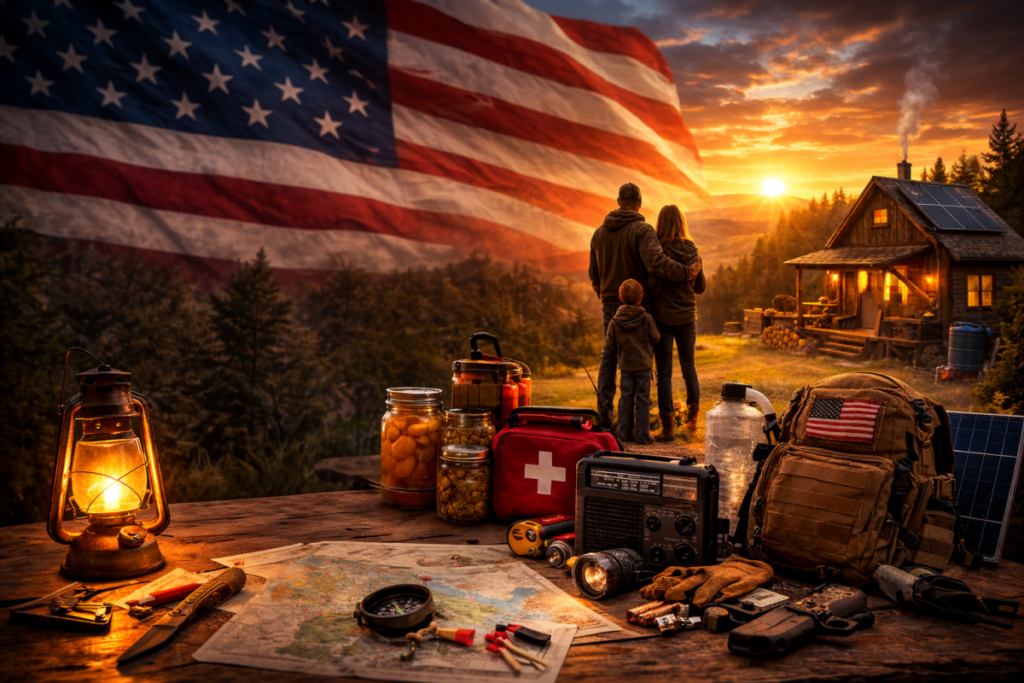
Gear and supplies matter but come after assessment and planning. The sensible categories are a home survival kit, a bug-out bag for evacuation, a get-home kit for when you’re away, and everyday carry items that make daily life safer. Buying gear before you know your risks is one of the most common mistakes newcomers make.
Personal health and household finances are preparedness priorities people often overlook. A chronic illness managed poorly or a family with no emergency savings are vulnerabilities that canned food can’t fix. Prioritize routine healthcare, prescription access, and a small emergency fund alongside your supplies.
Practical preparedness needn’t be expensive. A meaningful short-term foundation can be built for roughly one hundred dollars and a little time. About thirty canned meals, a few gallons of water per person, and a battery-powered emergency weather radio cover core needs for short regional emergencies.
Learning skills multiplies the value of gear and tends to outlast any product lifecycle. First aid, basic navigation, water purification, and fire-starting are cheap to learn and priceless in a pinch. Skills don’t require batteries and they stay useful long after a gadget is obsolete.
Preparedness is an ongoing habit, not a single purchase or weekend project. Review plans at least annually, replace expired supplies, and update plans when household situations change. The goal is steady improvement so your readiness keeps pace with life.


Finally, self-reliance is practical, not paranoid. FEMA recommends households be self-sufficient for at least 72 hours because real-world disasters routinely slow outside help. People who had basic water, food, warmth, and a plan fared better in Katrina, Harvey, and the Texas winter freeze; that isn’t ideology, it’s evidence.
!function(r,u,m,b,l,e){r._Rumble=b,r[b]||(r[b]=function(){(r[b]._=r[b]._||[]).push(arguments);if(r[b]._.length==1){l=u.createElement(m),e=u.getElementsByTagName(m)[0],l.async=1,l.src=”https://rumble.com/embedJS/u1htl22″+(arguments[1].video?’.’+arguments[1].video:”)+”/?url=”+encodeURIComponent(location.href)+”&args=”+encodeURIComponent(JSON.stringify([].slice.apply(arguments))),e.parentNode.insertBefore(l,e)}})}(window, document, “script”, “Rumble”);
Rumble(“play”, {“video”:”v746ssy”,”div”:”rumble_v746ssy”});