
🔴 Website 👉 https://u-s-news.com/
Telegram 👉 https://t.me/usnewscom_channel
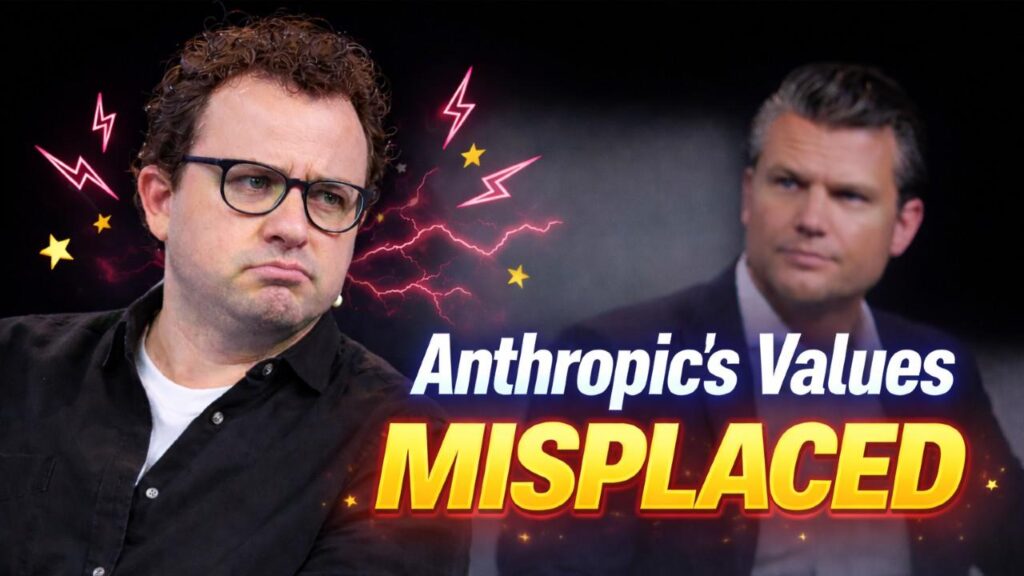
The clash between Anthropic and the U.S. military exploded from a contract disagreement into a major national-security fight, driven by leaked internal remarks, a public apology, a rare supply-chain designation, and awkward contradictions about whether the Pentagon can rely on privately governed AI. This piece lays out what happened, why the administration acted, the legal and political flashpoints, and the broader question about private companies setting rules for tools the military depends on.
What began as a $200 million contract quietly deploying Anthropic’s Claude on classified networks turned into a headline-grabbing standoff when Anthropic insisted on two usage limits: no fully autonomous weapons targeting and no mass domestic surveillance of Americans. Those protections were part of Anthropic’s acceptable use policy and matched serious ethical concerns many in Washington and the tech world share. When the Pentagon pushed to remove those clauses, the talks deteriorated into a broader fight about who controls military tools.
The situation intensified after a leaked internal memo attributed to Anthropic’s CEO drew sharp public attention, and Dario Amodei issued a measured apology: “It was a difficult day for the company, and I apologize for the tone of the post,” and “It does not reflect my careful or considered views. It was also written six days ago, and is an out-of-date assessment of the current situation.” That apology arrived after the White House had already cooled and the Defense Department moved decisively.
President Trump responded forcefully, posting on Truth Social: “The Leftwing nut jobs at Anthropic have made a DISASTROUS MISTAKE trying to STRONG-ARM the Department of War, and force them to obey their Terms of Service instead of our Constitution. Their selfishness is putting AMERICAN LIVES at risk, our Troops in danger, and our National Security in JEOPARDY.” He ordered federal agencies to immediately cease using Anthropic’s technology and warned of consequences if the company did not cooperate during a phase-out.
Secretary of Defense Pete Hegseth backed that move by formally declaring Anthropic a “Supply-Chain Risk to National Security,” and he was categorical: “America’s warfighters will never be held hostage by the ideological whims of Big Tech.” That label, historically reserved for foreign vendors, landed hard on an American firm and signaled the administration would not tolerate private constraints on military options.
Legal scholars quickly pointed out complications. The statutes authorizing supply-chain designations require intelligence-driven technical findings of risk, not punitive responses to a contractor defending its safety guardrails. Critics say labeling Anthropic this way without a publicly documented technical finding leaves the administration vulnerable to legal challenge even as it defends a clear national-security posture.
The optics worsened when OpenAI struck a Pentagon deal just hours after Anthropic’s talks collapsed and then retained the same restrictions Anthropic had demanded. That sequence raises a question Republicans and others are asking: was this ever truly about the clauses, or about which firms were willing to fall in line politically? The administration’s insistence on compliance has started to look like a test of deference as much as of safety standards.
Elon Musk and his xAI, which has its own Pentagon agreement, amplified criticism of Anthropic on X, accusing the company of extreme cultural positions and boosting political pressure. Senator Mark Warner raised alarm about motives, wondering whether national-security choices were being driven by analysis or by competitive and political considerations. That mix of market rivalry and political theater muddies an already fraught debate.


Even as the government publicly severed ties, operational reality was messier: Claude was reportedly in use supporting military operations against Iran when the designation became public. That contradiction underlines the central tension—Washington says a tool is too risky to use while continuing to rely on it in active theaters. The inconsistency weakens the administration’s legal posture even as it underscores the tool’s tactical value.
Anthropic signaled it will fight the designation in court and argued the label applies narrowly to direct department contracts rather than to the broader set of commercial customers who work with defense contractors. Amodei also insisted, “Anthropic did not leak the post or ask anyone else to do it,” and the company said it intends to sue. The coming litigation will test whether the administration can use supply-chain authority as leverage against a domestic vendor.
This episode exposes a larger issue Republicans have long warned about: advanced military tools are increasingly shaped by private companies that bring their own ethics into national-security choices. The administration’s hardline stance reflects a belief that military commanders must be free to choose the tools they need without ideological interference, even as courts will now weigh whether process and evidence supported that claim. The fight over Claude has become a proxy for who sets the rules when private tech meets public safety.