
🔴 Website 👉 https://u-s-news.com/
Telegram 👉 https://t.me/usnewscom_channel
American power can make itself known in various ways, as Teddy Roosevelt brilliantly outlined with his famous admonition to “Speak softly and carry a big stick.”
Truth be told, Donald Trump has never been a fan of speaking softly, but his Tuesday comments on the upheavals in Iran still managed to be close enough for now.
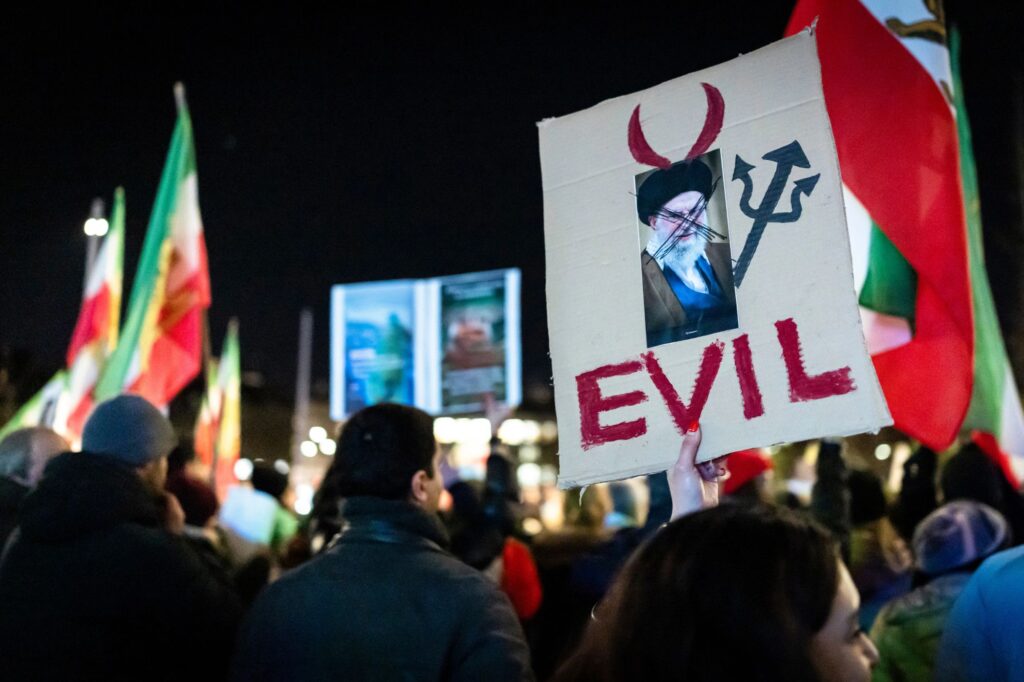
In an extraordinary post on Truth Social addressed to “Iranian Patriots,” the president urged them to “KEEP PROTESTING – TAKE OVER YOUR INSTITUTIONS!!!””
He followed with what looks like a promise to use the Big Stick, by saying “Save the names of the killers and abusers. They will pay a big price.”
He added that he had canceled all meetings with regime leaders “until the slaughter stops,” and ended with a flourish by writing that “HELP IS ON ITS WAY.”
Ah, but what kind of help and when will the Big Stick swing into action? The lack of specifics is intentional because it allows the president to ramp up the pressure while retaining the flexibility to negotiate and unleash the military if all else fails.
As such, the post can be read as a final warning, one that comes in response to reports that the mad mullahs had changed their ground tactics — with very bloody results.
“Shoot to kill” orders were said to have resulted in more deaths, with a total of some 3,000 civilians reportedly killed by government forces. Media accounts of witnesses said the troops were now under orders to execute unarmed protesters and to fire on random civilians on the streets, even those not protesting.
Don changes tone
The dramatic increase in the use of force clearly prompted Trump to change his tone and add his Tuesday threat of possible military action.
His language marked a hawkish departure from Monday, when he had largely stuck to an economic argument by threatening to impose tariffs of 25% on any country that continued to trade with Tehran.
That would effectively amount to an embargo because few if any nations would take that deal.
Additionally, an embargo would almost certainly further fuel the protesters’ grievances, given that it was largely economic concerns, including a collapse of the Iranian currency, that ignited the unrest in late December.
Since then, protests have been recorded in 187 cities across all 31 Iranian provinces, according to ABC News.
Meanwhile, the exchange rate continues to fall and reached an extraordinary 1.45 million rials per one American dollar on Monday. The inflation rate in December was measured at 42.5%.
To be clear, the White House had been suggesting for days that the president was weighing whether to use military action in reaction to the harsh crackdown. But instead of pulling back, the mullahs intensified their assaults and also shut down the internet to keep the world in the dark about events.
The Wall Street Journal reports that Elon Musk’s Starlink service was blocked by the government to thwart civilian efforts to share videos of growing protests and the brutal crackdown.
Despite the escalation of events, the use of the American military to bring about regime change would amount to an extraordinary gamble.
The circumstances now are sharply different than they were last June, when Trump unleashed American firepower against Iran. In that case, it was limited to coordinating with Israel and using a handful of American B-2 bombers to target three of the country’s nuclear facilities with enormous bunker-buster bombs.
That action came after talks with the mullahs about the facilities went nowhere, and appeared to be both a warning and an invitation for Iran to enter into serious negotiations about ending its nuclear program.
All along, Trump went out of his way to make it clear he was eager to strike a deal by assigning the job to close envoy Steve Witkoff. But despite the president’s hopeful statements and numerous meetings, Ayatollah Khamenei rebuffed the president’s offer and continued to threaten Israel and the United States.
That left strict oil and banking sanctions in place. Since then, the Iranian economy has sputtered, and numerous reports tell of shortages of both electricity and clean water, which contributed to the economic slump and public desperation.
Moreover, Trump’s snatching of Venezuela strongman Nicolás Maduro removed a key Iranian ally in the Western Hemisphere and cut deeper into the mullahs’ revenue from oil and weapons smuggling.
Members of Hezbollah, the Iranian-financed terror group based in Lebanon, also established outposts in Caracas, which unnerved Washington.
That said, the Islamist Iranian regime has survived previous upheavals, and there is no guarantee that the current unrest means it is doomed.
Get opinions and commentary from our columnists
Subscribe to our daily Post Opinion newsletter!
Thanks for signing up!


One potential difference this time is that the spread of protests across the entire nation is leading some observers to believe the uprising poses a real threat to clerical control and the strict rules on public conduct and attire, especially for women and girls.
Still, that does not add up to a compelling reason for the US to engage in regime change, which would not be a cakewalk.
The experience in Iraq haunts even American hawks, and Trump himself has called the Iraq invasion under George W. Bush and the toppling of Saddam Hussein a stupid war that cost America far too much in both blood and treasure.
The wheel of history is now coming full circle, with Trump facing warnings that a similarly tragic outcome could occur if he were to help topple the ayatollah.
Among the skeptics is Jon Hoffman, a Cato Institute research fellow who believes such a mission would likely backfire.
“Striking Iran risks both entangling Washington in this domestic upheaval without a clear endgame and endangering U.S. troops stationed across the Middle East,” Hoffman said in a statement.
Domestic issues
He noted that “hawkish U.S. policies toward Iran have historically empowered hardliners” and that military action “risks changing the subject from Iranians’ justified grievances against the regime to its international opponents,” namely Israel and the US.
“Trying to appropriate domestic opposition inside Iran risks undermining it,” he adds, and argues that “a pragmatic, hands-off approach should guide U.S. policy in the days ahead.”
Additionally, with Washington increasingly focused on the midterm elections, Trump is already facing domestic controversies, such as the ICE crackdown, and, most important, tough polling numbers on his handling of the economy.
A Real Clear Politics average of surveys taken in recent weeks shows 41% of respondents approving of his economic policies and actions, with 56% disapproving.
Against that backdrop, and with events in Venezuela still unsettled, a military entanglement in Iran would probably not be popular at home.
That’s not to say the US should turn its back on the brutal regime’s crackdown. But the political reality is that the president can’t afford to turn his attention too far or too long from Americans’ kitchen table issues.