
🔴 Website 👉 https://u-s-news.com/
Telegram 👉 https://t.me/usnewscom_channel
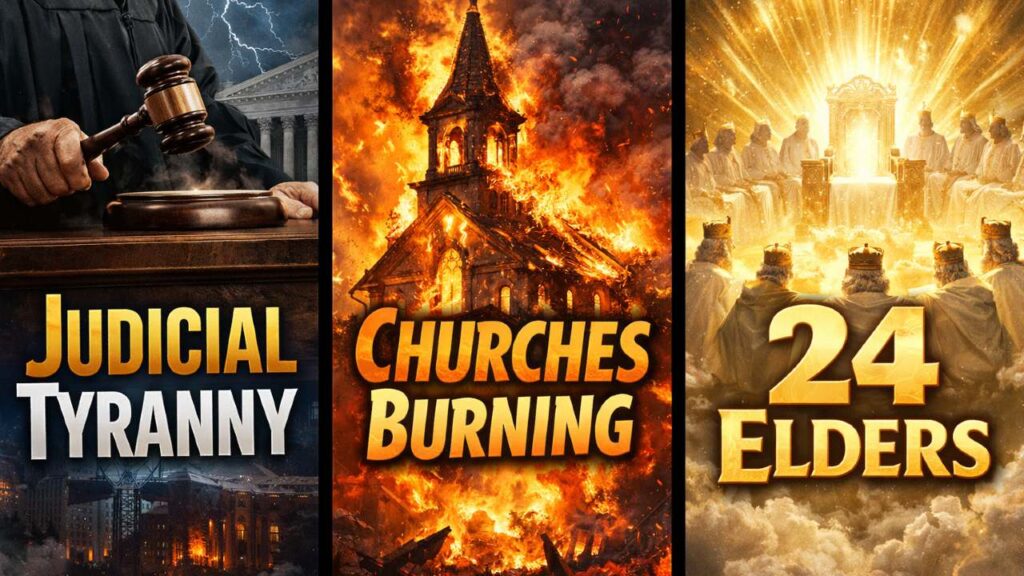
This article looks at three urgent stories: a sheriff pushing back against a judge over repeat offenders and a case headed to the Supreme Court, a worrying surge in church arsons that raises questions about organized targeting, and a brief look at the symbolic 24 elders from Revelation and why the image still matters to readers today.
The Las Vegas law enforcement saga has become a test of local control versus courtroom mandates, and the stakes are high for citizens who expect safety to come first. A sheriff refusing to follow a judge’s release order sends a clear message that public safety can trump procedural convenience when repeat offenders are involved. This is a courtroom showdown with practical consequences, and it’s moving up the ladder to the Supreme Court for a definitive ruling.
From a Republican perspective, this isn’t about lawlessness by elected sheriffs, it’s about elected leaders who feel duty-bound to protect their communities. Voters expect public servants to put people before paperwork, and when judicial decisions seem detached from reality, the pushback is understandable. The Supreme Court’s involvement will force a national conversation about accountability, the limits of judicial power, and the role of local law enforcement in enforcing public safety.
Across the country, churches burning is not just a crime spree, it’s a cultural wound that demands attention. When places of worship are targeted repeatedly, communities stop seeing these acts as random arson and start asking if there are organized efforts at work. Investigators and congregations alike are rightly alarmed, because faith communities provide social glue, emergency aid, and safe spaces that, when attacked, leave gaps far beyond the physical damage.
Rumors about sleeper cells or coordinated campaigns quickly fill the void when authorities give incomplete answers, and that uncertainty fuels fear and speculation. Law enforcement has to be transparent and thorough without stoking panic, and community leaders have to be proactive about security while keeping doors open to worshippers. The goal is to restore safety and confidence so churches can continue serving people without feeling like targets.
Religious readers and curious observers often turn to scripture when they want a deeper meaning for current events, and the image of the 24 elders in Revelation keeps coming up in conversations about authority and testimony. Those figures are steeped in symbolism, representing continuity, heavenly order, or a council of witnesses depending on the interpretation you prefer. For many, the elders are a reminder that institutions can represent an older law or moral authority that outlasts political storms.


Understanding these symbolic figures requires some humility; ancient imagery doesn’t translate directly into modern policy, yet it shapes how communities frame moral authority. People reading Revelation today often test current events against those symbols to ask who speaks for the common good. This interpretive lens can be comforting, but it should not be a substitute for civic action and well-grounded civic debate.
These three strands — legal clashes over public safety, attacks on sacred spaces, and the pull of ancient symbols — intersect in ways that matter for communities trying to make sense of turmoil. Each story asks a basic question about authority: who gets to decide what keeps people safe, what protects shared values, and which voices count when stability is threatened. Those debates play out in courthouses, pulpits, and dinner-table conversations alike.
People on the ground want practical solutions: clearer custody rules that protect neighborhoods, stronger safeguards for vulnerable institutions, and honest conversations about moral frameworks that guide civic life. Leaders who step up with workable answers will earn trust, while those who punt will find communities increasingly impatient. That accountability is what will shape how these stories evolve in the weeks and months ahead.