
KNOWLEDGE is POWER / REAL NEWS is KEY
New York: Thursday, February 26, 2026
ยฉ 2026 U-S-NEWS.COM
Online Readers: 340 (random number)
New York: Thursday, February 26, 2026
Online: 313 (random number)
Join our "Free Speech Social Platform ONGO247.COM" Click Here
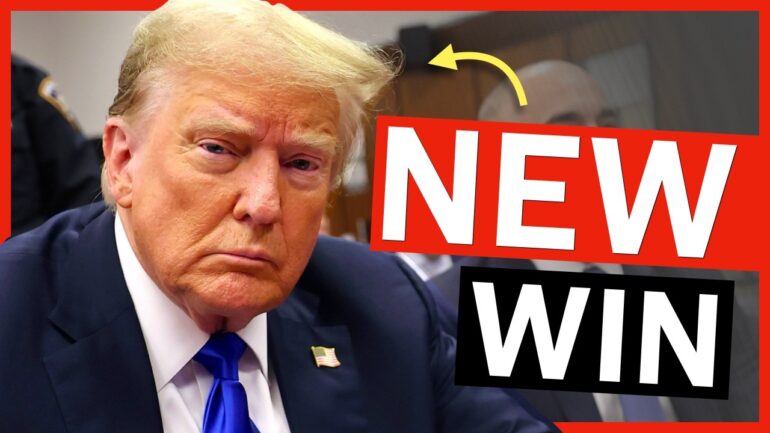
Judge Allows Trump BBC Lawsuit for $10 Billion

POLITICS: Judge Allows Trump BBC Lawsuit for $10 Billion – Video


๐Ÿ”ด Website ๐Ÿ‘‰ https://u-s-news.com/
Telegram ๐Ÿ‘‰ https://t.me/usnewscom_channel


๐Ÿงถ Check out Shen Yun tickets: https://bit.ly/3MK6AfC
promo code at checkout: ROMAN26

๐Ÿ‡บ๐Ÿ‡ธ Try The Epoch Times here: https://bit.ly/3JSZzXX

Episode Resources:

๐Ÿ”ต Trump Lawsuit:


https://bit.ly/3OzBwj7

๐Ÿ”ต Judge Latest Order:

https://bit.ly/4qVqxhu

๐Ÿ”ต Shen Yun Tickets:

https://bit.ly/3MK6AfC


source


OnGo247
New 100% Free
Social Platform
ONGO247.COM
Give it a spin!
Sign Up Today
OnGo247
New 100% Free
Social Platform
ONGO247.COM
Give it a spin!
Sign Up Today

What Do You Think?

  1. โคโคโคTRUMP, I heard the true SPEECH ON J6 Day, TRUMP SAID PEACEFUL !…corrupted BBCโคROMANโค

  2. I'm not sure that "airing" the program in Florida is fatal to Trump's suit there. "Airing" alone is not the only way the defamation breached the borders into Florida. We need to know the way Trump learned of it. Was it by cable, satellite, or even via the internet that the defamation entered the State of Florida? Airing by radio waves is not the only way broadcasts are transmitted.

  3. No โ€” the BBC generally cannot be sued in a U.S. state court for content it publishes in the U.K., even under an international treaty. Hereโ€™s why:

    Jurisdiction Limits U.S. courts need personal jurisdiction over a defendant to hear a case. For a foreign entity like the BBC: The BBC is based in the U.K. and primarily operates under U.K. law. U.S. courts only have jurisdiction if the BBC has sufficient contacts with the state โ€” such as offices, employees, or business activities there. Simply publishing content online does not automatically create jurisdiction, especially for content produced entirely outside the U.S. This is consistent with the โ€œeffects testโ€ in U.S. law: content must intentionally target the U.S. audience in a way that causes harm locally. Even then, courts are cautious about extraterritorial claims.

    Sovereign/State Immunity vs. Corporate Immunity The BBC is a public corporation funded by the UK government (via license fees), but it is not a foreign state per se. As a corporate entity, it is not automatically immune, but its operations are largely protected by U.K. jurisdiction. U.S. courts are extremely cautious about asserting jurisdiction over foreign public broadcasters to avoid diplomatic conflicts.

    International Treaties Do Not Override Jurisdiction There is no international treaty that allows a U.S. state to automatically enforce its content or defamation laws against foreign media like the BBC. Treaties govern state-to-state obligations, not private enforcement of domestic laws against foreign entities. For example, the U.K.โ€“U.S. bilateral treaties on legal cooperation relate to evidence sharing, extradition, or tax, not civil liability for content.

    Practical Legal Barriers Even if a U.S. plaintiff tried to file: Personal jurisdiction challenge โ€“ The BBC would likely argue the U.S. court has no jurisdiction. Choice-of-law defense โ€“ The content was published in the U.K., so U.K. law applies, not U.S. state law. First Amendment / U.K. editorial standards โ€“ The BBC can rely on freedom of speech protections in its home country. Enforcement issues โ€“ Even if a U.S. court ruled against the BBC, enforcing that judgment in the U.K. would be very difficult.

  4. Here are real examples of U.S. court cases involving foreign media or transnational litigation where the court refused to proceed or dismissed the case โ€” illustrating how U.S. courts treat foreignโ€‘based defendants and why suing a broadcaster like the BBC in a U.S. state court is often legally challenging:

    1. Lawsuits dismissed on forum non conveniens grounds Piper Aircraft Co. v. Reyno (1981) In this U.S. Supreme Court case, relatives of crash victims in Scotland filed wrongfulโ€‘death claims in U.S. courts. The Supreme Court held that even if the U.S. court had jurisdiction, it was appropriate to dismiss the case in favor of a foreign forum (Scottish courts) because that forum was more suitable for resolving the dispute.

    Why it matters: The doctrine of forum non conveniens allows a U.S. court to dismiss a case against foreign entities โ€” even when it has jurisdiction โ€” if another forum (e.g., the defendantโ€™s home country) is more appropriate for the suit. This is commonly applied to international cases involving foreign defendants or events that occurred abroad.

    2. Foreign publications and online content dismissed or legally limited Moberg v. 33T LLC (2009) A Swedish photographer sued a U.S. tech company alleging copyright infringement for using photos he published on a German website. The U.S. court rejected the case on the basis that the foreign posting didnโ€™t alone create a United States copyright interest โ€” emphasizing limits on crossโ€‘border jurisdiction tied to the Berne Convention.

    Why it matters: This case shows that foreign content available online is not automatically treated as U.S. subject matter for claims under U.S. law. Courts have declined to extend U.S. copyright rules based solely on internet availability.

    3. Suing foreign libel judgments in the U.S. isnโ€™t straightforward Although not an exact parallel defendant case, Matusevitch v. Telnikoff is widely discussed in U.S. courts regarding libel judgments obtained abroad. U.S. courts have refused to enforce foreign libel judgments that are inconsistent with U.S. freeโ€‘speech protections under First Amendment principles, using comity and publicโ€‘policy analysis.

    Why it matters: Even when a foreign court has ruled against a U.S. media company or foreign media entity, U.S. courts may decline to enforce that judgment if it conflicts with U.S. legal standards โ€” demonstrating that courts protect domestic constitutional law over foreign judgments.

    4. International scope vs. U.S. law limitations Thereโ€™s also specific U.S. statutory protection for foreign plaintiffs and foreign defendants in defamation cases: The SPEECH Act (2010) This law prevents U.S. courts from recognizing or enforcing a foreign defamation judgment unless the foreign law provides as much freeโ€‘speech protection as the U.S. Constitution or a U.S. court would have found liability under its own standards.

    Why it matters: The SPEECH Act is a statutory barrier protecting U.S. defendants (including foreign media defendants sued in U.S. courts) from liability based on foreign libel standards that donโ€™t align with First Amendment protections.

    How These Principles Affect Suits Like Against the BBC If someone tries to sue a foreign broadcaster like the BBC in a U.S. state or federal court for content produced in the U.K., courts will commonly consider:

    Personal jurisdiction A court must find that the defendant has meaningful minimum contacts with the forum. Simply having content accessible in the U.S. may not be sufficient. (Based on general personal jurisdiction principles like International Shoe v. Washington.)

    Forum non conveniens Even if the court could hear the case, it may dismiss in favor of a U.K. court as a more appropriate forum unless significant U.S. ties exist for the claim.

    Defamation and freeโ€‘speech law Defamation actions involving media are influenced by First Amendmentโ€‘based protections in the U.S. If a foreign media case is brought in the U.S., the court must apply U.S. law and can refuse to enforce foreign libel standards through the SPEECH Act.

    In practice: These doctrines and statutes mean that foreign media entities like the BBC are legally insulated from many types of lawsuits in U.S. courts unless the plaintiff can clearly show jurisdictional ties and that U.S. law applies โ€” which is often a high bar.

  5. I feel the UK's have declared war with America. That Steele Dosier was truly skuzzy and scandalous – and the UK's decided to protect that bastard from any accountability for his filth.

  6. If we had anyone in our government that wasn't 500% CORRUPT, they would all be ended and in prison for a minimum of 25 years, then work to pay back the damage for the rest of their life.

  7. They deliberately tries to destroy Trumps reputation just before the election…But because it didnt work they now think they should be let off…NO, put them out of business…permanently…!!

  8. They need to defund the BBC and the ABC. They are like the USs PBS and NPR, wholey one sided propaganda machines run by insane leftists.

  9. These Democratic people wants For American people to attack the government people that doing their job to protect this country And the corrupted judges that wants to protect immigrants over Americans And going against our president to protect our country So now this is what they wished on American people. So we now going to give them what they ask for.They had destroyed the justice system and And the democracy of fighting for us American people to be safe So now we are the people, we are going to come together as one large army to go against the corrupted people like the Democratic and the Democratic judges. That's against our country So be careful what you wish for 'cause we gonna give you what you asking for, a fight to the end of time. We will begin the revolution for democracy And fight till the end of time for all mankind.

  10. The jurisdiction defense is hilarious and stupid given the fact how fast information travels nowadays. Even if they only released it in New York, for instance, they know fully well that it will reach throughout the US. Good for the judge.

Your email address will not be published. Required fields are marked *