
🔴 Website 👉 https://u-s-news.com/
Telegram 👉 https://t.me/usnewscom_channel
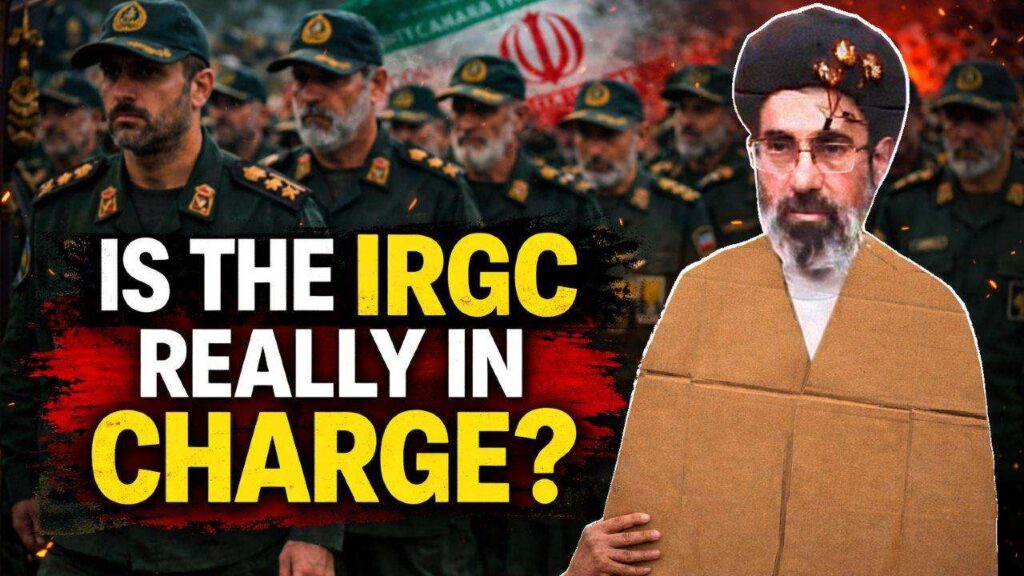
The sudden death of Ayatollah Ali Khamenei in a U.S.-Israeli strike has plunged Tehran into chaos, and his son Mojtaba’s rapid elevation amid conflicting reports of severe injury raises urgent questions about who actually runs Iran. This piece walks through the claims of a comatose successor, the shadowy rise of the IRGC, and the risks that follow for the region and America’s interests. Expect a clear-eyed Republican take: the U.S. must separate verified intelligence from regime theater while standing firm against a potential IRGC takeover.
The regime presented Mojtaba Khamenei’s promotion as routine, a scripted handover in wartime. Outside Iran, dissidents and intelligence leaks painted a darker scenario: a 56-year-old cleric critically wounded and possibly incapacitated after the same strikes that killed his father. With the internet blackout across much of Iran, reliable reporting is scarce and the uncertainty breeds danger.
Multiple accounts point to intensive care at Tehran’s Sina University Hospital, with a guarded wing and trauma specialists reportedly attending to severe injuries. Surgeons cited by exile networks described loss of at least one leg and possible internal damage, which, if true, would make any public leadership role impossible for now. Such reports force us to treat the official narrative with skepticism.
Iranian officials offered mixed signals that only deepen doubt. The regime’s ambassador to Cyprus admitted Mojtaba suffered wounds to his legs, hand, and arm, while state television insisted he remains “safe and sound.” In a system that builds authority on constant public imagery, the lack of any fresh photos or public appearances has been telling.
State media broadcast what it touted as Mojtaba’s first message on March 12, read by an anchor beneath a flag and heavy with threats. The statement vowed revenge for the “martyrs” and demanded the closure of U.S. bases across the region, a tone tailored to rally hardliners. That kind of rhetoric can be a signal of the actors actually writing the script.
“We will extract compensation from the enemy,” it declared, “and if they refuse, we will seize as much of their assets as we deem appropriate. If that is not possible, we will destroy an equivalent amount of their assets.” The words were paired with promises to strike facilities in Gulf states and paeans to the “resistance front,” a phrase meant to bind Iran’s proxies to a common cause.
The timing of that broadcast, amid swirling rumors of Mojtaba’s coma, raised fresh alarms about authenticity. Dissident journalist Ehsan Karami claimed Mojtaba was on a ventilator and unaware of his elevation or his family’s fate, suggesting the message could have been prepared by handlers. If true, it would mean Tehran is using a figurehead’s name to push policies decided elsewhere.
That elsewhere is often the Islamic Revolutionary Guard Corps, the force that blends military muscle with economic clout and ideological reach. Mojtaba’s known ties to the Guards make him an ideal candidate for those seeking a pliable public face. Analysts inside the Iranian diaspora argue the IRGC moved quickly to cement control, turning a religious succession into a practical power grab.
Online chatter amplified the claim of a quiet handover, with posts on platforms like X calling it a “major, silent power shift,” driven by commanders now running daily affairs. Anonymous leaks and diaspora sources likened the setup to a staged puppet show, with the Guards keeping real authority while preserving a veneer of clerical legitimacy. These patterns echo how military factions exploit leadership gaps elsewhere.
The implications for U.S. and allied security are stark. The IRGC has long supported proxies from Hezbollah to the Houthis, and a Guards-led Iran could escalate strikes against American forces or Israel. President Donald Trump has already deemed Mojtaba “unacceptable,” a blunt signal that Washington’s response will be unforgiving if the successor threatens U.S. interests.
Not all reporting converges on a picture of collapse; some outlets and officials insist Mojtaba survived with lighter wounds and remain operational. That divergence highlights the information war: Tehran attempts to look stable while dissidents try to expose fractures. Under a communications blackout, the truth will be slow and dangerous to extract.

History shows Iran can absorb shocks, but never like this: a wartime leadership change with the country’s elite corps smelling decisive advantage. If the IRGC consolidates power, it could harden Iran’s stance, accelerate nuclear ambitions, and push more aggressive proxy campaigns. Republicans watching will argue that deterrence and intelligence must be sharpened, not softened.
The human toll is grim and immediate. The strike that ended Ali Khamenei’s rule also killed other family members and left ordinary Iranians caught between repression at home and the threat of renewed regional violence. For citizens who have long sought relief from clerical rule, a militarized regime offers little cause for hope.
What to watch next is simple: a public Mojtaba would undercut the worst rumors, while continued silence would confirm a deeper leadership crisis and embolden the Guards. Ramp-ups in attacks would be a clear signal the IRGC is steering policy; a pause might hint at internal bargaining or weakness. America and its allies must calibrate policy on tested facts, not Tehran’s propaganda.
Dissident networks keep risking everything to funnel out details despite the blackout, and those accounts, when cross-checked with slips from state sources, merit serious scrutiny. The coming days will reveal whether Iran’s power center truly shifted to the IRGC, and whether the region braces for a more dangerous phase of conflict.