

🔴 Website 👉 https://u-s-news.com/
Telegram 👉 https://t.me/usnewscom_channel
Riding a wave of surplus tax revenue generated largely by a finance-sector boom that won’t last forever, Gov. Kathy Hochul is continuing to spend like there’s no tomorrow.
The $260 billion state budget she presented last week contains plenty for New York City, including increased child-care funding, renewed state support for cops in subways and added transit capital.
Despite the much-hyped threat of federal aid cuts, the state’s core Medicaid budget will continue bursting at the seams — much of the money inevitably headed to city hospitals and health-care providers.
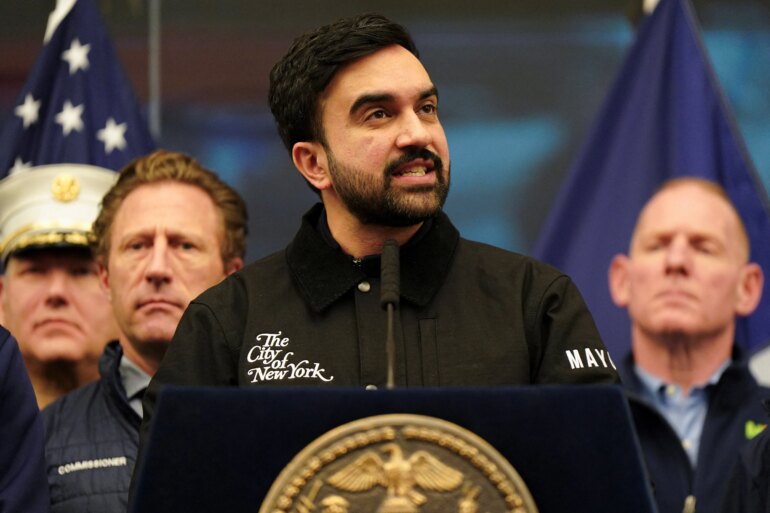
In his initial reaction to the plan, Mayor Zohran Mamdani duly tipped his cap to “meaningful investments that move us closer to an affordable and livable New York.”
But pointing to the $12 billion city budget shortfall he’s inherited from Eric Adams, Mamdani also made it clear he’ll continue to push his favorite hobby horse — raising taxes on city residents with income over $1 million, to ensure they pay a “fair share” of the city’s enormous budget.
Citing a conversation with an unnamed $1 million earner who expressed surprise that the tax hike might come to as little as $20,000 (“That’s all?” he quoted the guy as replying), Mamdani cited “a lack of understanding as to what exactly we are talking about.”
Speaking of lack of understanding — Mamdani and his tax-the-rich allies in the Legislature regularly ignore the wider economic and fiscal context for what they’re proposing.
Here are the basics.
In 2021, as part of then-Gov. Andrew Cuomo’s last budget, New York state raised its tax rate on million-dollar incomes from 8.82% to 9.65%, adding higher rates of up to 10.9% on multimillionaire earners.
The city’s tax rate of 3.88%, which begins at much lower income levels, is essentially a surcharge atop the state’s more steeply graduated rate schedule.
But the two taxes are collected together.
An increase in one rate is an increase in the total cost of living and doing business in New York City, the heaviest-taxed jurisdiction in the country.
Thanks to the 2017 federal tax law eliminating state and local tax deductions, millionaire earners already are subject to the highest effective income tax rates ever imposed by New York state — which, given its high-tax history, is really saying something.
The combined top federal, state and local tax rate on salary and bonus income for New York City residents has risen above 50% for the first time since the early 1980s — to the highest level in the country.
At the same time, the federal-state-city tax on long-term capital gains is nearly 39% — not just the highest in the United States, but one of the highest in the world.
Capital-gains income directly reflects the distribution of financial-asset wealth around the country.
Just as New York’s share of all US taxpayers earning $1 million or more dropped sharply between 2010 and 2022, the state’s relative share of millionaire capital gains income has fallen steeply as well.
During the same period, there was a notable shift to (where else?) Florida.

The average millionaire tax hike under Mamdani’s proposal would be several times the $20,000 the mayor cited in his anecdote about the million-dollar earner — running well into six figures for the mega-earners who generate a hugely disproportionate share of city income taxes.
The governor, to her credit, is at least aware that New York’s biggest taxpayers aren’t chained to the Empire State.
“I don’t want to lose any more people to Palm Beach. We’ve lost enough,” she has said.
For comments like that, Hochul is portrayed by progressives as a “moderate” party-pooper.
Which couldn’t be more ironic — since just last year she pre-emptively extended Cuomo’s 2021 tax increases for five full years beyond their originally scheduled 2027 expiration date.
Hochul needs to hold the line on further tax hikes because she knows that any further increase in city income taxes has implications for the state tax base as well.
If Mamdani’s tax agenda undermines the city’s tax base, it will do even more damage to the state’s.
Mamdani will have his own budget to roll out in February, at which point he’ll need to produce specifics on how he’ll deal with the shortfall in city finances.
If the mayor waves off responsibility for the red ink and turns to Albany for a bailout, he’ll be re-enacting a very old story in New York government and politics.
Sneak preview: It never ends well.
E.J. McMahon is an adjunct fellow at the Manhattan Institute.