
🔴 Website 👉 https://u-s-news.com/
Telegram 👉 https://t.me/usnewscom_channel
Redistricting battles in Texas and California grabbed national attention for months — but all the while, an attempt to re-gerrymander New York’s congressional map has been quietly underway in a Manhattan courtroom.
On Wednesday, acting State Supreme Court Justice Jeffrey Pearlman invalidated New York’s 11th Congressional District and ordered new lines drawn in the next two weeks, giving the case’s Democratic plaintiffs exactly what they want.
Contrary to the plaintiffs’ arguments, this isn’t about protecting minority voting rights.
It’s about finding any pretext to flip the last Republican-held House seat in New York City.
And it’s all being orchestrated by Marc Elias, the Democratic “superlawyer” whose firm seeks to win in the courtroom what his party can’t win at the ballot box.
The district covers all of Staten Island and the Brooklyn neighborhoods directly across the Verrazzano-Narrows Bridge: Fort Hamilton, Bath Beach, Bensonhurst, Dyker Heights and part of Bay Ridge.
It’s the same basic map that’s existed for five decades, yet Elias’ lawsuit claims this district improperly dilutes black and Latino voting power.
His argument is galling for many reasons, including that the current map was created by Elias’ own Democratic allies in Albany in 2024.
Democrats drew these lines, then Democrats sued to redraw them — because they didn’t like the election results.
In addition, Judge Pearlman’s decision creates a new legal standard so broad as to leave virtually any House district open to challenge.
He found evidence of “racially polarized voting” — that black and Latino voters in NY-11 tend to support the same candidates, while white voters usually support different ones — and noted that minority-preferred candidates won only five of the 20 most recent elections.
But do the math: Black and Latino voters make up roughly 30% of the district, and their preferred candidates won 25% of elections.
That’s proportional.
The judge, however, held that “vote dilution claims do not turn on whether minority-preferred candidates win elections at a rate that matches” their relative population in a district.
Under this logic, any district where minority-preferred candidates lose more than they win could be unconstitutional.
That’s absurd, and an invitation for endless litigation.
The decision also alleges a history of racial discrimination on Staten Island, including redlining and segregation. These are serious historical wrongs.
But it never explains how the current district lines are responsible for these past conditions — or how redrawing the district would fix anything.
Then there’s the elephant in the room: the district’s current three-term member of Congress.
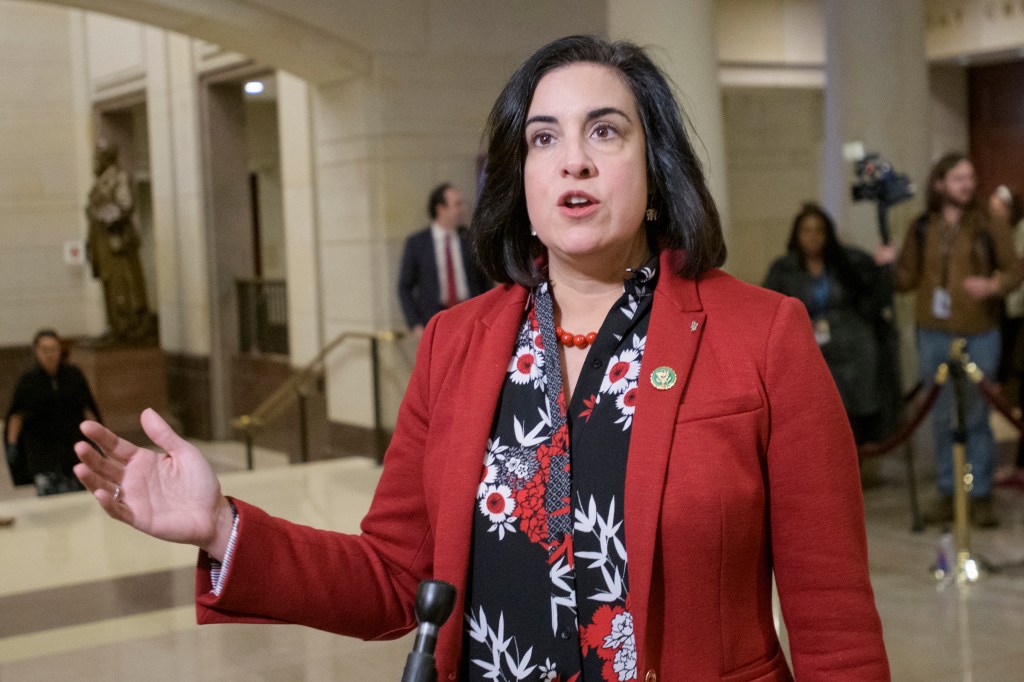
That would be Republican Rep. Nicole Malliotakis, a Latina whose mother is an immigrant from Cuba.
The decision acknowledges Malliotakis was “the first elected official of Latin American descent elected in Staten Island” — but dismisses this, explaining that electing an actual minority candidate is different from electing a minority-preferred candidate.
A Latina congresswoman represents the district, yet the court finds the district lines dilute Latino voting power because she’s the wrong kind of Latina — a Latina Republican.
Make no mistake, this lawsuit was never about empowering minority voters.
It’s purely about electing more Democrats.
Judge Pearlman’s remedy makes the partisan game obvious: The decision sends the case to the Independent Redistricting Commission with a Feb. 6 deadline — two weeks away, with candidate petitioning for November’s midterms starting Feb. 24.


The IRC, with its equal number of Republican and Democratic members, has repeatedly deadlocked. It won’t meet this impossible deadline.
When it fails, the Democrat-dominated state Legislature will draw the lines itself.
This is the third time New York will redraw its congressional map in three election cycles.
The 2022 “Hochulmander” was so partisan that courts struck it down; a court-appointed expert drew maps for that year’s congressional elections.
Democrats convinced the Court of Appeals to let the Legislature redraw the maps in 2024, and Republicans lost three seats that November.
But three seats clearly wasn’t enough.
Now the Democrats want New York City’s only GOP congressional seat, too.
By an overwhelming margin, New York voters amended the state Constitution in 2014 to stop this manipulation of the redistricting process.
They wanted to end the gerrymandering madness and the constant litigation by partisan lawyers seeking to game the system.
As Wednesday’s decision works its way through the appeals process, this fight is now bigger than just one House seat.
It’s about whether New York’s constitutional safeguards against gerrymandering mean anything at all — or whether they can be exploited by partisans whenever election results don’t go their way.
Joseph T. Burns is a partner in the law firm Holtzman Vogel and a New York State-based election lawyer.