
🔴 Website 👉 https://u-s-news.com/
Telegram 👉 https://t.me/usnewscom_channel
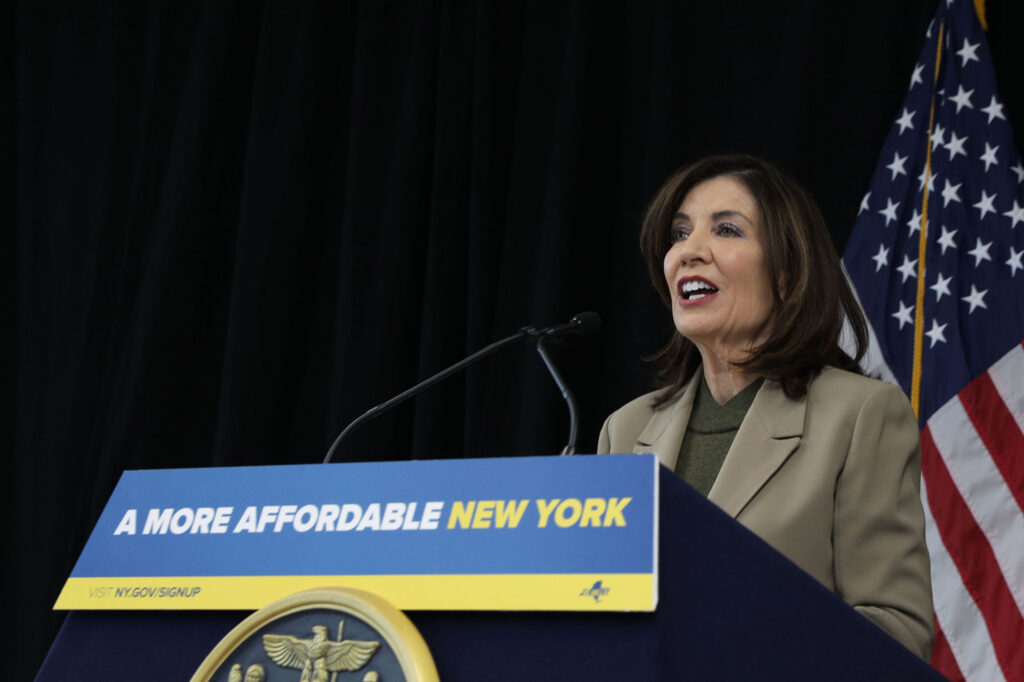
Even though Congress has punted (for now) on any national rules to regulate Artificial Intelligence development, Gov. Kathy Hochul should still veto the bill now on her desk for New York-only regulation.
America is absolutely guaranteed to lose the race with China to set the global standards for AI if US developers have to cope with 50 different sets of contradictory regulation — and the nation would pay a huge long-term economic price for that loss.
Hochul herself flagged that point months ago on Bloomberg TV: “People prefer to have a federal regulation,” as “it’s hard when one state has a set of rules, another state does, another state. I don’t think that’s a model for inspiring innovation.”
Beyond that, the bill passed by New York legislators, The Responsible Artificial Intelligence Safety and Education (RAISE) Act, contains some terrible provisions designed to boost trial lawyers, not cutting-edge tech.
How’s that?
China is zipping ahead on AI, thanks in part to the ability of labs like DeepSeek to make the source code of their large language models freely available to anyone.
US companies want to make their designs open-source, allowing others to build on their tech so American software can become the global standard.
But the ambulance chasers want to be able to sue one tech company for sky-high damages over how another programmer uses (abuses) such open-source code; that’s tantamount to banning US open-source work — even though US lawyers will have no ability to suck the blood out of China’s open-source innovators.
The RAISE Act only allows the state attorney general to sue — but it’s sure to be followed soon enough by bills to let private parties “seek justice.”
Similar innovation-crushing provisions are already part of the Transparency in Frontier AI Act that California passed last month; having New York second the trend is beyond ominous.
At the very least, it’s going to push cutting-edge tech companies to states like Texas and Florida, whose laws are likely to be far more innovation-friendly: On top of New York’s high taxes and energy costs, lawsuit-friendly laws will make the Empire State a foolish place for tech to set up shop.
Again, Congress really needs to act, with lawmakers meeting in the middle to set clear, practical AI guidelines.


Among the musts for any national regulation, incidentally: Copyright must be protected, so that AI companies can’t mine publishers’ content without compensating them.
That could put countless entertainment, news and media outfits, including us, out of business fast.
But American tech companies can’t be strangled, either, as the New York bill would do: It even tries to set international regulatory standards — anyone who wants to do business in New York will have to abide by them: Another way to send more companies running full-speed from the Empire State.
China’s lack of any true rule of law (especially in protecting intellectual property) constitutes a real handicap in the AI race, but imposing actively bad laws in America could prove worse.
Above all else, most folks who win New York state legislative races are terrible candidates when it comes to grasping the issues involved in cutting-edge tech; how can they possibly craft sensible policy that protects consumers while allowing innovation?
Veto the RAISE act, governor, and stick to your guns: Shaping the regulatory future of AI is a job for national lawmakers.