

🔴 Website 👉 https://u-s-news.com/
Telegram 👉 https://t.me/usnewscom_channel
by Mary W Maxwell
Some people have one country. Some people have no country. I have been unbelievably blessed to have two beautiful countries, US and Oz. Although both are feeling ‘down and out’ lately, that does not have to continue. Australia and America each have very intelligent citizens. We can get on top of the current ‘evil’ in our midst. Yes, we can. Defo.
Below, I’ve sketched a Bill of Rights for the country that has been a bit slow off the mark. (Oz, what could you have been thinking, not organizing your rights?) Never mind. We can start from scratch unimpeded, as no one has a vested interest in the ‘official’ (non-existent) version. Bewdy!
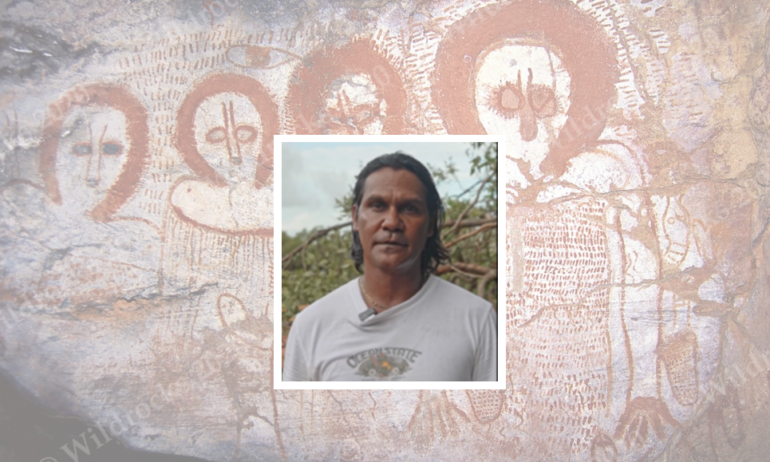
But before – or after — you read it, consider the following issue. Some colossal jerk is thinking of allowing fracking (money for mining companies) in northern South Australia. It is known as a beautiful place, the Kimberly Ranges, mainly inhabited – maintained, I’d say, by Aboriginal families. The Fitzroy River there is essential as a water supply.
A few years ago I heard that water was being cut off in the Coorong, southeast of Adelaide. I did nothing. Have felt guilty ever since. But this case is easy – it is LEGISLATION that is about to turn on the fracking machine. Eff the legislation (pardon me). Easy to fix. Just throttle your parliamentarian into doing the effing right thing.
“I have a dream” that we Anglo-ish types (in my case, Irish) can show the Bozos we mean business. Go on, find fault in the proposed Bill of Rights. Betcha can’t. There is only one way for a community to survive and that is by looking out for each other.
Say you are in a car crash tomorrow. Is the state going to get you to hospital? Yes. So please “get the Kimberly people to hospital” by making them not need hospital. Easy peasy. No matter how busy you are. Place a phone call to Adelaide.
OK, burrow down now and read my text. Then I will play a movie for you. And I thank you in advance for doing this for me, for you, for the folks at the Fitzroy River. For salvation from evil.
A Bill of Rights for Australia, Presented As a Covenant To Be Developed
Preamble: Every person is worthy of having their ‘rights’ respected, but others can, and often do, trample those rights. The only way an individual’s rights are ‘safe,’ is if many citizens covenant to deal with the likelihood of that trampling. This document outlines such a covenant.
How rights work:
- The principal desired ‘right’ is for a person to be able to carry out his/her will, rather than be forced to do what someone tells them to do. We value freedom, as such.
- Still, it can be assumed (but not sloppily taken for granted) that people living in a group agree to basic rules, e.g. “Don’t double park.” A right to double-park is not a guaranteed right; we covenanters won’t go out of our way to help someone double park.
- We covenanters, in Australia, will help individuals pursue their freedom especially when it is cruelly blocked. It is our duty to pitch in. If we don’t pitch in, there is no point claiming that humans have ‘rights.’
- The first right is the right of each living person to stay alive. Hence, we covenanters will oppose the taking of lives in Australia. This taking could occur in a large setting. For example, a corporation that seems to own a waterway might re-direct a river, with local lives at risk from inability to get enough water.
- In a small setting, the right to life may be jeopardized by a gang of bullies. The bullies may indeed wish to kill for the pleasure of killing. Covenanters cannot stand back and say “Well, fancy that; some people are perverts.” They must think of a victim’s right to live.
How this meshes with the legal system:
- Generally, modern society has organized much protection of rights via a legal system. Society criminalizes the behaviors that would otherwise harm people. Thus, Parliament legislates against larceny, murder, the supplying of narcotics, fraud, etc.
- Much of this was derived from religious teachings, sometimes under the rubric “Don’t offend God by sinning.”
- The Common Law is also the product of ‘jurisprudence’ — decisions made when a specific case was argued in court. The basis for the deciding is ‘reasoning.’ Example: Solomon decided that the baby should be placed with the claimant-mother who was unwilling that it be cut in half.
- Australia was colonized by Britain, mainly in the 1800s. All of British common law came to Botany Bay, as it were. It is still in force, unless Australian parliaments have repealed or modified particular elements of it.
- Human nature seems to contain a readiness to obey law, and a sort of adoration of law. Such is how the people can band together and make “good” happen.
- An oddment that has become noticeable lately is that, even in a modern nation where the law was created for good, law enforcers , and courts, can do wrong and attack the people. Thus, it is not sufficient to say “Those enforcers are sinning,” since one cannot appeal to ‘law’ to restrain them. Folks need to work on this conundrum explicitly.
The effect of politics on rights
- Australia is a monarchy. By tradition, the king can do no wrong. That tradition must be abandoned in our day, as one of the things a king might do is to harm the population. If he is free to do that, there is no point talking about any “rights” of the people.
- Under the current Constitution [2026], all acts of Parliament must obtain the signature of the Governor General, who speaks for the king. The G-G cannot be expected to sign an act of Parliament that calls for replacing the monarchy with a republic. [In the 1998 Referendum, the people allegedly voted ‘No’ to a Republic.)
- Therefore, in practical effect, because of 14 and 15 above, we do not have a ‘right’ to choose our form of government. This must be corrected soon, by fair means or foul.
- A cultural icon of Australia is the Party system. Persons have a right to join any group that strengthens him or her. This is often associated with class. The working class chooses to join the Labor Party, the rich lean toward the “libs” which proclaims itself conservative. Party loyalties have the unintended effect of shutting down debate.
- Federal Parliament is run along Westminster lines, with the Party in power having sway. This conflicts with each person’s right to be represented in Canberra. When your Party is out of power, you can only twiddle your thumbs.
- All federal judges are appointed politically. This may conflict with the principle of the Bench’s impartiality and the sacredness of the blindfolded Lady Justice. To secure any litigant’s rights, it is imperative that the judge answer only to the law. However, the court should go overboard in assisting a defenseless accused person, and must have an eye out for who may be persecuting whom.
Rights identified in the Universal Declaration of Human Rights
- The General Assembly of the United Nations, in 1948, declared some rights for all mankind, and in 1966 these were made into two treaties, which Australia ratified, one on civil rights and one on economic and cultural rights. Some of the 1948 rights seem well ingrained in the public now. It would seem odd to drop them. For example:
- Everyone is entitled to all the rights without distinction of any kind, such as race, colour, sex, language, religion, political or other opinion, national or social origin, property, birth or other status.
- Everyone has the right to life, liberty and security of person.
- No one shall be held in slavery or servitude.
- No one shall be subjected to torture or to cruel, inhuman or degrading treatment or punishment.
- Everyone has the right to recognition everywhere as a person before the law.
- No one shall be subjected to arbitrary arrest, detention, or exile.
- Everyone is entitled in full equality to a fair and public hearing … in the determination of his rights and obligations, and of any criminal charge against him.
- No one shall be subjected to arbitrary interference with his privacy, family, home or correspondence, nor to attacks upon his honour and reputation.
- Everyone has the right to freedom of movement and residence within the borders of each state.
- Everyone has the right to leave any country, including his own, and to return to his country.
- Everyone has the right to seek and to enjoy in other countries asylum from persecution.
- Men and women of full age, without any limitation due to race, nationality or religion, have the right to marry and to found a family. They are entitled to equal rights as to marriage, during marriage and at its dissolution.
- No one shall be arbitrarily deprived of his property.
- Everyone has the right to freedom of thought, conscience and religion; this right includes freedom to change his religion or belief.
- Everyone has the right to freedom of opinion and expression; this right includes freedom to hold opinions without interference and to seek, receive and impart information and ideas through any media and regardless of frontiers.
- The will of the people shall be the basis of the authority of government; this will shall be expressed in periodic and genuine elections which shall be by universal suffrage and shall be held by secret vote.
- Everyone has the right to work, to free choice of employment, to just and favourable conditions of work and to protection against unemployment.
- Everyone has the right to leisure, including reasonable limitation of working hours.
- Motherhood and childhood are entitled to special care and assistance.
- Everyone has the right to education. Higher education shall be equally accessible to all on the basis of merit.
- Parents have a prior right to choose the kind of education that shall be given to their children.
- Everyone has duties to the community in which alone the free and full development of his personality is possible.
New demands on the covenanters’ ingenuity:
- Time does not stand still. Now in the 21st century, we find ourselves needing protection from new technology and exorbitant new accumulations of power by a few bosses.
- Phrasing these needs as ‘rights’ will help people regain some sense of their duty to take action. To remain mere spectators would be immoral and inhuman. Examples:
- Geoengineering means that some individual, somewhere, can decide that a particular locality will experience fire, flood, tornado, heat wave, tsunami, and even an earthquake. Even someone with good intentions should not hold such power. You have a right to expect only such weather disturbance as Nature provides.
- Convergence of major media corporations means that the whole world is hearing the same story, be it a true story or a false story. One’s right to make choices requires that one have knowledge. A false story cannot convey ‘knowledge.’
- Lying has become the norm even in social relations, where once that was frowned upon. (Liars used to be despised.) We have a right to re-install honesty, for the sake of our survival.
- Cheating and secrecy have worked towards making some people billionaires. That is to say, this new development, wherein a small class of people possess more wealth than most nations possess, took place in breach of ordinary law and human understandings. It is a cuckoo situation which we have the right to halt.
- The control of health has moved from the person, the family, and the community, to a monstrosity known as Big Pharma and also Big Organized medical decision-making by insurance companies, private hospitals funded by Medicare, and a professional ‘industry’ based not on making people get healthy but keeping them dependent. We have a right to disestablish this set-up.
- Who knew that children were being taught strange values in school, or that the new devices they use were invented to alter their brains? Every child has the right to develop naturally without some technocracy ruining his opportunities.
- Who knew that the family itself was under cultural attack, not to enlarge the freedom of individuals but to deprive them deliberately of the security of home, marriage, and an automatic source of emotional support? How far out of humanity are the persons (perhaps slaves themselves) that sit down at a desk and plan such things?
- Australia was once known, to Third World countries seeking independence, as a spokesperson for liberation and as a champion of the Little Guy. Clearly Aussies have the background, coming from a penal-colony set-up where prisoners got beat up ‘for fun.’ It is well within possibility for Australia to develop a whole new philosophy of rights.
The post Hey, You Mob! A Bill of Rights for Australia. And I Beg You To Nix the Frack in the Kimberly Ranges appeared first on Gumshoe News.
This content is courtesy of, and owned and copyrighted by, https://gumshoenews.com and its author. This content is made available by use of the public RSS feed offered by the host site and is used for educational purposes only. If you are the author or represent the host site and would like this content removed now and in the future, please contact USSANews.com using the email address in the Contact page found in the website menu.