
🔴 Website 👉 https://u-s-news.com/
Telegram 👉 https://t.me/usnewscom_channel
Americans say they value hard work — and this week Congress has a chance to prove it.
Lawmakers in the House are now debating the SPEED Act, a bipartisan permitting-reform bill that could help reignite the American Dream for millions of working families.
By setting firm timelines on federal permitting for energy, mining, logging and infrastructure projects, the measure could determine whether responsible projects get built — or remain buried in paperwork for decades.
That question isn’t abstract to me: I grew up in Libby, Mont., a timber town where work meant not just a paycheck, but identity.
Our high school mascot was the Logger. When the football team scored, the sound of chainsaws roared from the bleachers.
It wasn’t noise. It meant respect.
That was how the valley saluted the millwrights, welders and loggers who built the American West with sweat and skill.
For generations, a kid in Libby could graduate high school on Friday, lace up his boots on Monday and start earning a living that would support a home, a truck and a family.
No resumé or pedigree needed — just a work ethic, a pair of gloves and an older tradesman willing to teach the craft.
That world didn’t disappear because Americans stopped wanting to work.
It disappeared because the system stopped letting them.
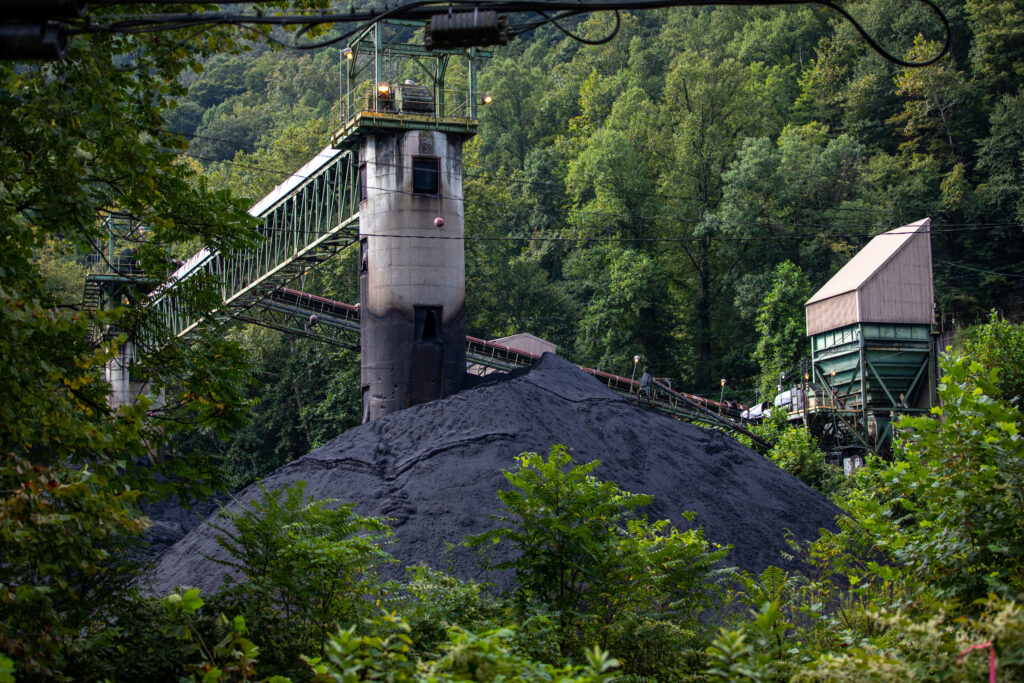
Just outside Libby sits the Montanore Project, one of the largest undeveloped copper and silver deposits in the country.
First proposed in the 1980s, it has spent more than 40 years navigating environmental reviews, lawsuits and bureaucratic delays.
Entire generations have grown up, started families and moved away from Libby while a project capable of supporting hundreds of good-paying jobs sat frozen on paper.
Not because the resource wasn’t there. Not because the workforce wasn’t capable.
But because the permitting process never ends.
And it’s not just minerals.
Over the past two decades, millions of acres of timber in Montana alone have burned: Enough lumber to build millions of homes — reduced to smoke and ash.
All while projects that could have thinned forests, reduced fire risk and kept mills running were delayed or killed outright.
The cost isn’t just environmental. It’s economic and cultural.
It’s lost paychecks, shuttered mills, apprenticeships that never started and families who watched opportunity slip away while regulators demanded just one more study.
My friend Mike Rowe has been fighting for years to make a persuasive case for the skilled trades, and for the dignity of the work itself.
Long before these government failures were headline news, Rowe was sounding the alarm about the collapse of America’s skilled trades — on his hit show “Dirty Jobs,” in sworn testimony before Congress, and in conversations with thousands of employers across the country.
“Something fundamental has broken,” he told me. “Not a week goes by that I don’t hear from the leader of some essential industry, desperate for skilled workers. ‘Where are they?’ they ask.
“I always tell them the same thing: They’re in the eighth grade.”
Rowe hasn’t just diagnosed the problem — he’s invested in solutions.
Through his mikeroweWORKS Foundation, he has awarded nearly $20 million in work-ethic scholarships to Americans who chose trade school over a four-year degree.
He has also launched advocacy campaigns in several states to highlight the millions of good-paying trade jobs sitting open today.
Get opinions and commentary from our columnists
Subscribe to our daily Post Opinion newsletter!
Thanks for signing up!


Those efforts are having an impact.
But until we eliminate senseless regulations and onerous compliance burdens that prevent projects from ever breaking ground, Rowe — and anyone serious about closing the skills gap — will be fighting uphill.
Without enough real, breadwinner jobs, young Americans are pushed toward debt-financed degrees that too often fail to deliver stability, while the skilled trades that once built the middle class sit sidelined by a system that won’t let work begin.
You can’t rebuild the middle class if the jobs never get off the drawing board.
That’s why the SPEED Act matters — and why it matters now.
The bill would establish clear, enforceable timelines for federal permitting, end the endless reviews, and allow responsible projects to move forward — while still protecting our land and water.
It doesn’t weaken environmental standards; it revives common sense.
America’s greatest renewable resource isn’t sunlight or wind, but the work ethic of people who know how to build, fix, mine, mill, weld, wire and restore the physical world.
They don’t need lectures about dignity. They live it.
The people who want to work are not the problem. The system that won’t let them is.
If Congress is serious about restoring opportunity and giving working families a fair shot at the American Dream, it must pass the SPEED Act — and let Americans do the work again.
Jesse Ramos is the state director of Americans for Prosperity-Montana.