
🔴 Website 👉 https://u-s-news.com/
Telegram 👉 https://t.me/usnewscom_channel
Iran has turned its war with the United States and Israel into a direct assault on its Persian Gulf neighbors — targeting not just American military and diplomatic installations based in these Arab states, but on Arab capitals themselves, and on the world’s energy lifeline.
On Saturday, Iranian President Masoud Pezeshkian apologized to Gulf states for Tehran’s strikes — but soon after, the Revolutionary Guard launched more drones and ballistic missiles at the same Arab neighbors Tehran claimed to regret hitting.
The attacks have been relentless.
Iranian strikes on Saudi oil facilities last week forced the shutdown of the kingdom’s largest refinery, and damaged US diplomatic missions in Riyadh and Dubai.
Qatar suspended some of its natural gas production after being struck twice on Monday.
On Wednesday alone, the United Arab Emirates and Kuwait endured barrages of nearly 200 ballistic missiles each.
Tehran’s sustained assault makes clear that the era of hedging is over.
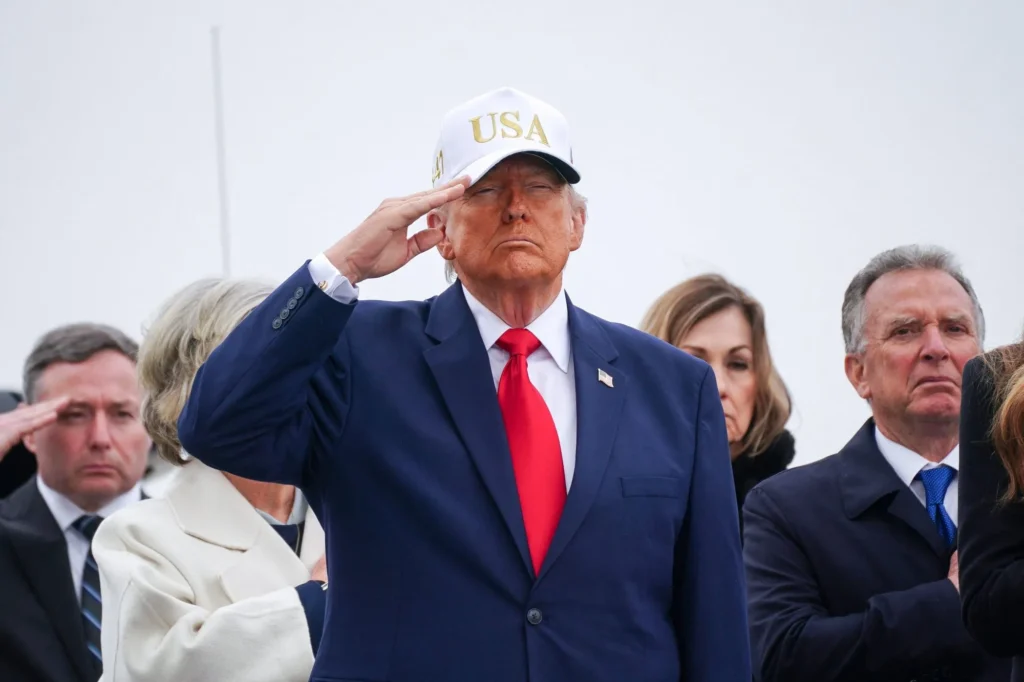
President Donald Trump should tell America’s Arab Gulf partners that they must choose a side.
For years, Gulf leaders have tried to balance between Washington and Tehran — publicly distancing themselves from any potential US military action against Iran, while relying on American security guarantees to shield them from the regime’s aggression.
It’s a strategy that no longer holds up when missiles are falling on Dubai and Doha.
Not even Oman, long seen as Tehran’s preferred Gulf interlocutor, was spared.
Iran knows it can’t defeat the United States outright, so it’s trying to make the war unbearable for America’s partners.
If it hits airports, ports, energy infrastructure and commercial hubs hard enough, it expects Gulf leaders to decide that siding with Washington is too costly.
A drone over a luxury skyline spooks investors; a missile striking an airport empties the terminals and grounds flights.
But the real pressure point is energy.
However much the Gulf has tried to turn itself into a tourism and financial hub, it remains the backbone of global oil and liquefied natural gas markets.
Sustained strikes on oil facilities, export terminals, LNG infrastructure or shipping lanes could bring this industry to its knees.
If oil exports are disrupted or LNG shipments slowed, Gulf economies bleed.
That reality alone may soon push Gulf governments to conclude that staying on the sidelines is more dangerous than entering the fight.
To their credit, the Gulf states’ air defenses have performed admirably under fire, knocking down large numbers of incoming missiles and drones and preventing far worse damage than the relatively little already absorbed.
But defense can only blunt a blow, not deter the next one.
That’s precisely why Trump must make the case directly to Gulf leaders: Air defense alone is not a strategy.
Iran’s barrages are continuing. Interceptor capacities are surely strained
Gulf leaders now face a stark choice, and Trump must frame it that way.
They can continue absorbing blows and hope Iran eventually runs out of missiles — or they can help shorten the war.
That means more than quiet coordination: It means building a formal, defense-focused regional security architecture that integrates air and missile defense with shared intelligence.
The Gulf states should have joined such a framework long ago.


In fact, the basic architecture already exists.
In 2024, when US CENTCOM guided an international defense effort to thwart Iran’s missile and drone attacks on Israel, multiple Arab states joined in.
Now, Washington should turn that ad-hoc cooperation into a permanent regional shield — linking Gulf radar networks, air defenses and early-warning systems with American and Israeli assets in the region.
That means real-time intelligence on Iranian launches, integrated air and missile defense coverage across Gulf airspace, and joint command centers capable of intercepting threats.
The payoff would be immediate.
It would turn today’s patchwork of national defenses into a single protective umbrella over the Gulf, freeing American forces now defending Gulf skies to focus on the source of the danger.
It would send Tehran a message that the Gulf is part of a coordinated security bloc that won’t be intimidated by missile terror.
And if Iran continues to rain missiles and drones on Gulf cities, those same states may decide that defense is not enough — and that helping shut down the launchers is the fastest way to restore security.
Some Gulf leaders will hesitate, worrying that overt alignment with Washington or Jerusalem will spark domestic backlash and paint a target on their backs.
But last week proves equivocation doesn’t buy immunity.
The choice here is between a short, decisive confrontation and a prolonged cycle of bombardment that erodes stability.
Trump should make this clear to his Arab partners: Iran has chosen to target you.
The path to security is not to distance yourself from Washington, but coordinated action that eliminates the common threat.
Ahmad Sharawi is a senior research analyst at the Foundation for Defense of Democracies.