
🔴 Website 👉 https://u-s-news.com/
Telegram 👉 https://t.me/usnewscom_channel
The Guardian’s recent article, “‘My husband and daughter went down to the garage in case it flooded. Then I heard a strange noise’ – This is climate breakdown,” by Ajit Niranjan, presents the tragic story of a family caught in the Valencia floods of October 2024, framing the disaster as evidence of “climate breakdown.” This is false. History shows such storms and floods have repeatedly occurred in that region of Spain before, and the article ignores that important context along with other factors, like rebuilding in known flood zones, that made the recent flooding likely and likely worse than it otherwise might have been.
The article asserts, “devastating storms hit the Iberian Peninsula, bringing the heaviest rain so far this century . . . scientists say the explosive downpours were linked to climate change.” The human tragedy is real, and the suffering undeniable. But The Guardian uses this story as a vehicle for a sweeping climate narrative that the observational record undermines.
A single storm—even a deadly, destructive one—says nothing about long-term climate trends. Weather is not the same as climate. Weather extremes resulting in floods have occurred in Spain for centuries, well before modern industrial emissions. Historical accounts such as those of the catastrophic October 1957 Valencia flood, which killed dozens and reshaped the city, or the 1879 and 1897 torrential rains that inundated large portions of eastern Spain, illustrate that intense downpours are hardly unique to the present era.
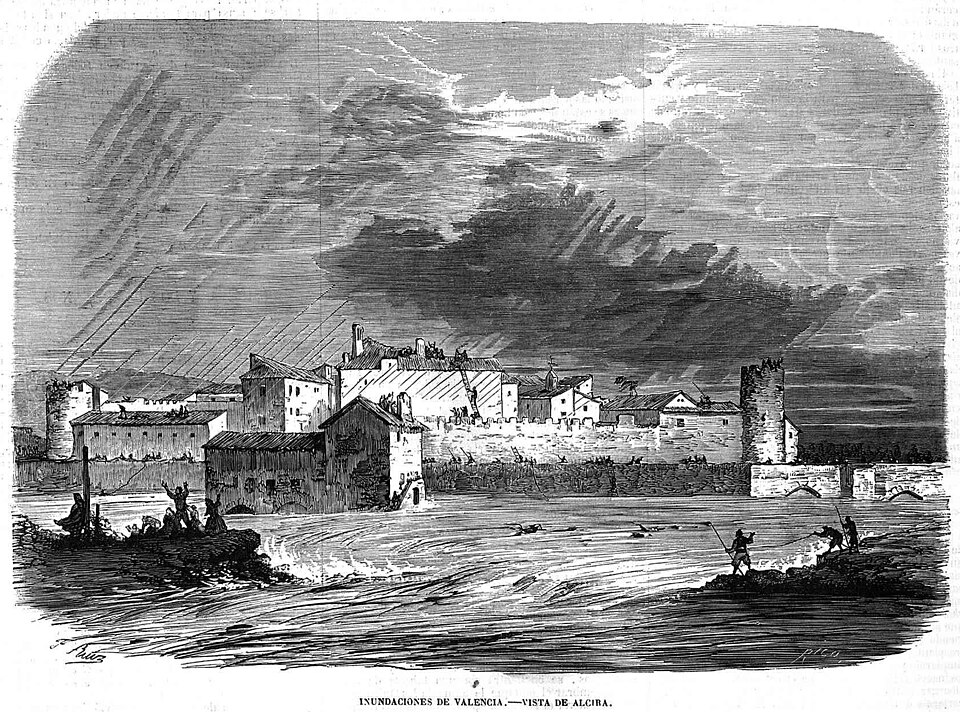
An example is a drawing from 1864, by Frederico Ruiz, which showed the scale and violence of flooding in Valencia Province, in Alzira, a city on the left bank of the Xúquer River, 45 kilometers to the south of Valencia in 1864.
In fact, peer-reviewed science shows a long history of such floods well before “man-made climate change” was even a buzzword and global atmospheric CO2 levels were much lower. One peer-reviewed study published in 1996 shows that floods there were far worse in the 1600s than today, as seen below.
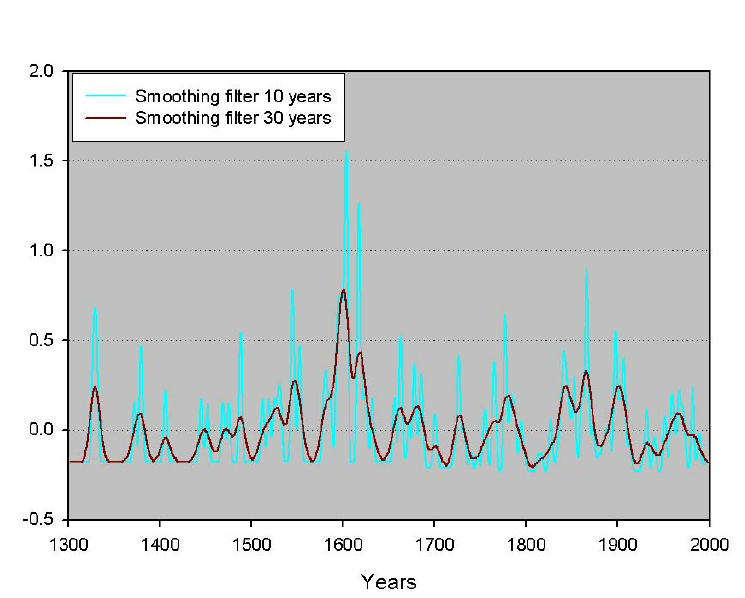
The Guardian ignores this important context entirely, promoting the false narrative that climate change is responsible for or makes worse every present day natural disaster, notwithstanding history.
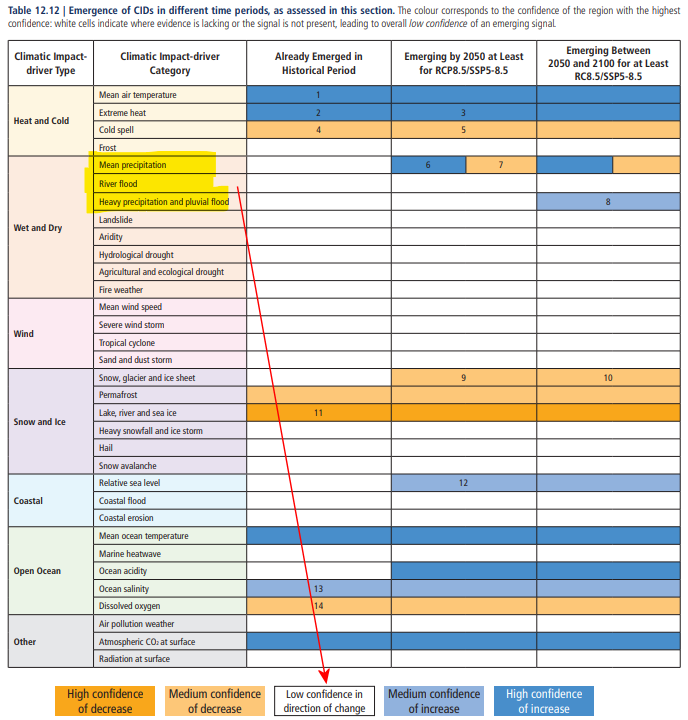
Observational climate data paint a more complicated picture than “climate breakdown.” The Intergovernmental Panel on Climate Change (IPCC) Sixth Assessment Report (AR6), on Page 90, table 12.12 (seen below) states that it has low confidence in any global trend in flood frequency or magnitude.
Similarly, rainfall intensity varies strongly across decades due to natural climate oscillations such as the North Atlantic Oscillation (NAO) and Mediterranean teleconnections. None of this appears in the article, which instead wrongly implies a direct, linear link between fossil-fuel emissions and a single storm event.
If readers want data-driven assessments rather than emotional narratives, they can consult the Climate at a Glance summary “Floods,” which explains that global flood trends show no sustained upward pattern. Likewise, “Extreme Weather” summarizes that most categories of extreme weather—hurricanes, tornadoes, droughts, heatwaves, rainfall—show mixed or declining long-term trends in the observational record. Climate Realism has documented many media misrepresentations of rainfall and flooding events, including their recent takedown of a similar BBC claim, “Flooding Facts Drowned by Climate Hysteria: The BBC Ignores Spain’s Weather History.”
The Guardian also fails to acknowledge the decisive role that local factors played in magnifying the Valencia disaster. The flood images in the article, showing submerged vehicles piled together and narrow streets acting as channeled torrents, make clear that urban design, impermeable surfaces, insufficient drainage systems, and inadequate warnings all contributed to the severity of impacts. The increased urbanization in a known flood plain was an invitation to the disaster that occurred. The woman at the center of the article concludes that the regional government’s failure to warn residents or provide preventive measures was the primary cause of loss, not the climate. Yet The Guardian still insists that the true antagonist is “climate breakdown.”
Natural climate variability, infrastructure decisions, and emergency preparedness determine disaster outcomes far more than marginal changes in global average temperature, a fact The Guardian ignores to the detriment of the truth and its readers. The Guardian’s assertion that the recent flood was unprecedented is flat out false, as similar or worse flooding events in the region documented in the historical record attest – floods that occurred long before CO₂ levels rose significantly .
By implying that a heartbreaking family tragedy is proof of global climate collapse, The Guardian irresponsibly misleads its readers, substituting emotional persuasion and advocacy with scientific rigor. Readers deserve factual reporting complete with historical context and data, rather than a false narrative that treats every intense weather event as evidence of a “climate breakdown.”
The post From Storm to Scare Story: How The Guardian Wrongly Claimed Climate Change Caused a ‘Climate Breakdown’ appeared first on ClimateRealism.
This content is courtesy of, and owned and copyrighted by, https://climaterealism.com and its author. This content is made available by use of the public RSS feed offered by the host site and is used for educational purposes only. If you are the author or represent the host site and would like this content removed now and in the future, please contact USSANews.com using the email address in the Contact page found in the website menu.