

🔴 Website 👉 https://u-s-news.com/
Telegram 👉 https://t.me/usnewscom_channel
The Department of Homeland Security sits at the eye of a political storm during the partial government shutdown that began February 14, 2026, and the stakes are higher than cable talking heads want you to believe. Funding lapsed and more than 260,000 federal workers across TSA, FEMA, and the Coast Guard face uncertainty, while immigration enforcement continues under rules set by last year’s One Big Beautiful Bill Act. Media coverage is flattening a complicated fight into soundbites about masks and body cameras, and that framing is steering attention away from what really matters. This piece lays out why the warrant fight matters, how reporting obscures it, and what Republicans should be saying now.
The hot take from many outlets centers on surface-level reforms: body cameras, clear name badges, and bans on masks in operations. Those items have been packaged as “accountability measures” and presented like common-sense fixes people can nod along to. But treating optics as the core of the dispute lets broader, more consequential policy changes slip through without scrutiny. Conservatives should call out that sleight of hand instead of letting the narrative be set for them.
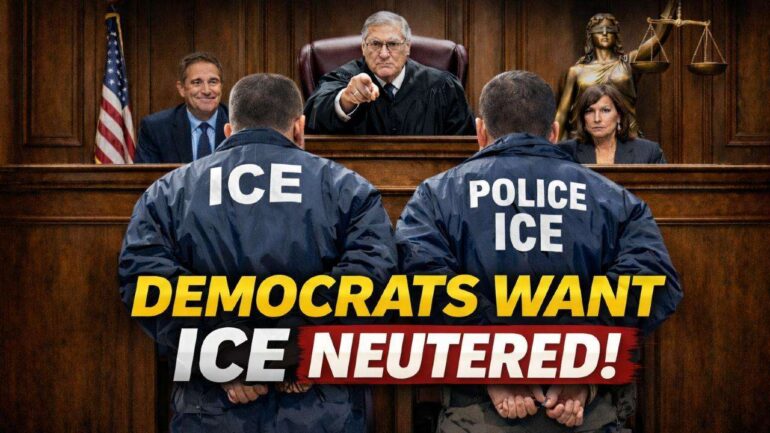
Behind the optics is a push by Democrats to swap decades-old administrative warrants for judicial warrants whenever agents make arrests on private property. Administrative warrants, authorized under the Immigration and Nationality Act, let ICE act quickly and avoid needless delays. Requiring a judge’s sign-off every time would inject heavy legal friction, giving suspects time to disappear and making routine enforcement sluggish and less effective.
This is not a neutral tweak to process. It would fundamentally alter how enforcement works, narrowing options at a moment when policymakers are talking about aggressive deportation campaigns. The change would not only slow arrests but create legal chokepoints that opponents can exploit in court. Republicans need to say plainly that this demand, tucked behind talk of badges and cameras, would hamstring operations and put public safety at risk.
Recent, high-profile incidents have fueled demands for changes, and those cases deserve scrutiny and appropriate response. But the media’s focus on individual tragedies becomes a vehicle to push structural shifts that do far more than improve transparency. Labeling the package as focused on masks and identifiers comforts viewers while masking the true policy trade-offs being demanded. That rhetorical sleight of hand is exactly what critics should be exposing.
Coverage often reduces the debate to Democrats insisting agents “identify themselves” or banning procedures described as “secret police” tactics, as if that resolves the important legal questions. When reporters dwell on whether officers wear masks or display badges, they miss how bundled proposals would rewrite enforcement doctrine. The public ends up believing this is about simple decency instead of a wholesale reconfiguration of immigration tools.

Republican leaders have pushed warnings about how Democrats’ demands would leave agents “totally vulnerable” and complicate national security work, but those warnings have too often been procedural or muted. Instead of defaulting to process, the GOP needs to connect the dots for voters: slower enforcement means more people evade capture, cartels and coyotes gain leverage, and communities face greater exposure to criminal activity. That is the real trade-off at stake.
Media narratives also downplay how the One Big Beautiful Bill Act funding interacts with this fight. Because enforcement remained operational after that infusion, networks can portray agencies as unaffected, and the debate gets framed as an internal policy squabble. But the infusion only temporarily preserved activity; it does not erase the policy consequences of converting administrative practice into judicial gatekeeping.
- Focus on Face Masks: The “masks off” framing sounds like an accountability win, but it sidesteps how removing tactical protections could endanger agents while failing to address warrants and paperwork that matter more.
- Name Badges and Body Cameras: Those look reasonable on the surface, yet they are being used as cover for broader demands that will slow deportations nationwide.
- Downplaying Judicial Warrants: The shift to court-ordered warrants is buried beneath feel-good reforms, leaving the public unaware that enforcement would be bogged down in new legal hurdles.
- Ignoring Republican Concerns: Much reporting skips GOP warnings that tying immigration policy to funding risks disrupting DHS operations far beyond enforcement, and that omission matters.
If Republicans want to win this argument, they must stop playing defense on optics and start telling the public what the proposed legal changes would do in practice. Press conferences and social posts should name the warrant issue, explain the operational consequences, and challenge media shortcuts that reduce the debate to superficial fixes. Voters deserve a clear choice between preserving effective enforcement tools and accepting a reimagined system that leaves dangerous gaps.