

🔴 Website 👉 https://u-s-news.com/
Telegram 👉 https://t.me/usnewscom_channel
This piece examines a sharp divide in preparedness thinking: should you stockpile only useful gear, or hold portable wealth like gold and silver for bartering when the worst happens? It follows a wide-ranging chat on The Late Prepper where JD and guest Ira Bershatsky pivoted from economic talk to survival tradeoffs and practical choices for real-world breakdown scenarios.
People who demand every stored item have direct utility make a clear point: in a survival crisis, the things that keep you alive and moving are the things that matter. Food, water treatment, fuel, medical supplies and practical tools solve immediate problems and prevent small issues from turning deadly. Those essentials are consumable and often unglamorous, but they usually determine whether a household can sustain itself for weeks or months.
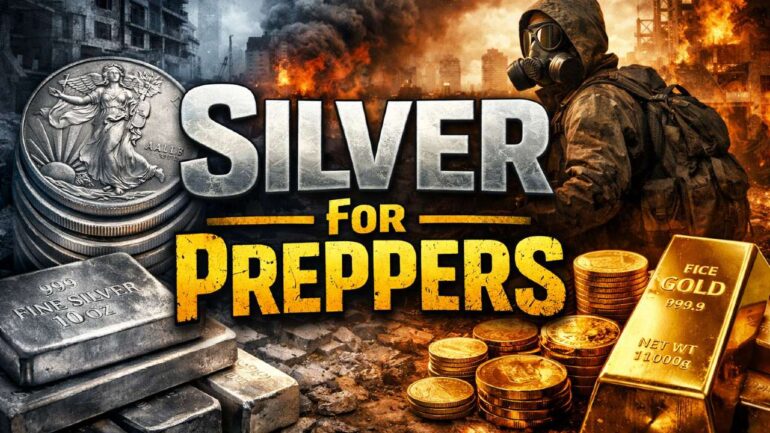
On the other side, advocates for barterable assets argue that some form of condensed value is useful when conventional currency fails or when networks break down. Metals like gold and silver, along with other compact stores of value, are prized for durability and portability. They can be moved, hidden, and traded discreetly, and in some communities they retain recognized worth even when paperwork and banks collapse.
The tension comes down to immediate survival versus medium-term exchangeability, and the right answer isn’t one-size-fits-all. If the crisis is localized or short-lived, consumables and tools will outstrip gold for usefulness because you literally eat and use them. If the collapse is prolonged and social order erodes, items that are widely valued and easy to trade can become critical to securing goods you can’t produce yourself.
Practical prep folks often forget the human element: trade only works if people are willing to accept what you offer. In many SHTF stories, cigarettes, alcohol, hygiene products and painkillers quickly become unofficial currency because they are recognizable, divisible and immediately useful. Gold and silver have advantages but also limits; they require trust in someone’s ability to evaluate and accept them, which is not guaranteed in chaotic marketplaces.

There’s also a scale issue to consider. Bulky stockpiles are excellent for a family bubble but hard to move or defend if you need to relocate. Small, high-value items let you travel light and negotiate escape or resupply. At the same time, tiny valuables can be stolen and are tempting targets, so security and concealment strategies become part of their cost. Diversifying between anchored supplies and portable value reduces single-point failures.
Another angle is convertibility and local context. Precious metals are globally recognized but not always immediately liquid for day-to-day essentials. Consumables and skills often convert faster into food, shelter or help. Building a reputation as a reliable trader, mechanic, medic or gardener can be as valuable as any physical asset, because social capital tends to amplify whatever you bring to a community exchange.
Risk management in prepping shouldn’t be mystical. Think in scenarios: brief disruptions, long local breakdowns, full societal collapse. For short events, prioritize consumables and redundancy. For longer-term instability, add compact stores of value and learn how to make them useful in barter—break gold into smaller units, keep silver in recognizable forms, or combine with tradeable goods that increase acceptability like sealed antibiotics or fuel canisters.
Finally, plan for both security and flexibility. Rotate food and medicines, train the people who will use your supplies, and stash part of your value in forms that are both mobile and discreet. Combining practical survival items with some portable wealth and social skills creates a layered approach where each asset can be called on depending on how the situation unfolds.