

🔴 Website 👉 https://u-s-news.com/
Telegram 👉 https://t.me/usnewscom_channel
Chevron, the energy company that began relocating its headquarters from the Bay Area to Texas in 2024, wrote a letter Tuesday to Gavin Newsom’s office warning about the proposed changes to the state’s Cap-and-Invest regulations.
The industry giant warned that if enacted, the new regulations will “cripple the survivability of the state’s remaining refineries.”
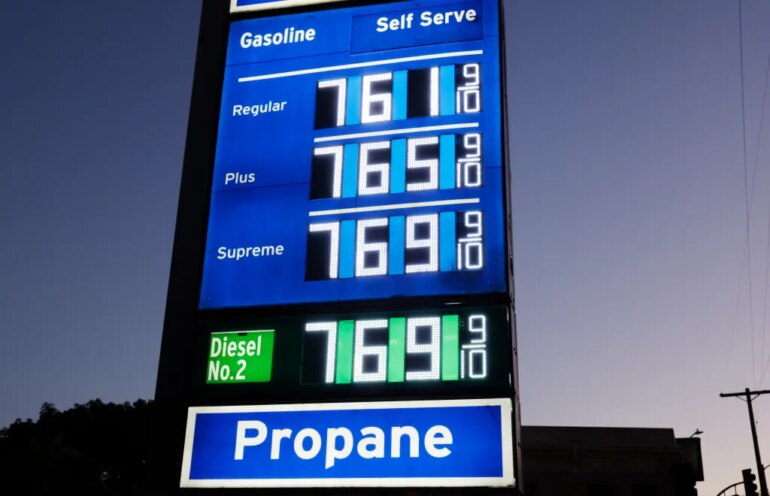
Chevron further predicted that “the price of gasoline will increase by more than a dollar a gallon by 2030 as a result of this regulatory change.”
Under Cap-and-Invest regulations, which are set by the California Air Resources Board (CARB), companies must hold sufficient allowances to match the volume of their greenhouse gas emissions.
If companies do not have enough of these permits, they are required to purchase more, either through CARB’s quarterly auctions or through private transactions.
The proposed changes to the Cap-and-Invest rules would raise the price of these allowances, dramatically affecting the ability of refineries to operate in the state.
This situation is made even more precarious by California’s strict environmental standards, which effectively require that fuel must be refined within the state.
In a 2024 policy report, Robert J. Michaels and Independent Institute Senior Fellow Lawrence J. McQuillan found that due to stringent regulations, California is essentially a “fuel island,” cut off from the rest of the country.
According to the authors, this means that “refiners and retailers cannot simply buy gasoline from other states in a pinch to meet demand.”
In 2022, the California Energy Commission revealed that over 70 percent of the state’s crude oil is imported from elsewhere, but that the vast majority of refined fuel is produced in-state.
Moreover, over the last few years, several major oil refineries in California have closed or begun the process of closing. As these refineries have wound down operations, gas prices in California have already increased.
Forty years ago, there were 42 refineries in the state, but there will soon be only 11. This trend is likely to accelerate if proposed changes to existing regulations are enacted.
This means that if the remaining refineries in the Golden State were to close, due to Cap-and-Invest, the economic consequences would be devastating.
Chevron reminded Newsom and CARB that there are still over half a million fossil fuel industry jobs in California, and that the industry contributes $64 billion in federal, state, and local taxes.

That’s a lot at stake.
Moreover, without refineries in California that produce a blend that adheres to the state’s regulations, refined fuel would have to be imported from a few select locations, such as Asia, dramatically reducing the supply of fuel in the state.
With the highest gas tax in the nation, California already has the most expensive gas prices out of all fifty states—approximately $4.80 per gallon in March 2025.
In the past, Newsom has tried to blame Chevron and other oil companies for high gas prices, accusing them of “gouging.”
But taxes and regulatory costs make up well over $1 per gallon of the gas price in California. As of December 2025, these costs contributed to $1.28 of per gallon fuel costs, or approximately 30 percent of the then sticker price.

The burden of these costs is not shared equally. Low-income populations tend to spend a larger portion of their income on fuel expenses, which means that these policies effectively function as a regressive tax.
For a state that champions itself on being progressive and supporting everyday Californians, these policies do the exact opposite.
Download The California Post App, follow us on social, and subscribe to our newsletters
California Post News: Facebook, Instagram, TikTok, X, YouTube, WhatsApp, LinkedIn
California Post Sports Facebook, Instagram, TikTok, YouTube, X
California Post Opinion
California Post Newsletters: Sign up here!
California Post App: Download here!
Home delivery: Sign up here!
Page Six Hollywood: Sign up here!
The burden of these policies will only be further amplified by the conflict in Iran, which has already raised the cost of crude oil by 15 percent.
The Chevron warning should not be taken lightly. Fuel and transportation are the backbone of economies; to jeopardize fuel security is to threaten economic stability.
Repeatedly, from its insurance regulations to its fuel regulations, the Golden State has shown what happens when regulators attempt to overregulate markets.
Chevron’s letter also reminded the governor that raising the price of fuel, and constricting supply, could harm national security.
California’s ports and airports, and the federal military facilities in the state, need fuel to function. They get it from the same refineries that consumers do.
The new “green” regulations could put our entire country at risk.
Perhaps that’s the message that will finally get through to a would-be commander-in-chief.
Kristian Fors is a research fellow with the Oakland-based Independent Institute and director of the California Golden Fleece Awards.