

🔴 Website 👉 https://u-s-news.com/
Telegram 👉 https://t.me/usnewscom_channel
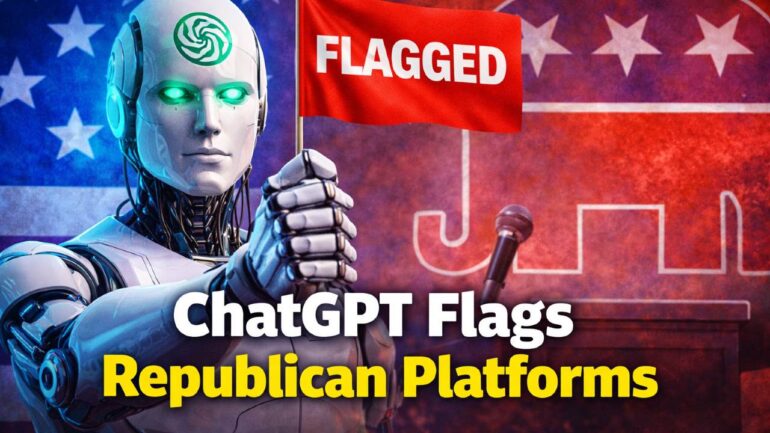
ChatGPT flagged links to the Republican fundraising platform WinRed as potentially unsafe while leaving comparable Democratic links alone, a disparity a marketer exposed that OpenAI called a technical glitch; the episode stoked conservative concerns about bias in AI, raised fresh questions about how automated safeguards can shape political behavior, and prompted heated reactions from party leaders who warned about interference ahead of elections.
The story broke when digital marketer Mike Morrison ran a simple experiment asking the chatbot to generate campaign merchandise store links. He reported the result on X and wrote, “WILD. ChatGPT universally marks [WinRed] links as potentially unsafe,” adding, “Of course ActBlue links are totally fine.” The contrast was stark: identical tasks, different flags.
When the AI appended warnings to WinRed addresses, the message suggested users “check this link is safe,” noting the site was unverified and could share conversation data with a third party. That kind of caution is useful against phishing, but applied unevenly it becomes a nudge that can chill engagement. People who see a safety tag may hesitate to donate or even click through, and small frictions add up quickly in fundraising races.
OpenAI responded after the post drew attention and explained the behavior as a technical hiccup tied to indexing and AI-generated link safeguards. Spokesperson Kate Waters said, “This wasn’t about partisan politics,” and the company promised to correct the issue. The official fix may be straightforward, but the political optics are not.
WinRed’s CEO pushed back hard and framed the selective warnings as a threat to electoral fairness, calling the incident “election interference.” That language captures why conservatives are alarmed: a tool trusted for facts and assistance could subtly skew traffic away from one side. The worry isn’t only about one glitch but about patterns that repeatedly touch conservative causes.
This episode didn’t appear in isolation. Conservatives have pointed to earlier incidents where major models treated similar queries about Republicans and Democrats differently, and those examples feed a broader narrative of ideological tilt. Whether due to training data, human reviewers, or automated safeguards, the appearance of bias corrodes confidence among users who already suspect tech elites of partisan leanings.
Technical defenses that flag unindexed or AI-generated links aim to protect people, yet they can produce unintended consequences when they trigger disproportionately for one party’s infrastructure. If a platform’s URLs are crawled less or structured differently, it may fall into a safety gray zone more often. The system-level effects of crawling, indexing, and verification deserve scrutiny when they intersect with politics.
There’s a chain from a subtle warning to real-world results: fewer clicks, fewer donations, less visibility. In tight races, small margins matter and fundraising is a tangible resource that can be influenced by these digital nudges. Conservatives see this as a vulnerability that needs fixes and guardrails that prevent accidental or systematic dampening of political participation.
OpenAI’s quick attribution to indexing gaps is plausible, but plausibility doesn’t erase the need for transparency. When tools mediate civic engagement, every explanation should come with evidence: logs, timelines, and clear steps taken to prevent recurrence. Ambiguity breeds suspicion, and the company’s remediation must convince skeptical users it was a one-off error.

Beyond a single incident, the bigger question is how large language models handle politically sensitive content under their safety frameworks. Are automated checks uniformly applied? Who audits the decisions and how often? Without public scrutiny, policy choices inside these systems look like black boxes that affect elections indirectly.
The conservative critique is straightforward: tech systems reflect the assumptions of their designers and the biases in their data, and without explicit safeguards for neutrality, those systems will tilt outcomes by default. That point resonates for Republicans who already feel squeezed by content moderation and platform policies elsewhere in the tech ecosystem.
If we accept that AI tools shape behavior, then correcting a glitch isn’t enough; companies must build accountability into how safeguards operate around politics. That could mean clearer standards for indexing, faster appeals processes for flagged entities, and independent audits so parties can trust the systems they rely on to reach voters and donors.
Fixing a single flagged link won’t erase the political fallout, so the response should be measured and visible. Concrete steps and public reporting would help restore confidence faster than private fixes alone. For many conservatives, only visible checks and balances will stop the next unexpected nudge from becoming a trend.
This episode underscores that when AI stands between people and civic action, the stakes are political and practical. It’s not merely a tech problem; it’s an issue about who gets seen and who gets shadowed in the digital public square. Republicans are rightly demanding answers and structural changes to prevent future mismatches between safety systems and civic fairness.