

🔴 Website 👉 https://u-s-news.com/
Telegram 👉 https://t.me/usnewscom_channel
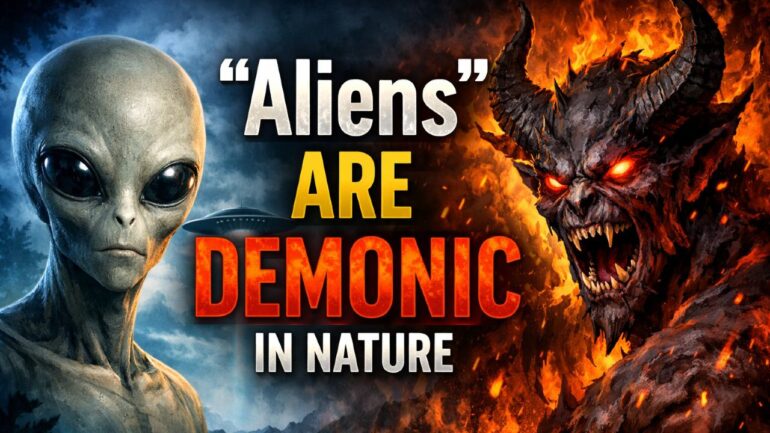
This article argues that the Bible places Earth and humanity at the center of creation, that salvation through Christ addresses fallen humans specifically, and that modern UFO and UAP reports—while real and puzzling—fit more consistently with spiritual deception and advanced human programs than with extraterrestrial civilizations.
The scriptural story begins with an unmistakable focus on our world and our race. “In the beginning God created the heaven and the earth” sets the scene for a narrative in which the creation account revolves around Earth as the intended home for mankind. Scripture consistently treats humanity as the special object of God’s creative and redemptive attention.
Isaiah’s clarity drives that point home in no uncertain terms: “For thus saith the LORD that created the heavens; God himself that formed the earth and made it; he hath established it, he created it not in vain, he formed it to be inhabited: I am the LORD; and there is none else” (Isaiah 45:18). This is not offered as poetic speculation but as a foundational claim that the Bible never revises to accommodate extra-earthly neighbors.
The New Testament reinforces human uniqueness through the drama of fall and redemption. Romans roots sin and death in Adam’s transgression, and Hebrews records Jesus taking on human flesh: “took not on him the nature of angels; but he took on him the seed of Abraham” (Hebrews 2:16). The gospel addresses fallen humanity directly, and nowhere does Scripture expand that rescue plan to include alien races.
At the same time, the phenomenon of unidentified anomalous phenomena is a fact demanding attention. Military pilots, sailors, and intelligence personnel have documented encounters that remain unresolved, and public interest has pushed governments to investigate more transparently. These episodes are real reports of real events, not merely internet fantasy, but official reviews have not produced verifiable evidence of alien technology.
That gap between unexplained sightings and extraterrestrial proof opens the door to other explanations grounded in biblical teaching. Ephesians explains the true battlefield plainly: “For we wrestle not against flesh and blood, but against principalities, against powers, against the rulers of the darkness of this world, against spiritual wickedness in high places.” This language fits many facets of the modern UFO narrative far better than a tale about distant planets.
The Bible pictures a realm that overlaps our own, a spiritual dimension able to influence sight, sound, and perception. The veil between physical and spiritual realities can thin, and entities from that realm can produce signs that mimic advanced mechanics or biological agents. Such activity matches patterns of deception described in Scripture rather than scenarios of alien civilizations seeking contact.

Deception is a recurring biblical theme, and the New Testament warns that appearances can be misleading: “And no marvel; for Satan himself is transformed into an angel of light.” If the prince of darkness can masquerade as luminous goodness, his agents can easily stage convincing spectacles—craft, lights, even humanoid encounters—that tempt people to look away from the gospel.
History furnishes examples of celestial phenomena later read as ominous or deceptive by faith communities. Apparitions and strange lights have been recorded across ages, frequently accompanied by confusion and theological error. Those historical patterns echo in today’s reports, suggesting continuity with spiritual activity rather than a sudden invasion of extraterrestrial neighbors.
Technological and defensive realities complicate the picture further. Advanced human programs, clandestine flight tests, and experimental drones account for many sightings once considered impossible to explain. When genuinely unexplained events occur, the mix of human tech and spiritual mimicry creates fertile ground for misunderstanding—and for the kind of cultural excitement that sidelines sober, biblical inquiry.
Christians are called to discernment grounded in Scripture, testing every claim against God’s revealed Word. That means approaching sensational reports with caution, refusing to let cultural curiosity upend theological clarity. The Bible supplies categories for spiritual deception and teaches believers to evaluate extraordinary phenomena in light of eternal truth.
As more footage and reports come to light, believers should resist sudden leaps to extraterrestrial narratives that the Bible does not support. Instead, maintain vigilance, pray for wisdom, and rely on the Scriptures to sort what is real, what is manufactured, and what is meant to mislead. Upholding the centrality of God’s redemptive plan for humanity remains the faithful response.