
🔴 Website 👉 https://u-s-news.com/
Telegram 👉 https://t.me/usnewscom_channel
As we enter the fourth week of the Iran war (or “excursion”), here are two great ideas about how to deal with some of the consequences — both from outside the Beltway.
In fact, right in New York.
One idea, unusually, is from longtime President Trump critic and former swamp creature Richard Haass, now back in his hometown.
The other is from Wall Street guru Larry Kudlow, Trump’s great friend and former economic advisor.
Both ideas are elegantly unconventional.
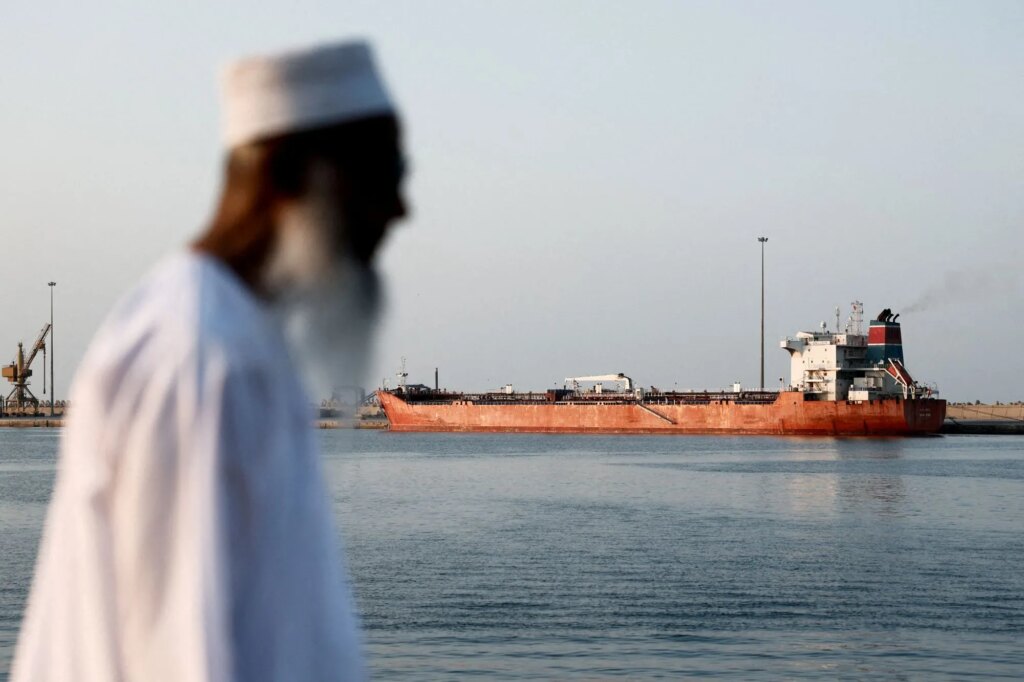
In his Substack last week, Haass took a moment from trashing the president to suggest an alternative to boots on the ground for the prickly problem of opening the Strait of Hormuz, where tankers carrying one-fifth of the world’s oil and liquefied natural gas are being throttled by Iran.
Don’t send the Marines in to seize Kharg Island, Iran’s principal export terminal — just close the Strait.
“Open for All or Closed to All” is the preferred option for Haass, a veteran Bush-era diplomat and former president of the Manhattan-based Council on Foreign Relations.
Line of defense
That way China and India will be incentivized to pressure Iran to get it open.
Currently, apart from its own ships, these are the only countries Iran is allowing to get any oil or gas through the strait, with Iran’s biggest customer, China, getting the lion’s share.
Pakistan and Turkey have negotiated a couple of tankers through, but other merchant ships are under constant threat of attack from Iranian drones, missiles and naval mines, with at least 20 strikes on tankers and cargo ships in the Persian Gulf since the war started.
Yet Iran is making more money than ever for its war effort, exporting more oil today than before the war, according to data from tanker-tracking firm Kpler, the Wall Street Journal reported.
Most of Iran’s oil is going to China, so closing Hormuz would certainly focus Beijing’s mind.
Iran’s demonstration on Friday of its ability to fire long-range ballistic missiles that might reach as far as European capitals such as Berlin, Paris, Rome and London ought to have focused the minds of our sullen NATO allies already.
In Haass’ thinking, no tanker from Iran would be permitted to reach its destination in another country “until Iran backed off [threatening and attacking]” commercial vessels transiting the Strait.
Blockading Iran’s exports would collapse its economy and immediately defund its war machine.
“Accomplishing this aim would require setting up an effective defensive line across the 200-mile-wide Gulf of Oman. Doing so would require ships, aircraft, and drones patrolling well outside the Strait.
“An aircraft carrier and access to local bases would also be required,” Haass said. “Commercial vessels that refused to stop at the line would be disabled. Governments that have title to the vessels or are expecting a delivery would receive advance notice of the new policy.”
Deadline given
The gambit “could rally the world as it reflects a commitment to keeping an international waterway open to nearly everyone’s benefit,” says Haass.
“It would not increase the damage and destruction of the war.”
That is superior to the alternative reportedly being considered by the White House of using ground forces to seize Kharg Island in a bid to leverage Iran to open the Strait.
As the global price of oil soars and feeds into inflation here at home, Trump on Saturday issued a 48-hour deadline to Tehran to fully reopen the Strait or he would “obliterate” Iran’s power plants.
But after the quagmire of Iraq and Afghanistan, Trump voters have no appetite for getting bogged down in another boots-on-the-ground grind in the Middle East. As Haass points out, “substantial casualties would be inevitable [in an invasion of Kharg], and the mission would further erode US missile stockpiles.”
Nor is dragooning reluctant NATO allies to play chicken by escorting tankers through Hormuz a sustainable solution.
Get opinions and commentary from our columnists
Subscribe to our daily Post Opinion newsletter!


Thanks for signing up!
The “Open for All or Closed to All” policy might even persuade our supposed Gulf allies to get off the bench and help with the effort to tame their neighbor.
The other problem facing the wartime president is the Democrats’ nihilistic obstruction of everything he does, with current interminable TSA lines the most glaring example.
A new bill
Therefore, expect them to block the Pentagon’s request for an additional $200 billion from Congress to pay for the war. It will be blocked by many of the same war-mongering neocons who spent the last decade saber-rattling about Iran and Russia. But, as the last sensible Democrat John Fetterman says, the only leader his party has now is Trump Derangement Syndrome.
In other words, Republicans have no chance of getting the 60 votes needed in the Senate for a new military spending bill.
Kudlow to the rescue.
He outlined a neat alternative on his Fox Business show on Friday: shoehorn the Pentagon spending, as well as the Save America election integrity bill into a new reconciliation bill which requires only 50 votes, plus the vice president.
Everything requires money, so with a bit of lateral thinking you can justify putting just about anything you like into a Big Beautiful Bill Mark II.
“The cleverest minds in Congress should put their heads together and generate a strong reconciliation package that will keep our military might and maintain proper voting laws,” he said. “There will be spending offsets, waste, fraud and abuse cutbacks, plenty of room for some entitlement reforms. Perhaps even some supply-side pro-growth tax reforms, but the most important issue will be our national security, completing the mission in Iran and maintaining peace through strength.”
These left-field ideas from Kudlow and Haass might just appeal to the president. After all, getting creative with intractable problems is Trump’s specialty.