

🔴 Website 👉 https://u-s-news.com/
Telegram 👉 https://t.me/usnewscom_channel
OAN Staff Brooke Mallory
12:35 PM – Thursday, February 12, 2026
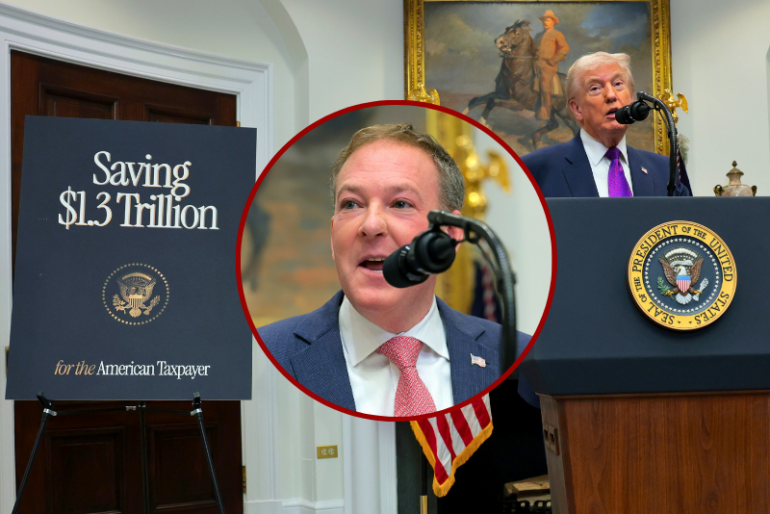
In what the Trump administration has labeled the “single largest deregulatory action in U.S. history,” EPA Administrator Lee Zeldin announced on Thursday that the federal government is effectively ending the era of the automatic engine start-stop feature, halting overreach measures from the Obama-era.
While the technology isn’t “banned,” as manufacturers can still include it if they choose, the EPA has eliminated the “off-cycle credits” that gave automakers regulatory points for installing it.
Without these financial and compliance incentives, industry experts expect most manufacturers to discontinue the feature or make it a permanent “opt-out” setting.
Standing alongside President Donald Trump, Zeldin detailed a sweeping rollback of vehicle emissions standards, specifically targeting the technology that shuts off a car’s engine when it idles at stoplights. Zeldin, who has frequently referred to the feature as the “Obama Switch,” told reporters that the move is a direct response to years of consumer frustration.
“Countless Americans passionately despise the start-stop feature in cars,” Zeldin stated. “So many have spoken out against this absurd ‘start-stop-start-stop’ concept. The Trump administration has heard your calls.”
While the government never technically mandated start-stop technology, the EPA has historically incentivized its use through “off-cycle credits.” These credits allowed manufacturers to earn compliance points toward federal greenhouse gas and fuel economy targets just for installing the feature.
Under the new rule finalized this week, those incentives have been eliminated. Zeldin characterized the credits as a “climate participation trophy” that forced technology onto drivers that many found intrusive, jerky, or even potentially damaging to the vehicle’s starter and battery over time.
The move removes the financial and regulatory reasons for manufacturers to include it as a default setting.
Industry experts expect several immediate shifts:
- Optional features: Manufacturers may move the feature to an “opt-in” or optional trim level rather than a standard requirement.
- Permanent off-switches: For cars that keep the feature, the EPA is encouraging “memory settings” that allow a driver to disable it once, rather than having to press a button every time they start the car.
- Engineering shifts: Some manufacturers who integrated start-stop deep into their powertrain strategies to meet 2026 standards may now pivot toward other efficiency technologies.
The elimination of the start-stop incentive is part of a larger rescinding of the 2009 Endangerment Finding, the scientific bedrock that previously allowed the EPA to regulate greenhouse gases as a threat to public health. By removing this finding, the administration is unwinding trillions of dollars in projected regulatory costs.
Progressive environmental groups have already signaled they will challenge the move in court, claiming studies from the Society of Automotive Engineers (SAE) suggesting start-stop systems can possibly reduce fuel consumption by 7% to 26% in heavy stop-and-go traffic.
The EPA, however, remains firm. “The decision will benefit consumers most immediately by allowing auto manufacturers to produce the vehicles that people actually want to buy,” Zeldin added.
.@epaleezeldin: “This EPA is committed to providing clean air for all Americans. Powering the great American comeback is based on the singular focus of providing clean air, land, and water for all Americans while harnessing the greatness of the American economy.”
Watch OAN Live… pic.twitter.com/BzxwZbAbQD
— One America News (@OANN) February 12, 2026

Stay informed! Receive breaking news alerts directly to your inbox for free. Subscribe here. https://www.oann.com/alerts
What do YOU think? Click here to jump to the comments!
Sponsored Content Below