
🔴 Website 👉 https://u-s-news.com/
Telegram 👉 https://t.me/usnewscom_channel
Folks, I don’t like reporting on this but I don’t only report things when I know it’s something you will want to hear.
I have to report the truth, even when it’s bad news.
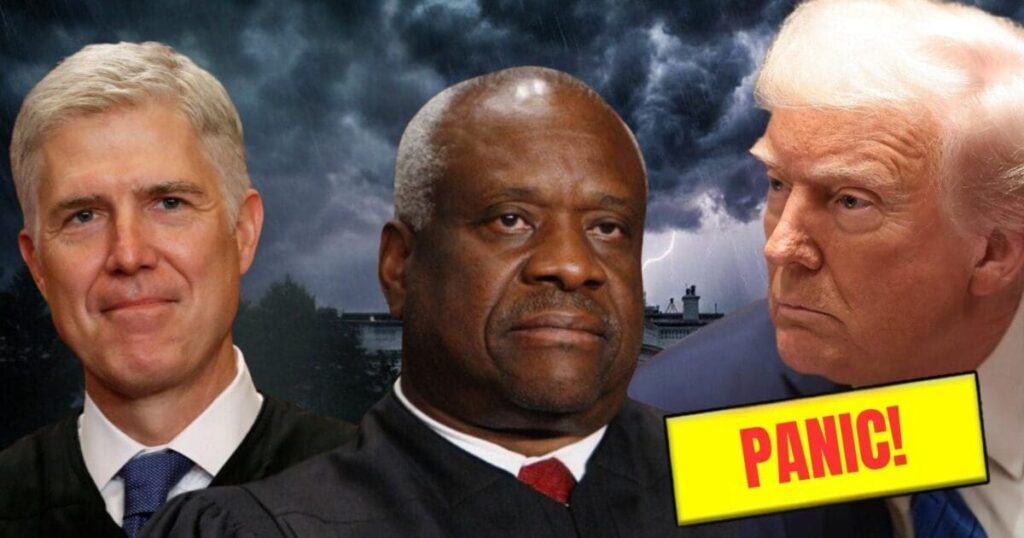
And in this case I’m reporting on something that could still turn out to be incorrect, but right now there is a 77% chance the Supreme Court is set to rule on President Trump’s tariff’s tomorrow morning and strike them down.
Because those are currently the odds on Polymarket, and quite frankly the big money is not too often wrong, so this concerns me a lot:
As I said, I hope this turns out to be wrong.
No one will be happier than me if it is.
The tariffs and the military are President Trump’s two biggest weapons right now, and leverage points he is using extremely well to end wars and to return America to prosperity.
If he loses this piece of leverage, it will be very bad for our country and it would be incredibly unwise of the Supreme Court.
Can you imagine a President needing to go to Congress with each negotiation with a foreign country?
Anyway, as I said I don’t like reporting on this but I have to bring you the truth and right now the odds and the big money in the betting markets are telling us we could be in for BAD news tomorrow morning.
I don’t agree with everything in this video, but I think it does an excellent job of explaining all the reasons why people currently believe this may happen tomorrow.
Not great for the president. There was at least the suggestion that the Court was prepared to strike down both Donald Trump’s reciprocal tariffs — the ones dealing with the trade deficit — and some more targeted ones designed to counter fentanyl trafficking out of a few countries, including China.
It’s possible we would see a split decision and some tariffs will be upheld, others struck down, but the overall tone of the argument suggested that Trump was going to lose on at least some things.
The U.S. Supreme Court is about to rule on Donald Trump’s tariffs, and they come at a critical time for the U.S. economy.
This could be the difference between a recession or a soft and smooth landing and a recovery from where we are right now, because we are at a critical junction point with the labor market.
And the Supreme Court’s ruling on tariffs could change absolutely everything.
Obviously, what’s at stake here — and what we’re going to talk about — are very clearly the IEEPA tariffs.
Those are the International Emergency Economic Powers Act tariffs.
These allow Donald Trump to issue reciprocal tariffs.
Now, of course, we know there are other opportunities to issue tariffs, such as Section 232 tariffs or Section 301 or even 338 tariffs.
However, 338 tariffs haven’t been used in almost 100 years.
301 and 232 tariffs can be used, but they’re harder to apply broadly.
See, with IEEPA tariffs, Donald Trump can issue an executive order and go, “We’re doing tariffs.” Yo.
But lawsuits — specifically the two main lawsuits, along with now as many as a thousand more lawsuits against the United States — the two main lawsuits being Learning Resources v. Trump (not to be confused with “Learing”), and of course, VOS Selections v. Trump.
Both of those cases are in front of the Supreme Court.
And we’ve got to talk about the impact that those cases could have.
And then, of course, why are there upwards of a thousand other cases going on against Donald Trump now regarding these tariff lawsuits?
Spoiler alert: everybody’s kind of expecting Donald Trump’s tariffs to get kicked out.
And after they get kicked out, they want to stand to collect money or refunds.
Hence why Bloomberg says more than a thousand companies are suing Trump over his tariffs.
But first, before we go through what’s likely to happen with the Supreme Court and the Supreme Court calendar and how the Supreme Court is likely to rule and why, I personally think it’s really important to analyze where we stand with the economy today based on data that we’ve gotten within the last three days.
And there is a lot of it.
Look, here’s the bottom line.
When we look at our JOLTS report, it tells us that while the labor market is weak and job openings came in lower than expected, we’re still not seeing big layoffs or big discharges — at least not yet, through November.
Now, yes, companies are laying off.
But when we look at the Challenger jobs reports, we can actually see that we’re at the lowest level of job cuts since July of 2024, and companies actually have the best hiring intentions since 2022.
Now, this is a really great report, and combined with JOLTS, it’s actually not that bad.
Yes, some people are losing jobs to automation.
This is why Symbotic stock has been a killer.
We’ve been promoting and pitching that stock for quite a while — not talking my own book here, just saying it’s been one that we’ve been analyzing since like $18.
But job cuts falling to the lowest level in 17 months — this is good.
We’re seeing fewer job cuts, and this is overall bullish, with closing out the year at the lowest level of announced layoff plans.
Now, that doesn’t mean everything is great.
We have an average employment level sitting around 20,000 jobs per month right now on the ADP report level, and about 30,000 to 40,000 on the BLS jobs report level.
Jerome Powell of the Federal Reserve says we should minus about 60,000 from those numbers, and that’s why we should be cutting.
In my opinion, the Federal Reserve suggests we should be cutting as much as 150 basis points this year.
That would be essentially — well, if I take 150 divided by 25, that would be six rate cuts.
Markets are really only pricing in about two rate cuts.
Waller, who’s applying for the Fed chair job as well, is now saying he’s open to as many as four rate cuts.
But still, the rate cut for January 28th — with these CBO numbers on GDP at 2.2%, 2% for 2026, and these recent numbers on jobs — not good enough to justify rate cuts.
So the odds of getting a rate cut on my birthday, January 28th, are only about 15%.
Now, a lot has to do with the jobs report that’s still coming out tomorrow, but that’s still going to be looking into the past a little bit.
Tomorrow’s jobs report, which comes out at 5:30 a.m. on January 9th — at 5:30 a.m. — that’s California time.
We expect 70,000 jobs.
Now, 70,000 jobs is decent, but if you minus out 60, you’re still below break-even, which is probably somewhere around 20, where the unemployment rate doesn’t rise or fall.
And we’re going to have to pay attention to that unemployment — or rather, I should say the labor force participation rate — because the participation rate can actually say that, “Oh look, we created 70,000 jobs,” but if the participation rate goes up, the unemployment rate could skyrocket.
And that leads algorithms in the stock market to get a little bit nervous, which is, I think, why we’re seeing some nervousness before this jobs report when we look at broader indices like the Qs.
The Qs have really been on this downward wedge pattern.
Now, this is the NASDAQ 100, if you’re not familiar with it.
And I personally don’t encourage people to invest in QQQ directly.
If you’re going to do that, get QQQM. It’ll save you some money.
But we can see this consolidating wedge here.
And honestly, this wedge is suggesting that people are relatively fully allocated.
And on a technical basis, things don’t look good right now.
In fact, this technical wedge suggests that we could get choked all the way back down to 577 in a little bit of a correction.
The jobs report tomorrow and the ruling by the Supreme Court should help us determine: is it a buy-the-dip opportunity, should we get that dip?
Now, I’m buying dips, and actually some stocks are just surging — and this is my top 10 stocks-to-buy list, which is crazy.
One of the stocks that we talked more about this morning is up like 28% in the last week, and I’m like, “Bro, I want to buy more, but it keeps going up too fast.”
But anyway, what’s important here is understanding the economy is at a precipice.
We have some data that says things are good.
We have Jerome Powell downplaying that data.
And then we have survey data that isn’t that great on a leading basis.
Take a look at the survey data.
If you look at the S&P survey data, we actually see that resilience of the U.S. economy is showing signs of cracking.
New business placed at service providers showed the smallest rise in 20 months.
And that surveys are signaling the weakest economic expansion since April.
And at least based on this survey — which is a little bit more of a leading tell into the beginning of January — the number of companies cutting headcounts has now started to exceed those reporting higher employment.
So JOLTS, Challenger, and BLS jobs data — they’re either all looking backwards, or they’re rigged — where the survey data is a little bit more cautious.
They’re like, “Hey, on services, you know, we actually have some serious problems that may not be so great.”
But it’s not just services.
If you go over to manufacturing, you could see some issues in manufacturing as well.
When we look at the S&P and the ISM reads for manufacturing, we see that both of them tell us a very similar story.
Both of them are telling us we are seeing cracks in the market because new orders are falling.
In fact, if you look closely at the ISM manufacturing data, they go as far as saying the recent activity that we’ve seen in the economy is actually just a short-term bubble of improvement.
That in December, U.S. manufacturing activity contracted at a faster rate, with pullbacks in production and inventories leading the index down.
It’s not just ISM, though.
It was also S&P suggesting the same exact thing.
When we look at the S&P manufacturing data, you can see it right here.
You see that we’re bullish jobs, but we actually might be in a Wile E. Coyote scenario where we think everything is good and we are a cartoon character continuing to run despite the fact that we’ve now chased the Road Runner off a cliff.
That factories are producing goods with the jobs that they’ve created, but we’re now seeing a drop in orders — the widest drop since the height of 2008 and 2009.
And as time goes on, payroll numbers will be adversely impacted unless we can recover from this manufacturing dump that we’re in right now.
Remember, it wasn’t just manufacturing, it was also services.
So obviously, the stakes of the economy are very high.
We’re at a turning point.
Take a look at this: the probability of finding a job in the next three months, according to the New York Fed — the lowest odds that people are giving in Fed surveys since basically ever on this chart, because I drew this little red line across.
We’ve never been this low in terms of people’s optimism for their ability to find a job.
And instead, people are pessimistic about their debts — debt delinquency expectations — the probability of not being able to make your minimum payment over the next three months.
Highest levels that we’ve seen since 2020 and 2013.
We know that the economy is at a turning point, in my opinion.
This is my personal opinion. Then we’ll hit the facts again.
Eliminating the IEEPA tariffs — and destroying the president’s ability to unilaterally impose inflationary tariffs on American consumers and American companies (obviously in addition to foreign countries) — will not only lower inflation, but increase growth, increase hiring, and lower long-term rates.
That’s my opinion.
That’s why I think these are critical to solve the hiring — or lack of hiring — and lack of new orders that we’re seeing in the economy now.
Now, you might not agree with my opinion, so let’s go into the facts on the Court.
Here’s the scoop.
Right now, the Supreme Court is reviewing the IEEPA tariffs.
These are the International Emergency Economic Powers Act tariffs.
These are really unique tariffs that the Court of International Trade — it’s called CIT — has already decided that both trafficking and reciprocal tariffs, i.e., IEEPA tariffs, exceed the president’s power.
They already ruled that on May 28th.
The Federal Circuit — or the Court of Appeals — upheld the CIT ruling on August 29th.
But on a 7-to-4 decision, they benched their decision — basically saying, “Don’t worry, you can keep doing your tariffs until the Supreme Court gets involved.”
The Supreme Court on November 5th heard arguments, but the Supreme Court does not make a decision right after hearing arguments.
The Supreme Court’s calendar starts in the third quarter and it goes all the way until June 30th.
Usually the Supreme Court, in October, November, December, hears arguments, and then they sit, deliberate, and think about their rulings.
Those rulings typically don’t come out until May, June, or sometimes you see them a little bit earlier, especially if they have been filed under an emergency appeal to the Supreme Court.
These lawsuits against Donald Trump to decide the fate of the IEEPA tariffs have been filed under an emergency process.
The Supreme Court has also just set an opinion date for Friday, January 9th, at 7:00 a.m. California time to announce some form of a decision.
Now, it’s not unusual for the Supreme Court to do this.
The Supreme Court historically — like, long time ago — has generally made rulings on Mondays, and then they would release rulings sometimes on Tuesdays and Wednesdays.
They sort of trickled them out.
That has changed over the last few years.
Over the last few years, we’ve seen a little bit more of a shift where sometimes these rulings are coming out on Thursdays and Fridays, and you’re really seeing a lot more of a cadence result for when you’re actually getting these rulings.
So, seeing a Friday ruling isn’t necessarily a big surprise.
It’s pretty consistent with what we’ve seen over the last couple years.
But this pre-announced Friday 7 a.m. deadline has a lot of people thinking, “Huh, I think the Supreme Court’s about to overthrow Donald Trump’s IEEPA tariffs,” which is leading a lot of traders, at least over the last five days here, to rush into stocks like Restoration Hardware because they believe that these stocks will be massive beneficiaries of the repeal of IEEPA tariffs.
Or basically the invalidation of Donald Trump’s opportunity to use these — basically saying that if the president wants to use extraordinary action via declaring a national emergency, he could do a lot of things, but he won’t be able to issue tariffs.
Instead, the president will have to go to Congress to do that.
And that’s exactly where the debate lies on these IEEPA tariffs.
See, IEEPA tariffs are so useful for Donald Trump because you can instantaneously apply them with a simple executive order: “I’m declaring an emergency, and I’m declaring the tariffs.”
However, the big problem with this — and this is why the IEEPA tariffs are likely to be struck down, which then raises the question of what happens next — but why I expect the IEEPA tariffs to actually be struck down has first to do with the major questions doctrine.
On major questions of vast economic or political significance, Congress specifically and clearly must provide the power to do something to the president.
That has been done through Section 232 tariffs — those we’ve seen through the Trade Expansion Act of 1962.
Those are like your steel and aluminum tariffs, or commodity tariffs.
You can make the argument for the 301 tariffs on chips, or Chinese phones, or consumer goods, or whatever.
You can make arguments for those.
But these reciprocal or universal tariffs are not clearly designated in the IEEPA law.
And when something is not clearly designated by Congress, the power rests with Congress, not the presidency.
And this is where it is very important to start looking at: well, what are Supreme Court justices starting to say?
What have they said during hearings?
So far, what we’ve seen is John Roberts, Gorsuch, Jackson, Kagan, Sotomayor, and Barrett all seem skeptical that Donald Trump is able to use these tariffs.
This suggests that you might have a 6–3 decision, given that those are six people skeptical that Donald Trump may be overstepping his bounds here.
And that’s exactly what the Supreme Court is deathly afraid of.
They don’t want to allow what they consider a one-way ratchet.
Like, think about having a box and you put the strap on it, you ratchet it down, you check the tension on it.
Once you ratchet — click — okay, we’re going to allow the president to impose IEEPA tariffs, you’re never going to loosen that box.
In fact, that is exactly what the Supreme Court said.
On balance, the Court overall appeared skeptical about the broad scope of the government’s claim to regulate importation via IEEPA.
There are mechanisms such as 232 and 338 that do have restrictions and constraints, which again is why Donald Trump doesn’t like those sections as much as the IEEPA tariffs.
Gorsuch himself says that we have a one-way ratchet here that would transfer taxing power to the president that Congress cannot practically get back.
This, to me, sounds pretty bad for Trump expecting a win on these tariffs.
I don’t actually think people are expecting a win on these tariffs, and that’s why a thousand different lawsuits have been filed to go collect their money back, which is expected to be somewhere around $160 billion.
But markets broadly aren’t going to so much worry about these $160 billion, in my opinion.
These are the lawsuits that have been filed.
Liberation Day tariffs announced.
Court of International Trade was over here.


Appeals court tosses the tariffs over here — this is the federal appeals court circuit.
Supreme Court — here’s the arguments.
And again, now we stand: these are all the lawsuits that have been filed.
Notice that after the arguments, all the lawsuits started getting filed because companies are like, “Oh my gosh, the Supreme Court’s going to rule against Donald Trump.”
Which is actually really rare.
In fact, I have that written down over here.
I saved this little piece — I’m going to grab it — because it’s so rare that the Supreme Court rules against the president in terms of the people whom he’s placed.
Look at this sheet of paper. I saved this because I think it’s so useful.
Alito, Gorsuch, Kavanaugh — they almost all vote for Donald Trump’s policies all of the time.
Trump’s second term: Alito 95%, Gorsuch 95%, Kavanaugh 89%, Thomas 89%, Barrett 79%, Roberts 74%.
Obviously, Kagan, Sotomayor, Jackson barely vote for his policies because they were appointed by Democrats.
But the point is, this might actually be one of those times where even the Republican justices say, “Yeah, bro. Nine out of 10 times we vote for you. We can’t do it this time.”
And I think that’s why this is almost like a betting market of: are the IEEPA tariffs going to get kicked out?
How many lawsuits are being filed is showing you that this is how many companies are actually spending the money to file a legal complaint because they actually think the IEEPA tariffs are going to get thrown out.
So I broadly expect that as well.
I expect a ruling as soon as tomorrow at 7 a.m., though it may take longer.
Ultimately, Donald Trump will try to use other policies, and that will create some uncertainty for markets.
A lot of people are worried that we could actually get a lot of uncertainty because these other methods of utilizing tariffs may not be as cut and dry in terms of what their impact is going to be.
And I understand that.
In fact, if we go back to the very first chart we showed, which shows a 100-year policy right here that has not been used before — 338, or hasn’t been used since 1930 — you’re really looking at more 301 or 232 tariffs.
The problem with these is 232 tariffs require the Commerce Department.
Not only do they require the Commerce Department to conduct a feasibility study — which could take up to 270 days, so basically nine months — but they actually invite more APA lawsuits.
Those are Administrative Procedure Act lawsuits — basically saying, “Hey, Commerce Department, you’re being unfair to our company,” or whatever, right?
IEEPA tariffs under emergency powers don’t invite as many lawsuits, which I know sounds ironic to say because now everybody’s piling in, but they’re only piling in because it sounds like the Supreme Court is about to ban them and people want their money back.
So, they’re kind of betting on the team that’s already winning, right?
But typically, if you lose this, this is a lot easier to win a lawsuit in — and it certainly is a lot slower.
So Donald Trump’s going to get slowed down a lot.
Now, a lot of people see this as actually creating more uncertainty for the markets.
“Oh my gosh, are we going to get a Liberation Day 2.0?”
And of course, this is where people also argue, well, you know, these tariffs are regulatory.
They’re not revenue-raising.
I mean, it’s fair, too.
And I don’t want to sort of labor the points of revenue-raising — this is going to be a debate.
But frankly, the justices have already ruled that, sure, you might just call them licenses as opposed to being revenue-raising or taxes, which is what Congress does.
But let’s be clear about that.
Nowhere in our documentation for IEEPA tariffs are license fees authorized.
In fact, they specifically say IEEPA authorizes licenses but not license fees, which is really interesting.
But it’s worth noting that the arguments for these IEEPA tariffs are really, really weak.
And I think that’s why the Supreme Court — not only because of major questions, or the fact that you’re not going to be able to pull this ratchet back from Congress, or from the president if you give it to the president — the license fees argument and what we’re seeing statistically with the lawsuits.
To me, this is a betting market saying these IEEPA tariffs are dead.
And yes, people are going to be concerned: “Oh my gosh, what alternatives is Trump going to go for?”
I personally hope, in a bullish scenario, as an opinion, that the Supreme Court will just slam the door shut on other alternatives — like, “Hey,” they really narrowly define what the president can and can’t do.
They probably won’t do that, though.
That’s mostly because we’ve seen Justice Kavanaugh say things like, “Well, if we have lawsuits under other sections, then we’ll deal with those at that time.”
Which means the Supreme Court is more likely to just kick the can down the road on answering all of the questions in total.
Now, what does all this mean?
Even if the Supreme Court bans the IEEPA tariffs, and then there’s some uncertainty in markets, what does it mean for our economy?
Yes, there is a risk of a Liberation Day 2.0, but it’s an election year.
And so I actually think that will be less likely.
I actually think the overthrowing of the IEEPA tariffs could be one of the most bullish catalysts of the entire year because it means all of that extra margin-compression baggage that companies have been holding on to evaporates.
Maybe not all of it because we still have other sections, but a substantial majority of those tariffs evaporate.
That is immediately deflationary.
Not only is removing all this crap immediately deflationary, but new tariffs are going to take a lot more time.
Trump can’t just use an executive order for the other tariffs, and it will be very unpopular during midterms.
Donald Trump will be much better off saying, “Well, I tried. We collected so much money, but the Supreme Court took that money away from you — but I’m such a nice guy. I’m still going to try to get us stimulus checks. Let me see what I can do. Vote for me in midterms.”
It’s going to delay him, though.
It’s going to delay him until after midterms.
“You’re going to have to vote for both the House and the Senate in order to get your stimmy check. Otherwise, I don’t think we can do it. You know, the Supreme Court, they delayed it. It’s their fault. They made a mistake. And you should be upset with them, not with me.”
Whatever.
Like, Donald Trump will play his song the way he always plays his song.
It’s never going to be Donald Trump’s fault.
But folks, this is game-changer for our economy because it gives the Federal Reserve the license to cut, cut, cut.
As the Federal Reserve cuts, we can hopefully rejigger this soft landing.
We can hopefully get that yield curve to compress.
We can hopefully get rates down, which is going to be great for mortgage companies and refinancing.
It’s going to be great for the soft landing.
And ultimately, it’s bullish for margins at corporations.
So this IEEPA tariff decision could change everything because it would be too unpopular to go for Liberation 2.0 in a midterms year.
Therefore, I could not be more excited about the likelihood of these IEEPA tariffs getting crushed.
Now, what if we don’t get a decision tomorrow?
That’s possible.
We might not get a decision tomorrow.
I hope we do.
But if we don’t, we might have to wait.
Hopefully, we get a decision in January or February, given that this was filed under an expedited process, but as with everything, there is no guarantee.
This is a Guest Post from our friends over at WLTReport.