

🔴 Website 👉 https://u-s-news.com/
Telegram 👉 https://t.me/usnewscom_channel
OAN Staff Brooke Mallory
6:38 PM – Friday, March 20, 2026
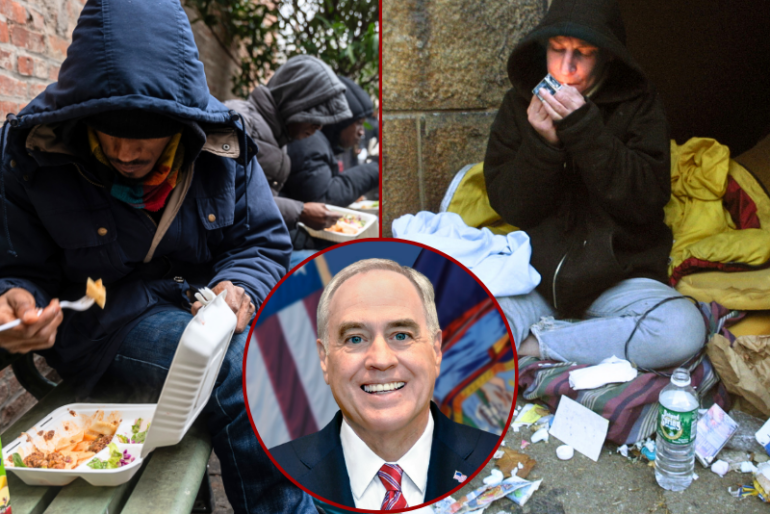
A sweeping recent report from New York State Comptroller Thomas DiNapoli revealed that New York City’s spending on services for the unsheltered homeless population has more than tripled since 2019, reaching an estimated $81,700 per person in the 2025 fiscal year.
A State Comptroller is the chief fiscal officer, accountant, and financial watchdog for a state government. They oversee state budgets, track spending, issue payments to state workers and vendors, and perform independent audits of state agencies to ensure legal compliance and prevent fraud, acting as the state’s top bookkeeper.
The findings, released in mid-March 2026, highlight a major disconnect between record-high taxpayer investment and the persistent visibility of street homelessness.
According to the data, the city’s Department of Homeless Services (DHS) spent nearly $368 million on the unsheltered population in FY 2025 — a 262% increase from the $102 million spent in FY 2019.
DiNapoli’s report paints a picture of a system that has grown exponentially in cost without achieving long-term stability for those it serves.
At roughly $81,705 per unsheltered individual, the city now spends nearly the same amount as the median household income in New York City, which is estimated at $81,228. While spending tripled, the unsheltered population grew by 26%, rising from 3,588 in 2019 to 4,504 in early 2025.
New York continues to shelter a larger share of its homeless population, 97%, than most major U.S. cities. However, the 3% who remain unsheltered are proving increasingly costly to reach and transition.
Additionally, the $81,000 “per person” figure is a system-wide average that covers a complex web of intensive services such as low-barrier beds, outreach teams, medical and mental health services, and operational overhead.
______________________________________________________________________________________
Low-Barrier Beds
Unlike traditional congregate shelters where dozens of people might sleep in one large room with strict curfews, Low-barrier beds are designed specifically for people who have long resisted the traditional shelter system.
These facilities offer more privacy, fewer restrictions, and a much higher staff-to-client ratio to manage the complex needs of the residents. The high cost reflects the physical infrastructure — often smaller, specialized buildings — and the intensive, around-the-clock clinical and social work support required to help someone transition from a decade on the street into a stable indoor environment.
Outreach Teams
The HOME-STAT initiative represents the most comprehensive street outreach program in the country, but maintaining a constant presence is extremely resource-heavy. These teams don’t just walk around, they are composed of highly trained specialists who engage in “relational” work, meeting with the same individual dozens or hundreds of times to build the trust necessary for them to accept help.
Operating 24/7 across five boroughs, including the subway system, requires a massive fleet of vehicles, specialized digital tracking systems to map “hotspots,” and hundreds of staff members earning competitive city wages and benefits.
Medical & Mental Health
A significant portion of the homeless population struggles with Serious Mental Illness (SMI) or chronic substance use disorders, which are far more expensive to treat in a mobile or transitional setting than in a standard clinic.
This funding covers “street medicine” teams that bring doctors and nurses directly to encampments, as well as the high cost of psychiatric placements and specialized beds. Since these individuals often cycle through emergency rooms, the most expensive form of care, the city invests heavily in specialized stabilization units to provide a clinical alternative to the ER or the justice system.
Operational Overhead
The “hidden” costs of these programs often lie in the operational overhead of private non-profit organizations the city contracts to do the work. As the cost of living in NYC rises, these organizations must pay more for insurance, utilities, and administrative staff to ensure compliance with strict city oversight.
Additionally, security is a major line item. Since these sites serve a “high-needs” population, as they’re referred to, the city often mandates private security contracts to ensure the safety of both the residents and the surrounding neighborhoods — which can sometimes rival the cost of the social services themselves.
______________________________________________________________________________________
In his report, DiNapoli further emphasized that while providing shelter is a “notable achievement,” the lack of transparent outcome tracking is a major concern.
“The escalation in spending merits greater focus on where resources are going and what services are working,” DiNapoli said. “Street homelessness is a chronic problem that requires collaborative efforts… but we must ensure every dollar leads to lasting housing stability.”
The budget for street homeless programs is projected to reach $456 million in Fiscal Year 2026. However, DiNapoli says that funding is expected to flatten after that, making the next 12 months a critical “make-or-break” period for the city’s ability to prove its current strategy is sustainable.
Stay informed! Receive breaking news alerts directly to your inbox for free. Subscribe here. https://www.oann.com/alerts
What do YOU think? Click here to jump to the comments!
Sponsored Content Below