
🔴 Website 👉 https://u-s-news.com/
Telegram 👉 https://t.me/usnewscom_channel
Earlier this week, the MAHA movement scored a monumental win after a controversial provision, which would have provided pesticide manufacturers immunity from lawsuits claiming their products harmed people, was removed from a government funding bill.
BIG MAHA WIN – Controversial Provision Removed From Funding Bill
MAHA Action celebrated the win in Congress, but the focus has turned to the judicial branch.
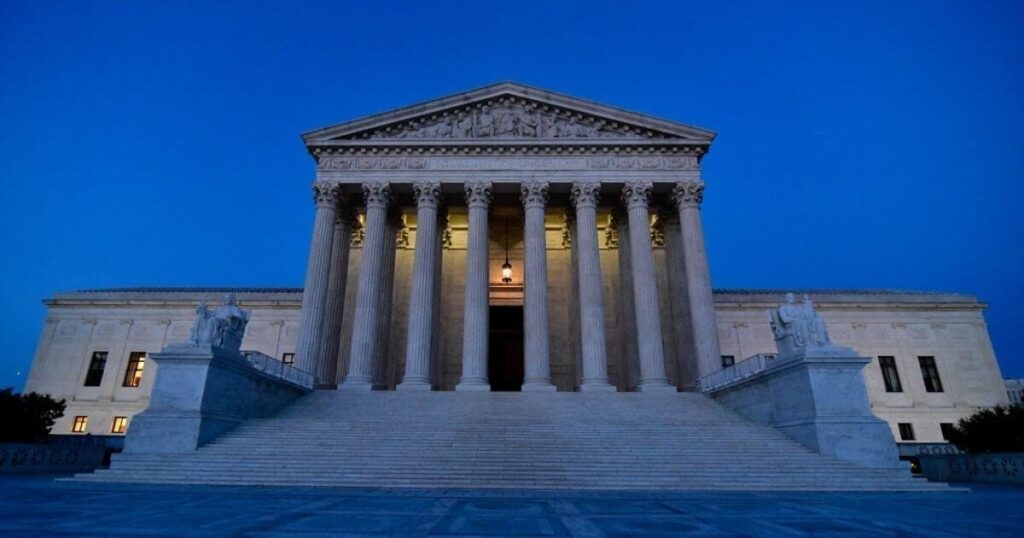
“The fight to stop pesticide immunity for Big Chem is far from over. Section 453, which would have shielded chemical companies from failure-to-warn lawsuits, was removed from Congress thanks to MAHA activists speaking out. But the battle continues. This Friday the Supreme Court will decide whether to take up Durnell v. Monsanto. If they hear the case, Big Chem could get the same immunity Congress denied them, this time from the judiciary,” MAHA Action wrote.
“Over 170,000 Americans have filed claims against Monsanto-Bayer over cancer they say was caused by glyphosate. A ruling for Monsanto could block state juries from holding companies accountable even when they knew the risks and hid them. The safety studies for glyphosate were literally based on a fake paper written by ghostwriters for Big Chem. That study has recently been retracted,” it continued.
“Federal labeling laws were never meant to protect companies from lawsuits. Allowing immunity would remove any incentive to warn the public or make products safer. This is a direct attack on the people and the MAHA agenda. It is critical that the Supreme Court either does not hear this case or rules in favor of the plaintiffs,” it added.
The fight to stop pesticide immunity for Big Chem is far from over.
Section 453, which would have shielded chemical companies from failure-to-warn lawsuits, was removed from Congress thanks to MAHA activists speaking out.
But the battle continues.
This Friday the Supreme Court… pic.twitter.com/k56ChkAEGb
— MAHA Action (@MAHA_Action) January 8, 2026
Read more at The MAHA Report:
For many Americans, that possibility is maddening. “We are now working to make sure that SCOTUS does not take up the glyphosate cancer case,” said Ryerson. “It should not be heard given that the registration of glyphosate is fundamentally based on fraudulent, ghostwritten science that covered up the carcinogenicity of glyphosate for decades.”
Some 170,000 plaintiffs have filed suit against Monsanto-Bayer for Non-Hodgkin lymphoma they claim was caused by glyphosate, a chemical found in Roundup, a weedkiller produced by Monsanto. The company invested billions of dollars to lobby state legislatures and Congress to pass legislation that would provide legal immunity from law suits, so long as Monsanto-Bayer labels its products in conformity with federal labeling requirements.
Their congressional pressure failed. How will SCOTUS respond?
On January 9 , SCOTUS will consider whether to grant a Petition for Writ of Certiorari to Monsanto-Bayer in Durnell v Monsanto, a Missouri case which found that federal labeling requirements do not operate as a shield against state product liability claims (In layman’s terms, that means lawyers for the plaintiffs would request the lower court to send its records up to, in this instance, SCOTUS.)
Monsanto has asked the nation’s highest court to overturn the decision. The company wants SCOTUS to issue a ruling that finds federal laws requiring warning labels — designed to protect the public from chemical toxins — to grant legal immunity to pesticide manufacturers facing lawsuits from individuals who claim their injuries come from exposure to chemicals. This would, in effect, grant the legal immunity sought by Section 453.
“Removal of Section 453, immunity for pesticides, was a victory that might be temporary. Friday SCOTUS will decide whether to hear the Roundup (glyphosate) cancer case. Why has @AGPamBondi‘s Solicitor General sided w/ German co. Bayer which sells Roundup?” Rep. Thomas Massie (R-KY) said.
Removal of Section 453, immunity for pesticides, was a victory that might be temporary.
Friday SCOTUS will decide whether to hear the Roundup (glyphosate) cancer case.
Why has @AGPamBondi‘s Solicitor General sided w/ German co. Bayer which sells Roundup?https://t.co/bbggRLVnqE
— Thomas Massie (@RepThomasMassie) January 8, 2026


Bayer wrote last month:
Bayer is pleased the Solicitor General supports U. S. Supreme Court review of the petition for a writ of certiorari in the Durnell case and agrees with the company’s arguments on preemption. The company believes that the backing of the U.S. government will be important to the Court’s consideration of its petition. The split among federal circuit courts in the Roundup™ personal injury litigation, on the cross-cutting question of whether federal law preempts state claims based on failure-to-warn theories, warrants review and resolution by the country’s top court.
“The support of the U.S. Government is an important step and good news for U.S. farmers, who need regulatory clarity. The stakes could not be higher as the misapplication of federal law jeopardizes the availability of innovative tools for farmers and investments in the broader U.S. economy”, said CEO Bill Anderson.
Similar preemption language to the Federal Insecticide, Fungicide, and Rodenticide Act (FIFRA) is included in other federal statutes such as those regulating medical devices, poultry products, meat, and motor vehicles. It is time for the U.S. legal system to establish that companies cannot be punished under state laws for complying with federal label requirements.
As part of the company’s multi-pronged strategy, a positive ruling on the central, cross-cutting preemption issue could help bring the company closer to closure of tens of thousands of Roundup™ cases, which are overwhelmingly based on claims grounded in failure-to-warn theories. The EPA and every other regulator worldwide that has independently assessed the safety of glyphosate, the active ingredient in most Roundup™ products, has concluded it can be used safely.
The company continues to advance its multi-pronged strategy designed to significantly contain the litigation by the end of 2026 as outlined in its Q3 communication.